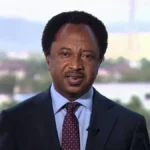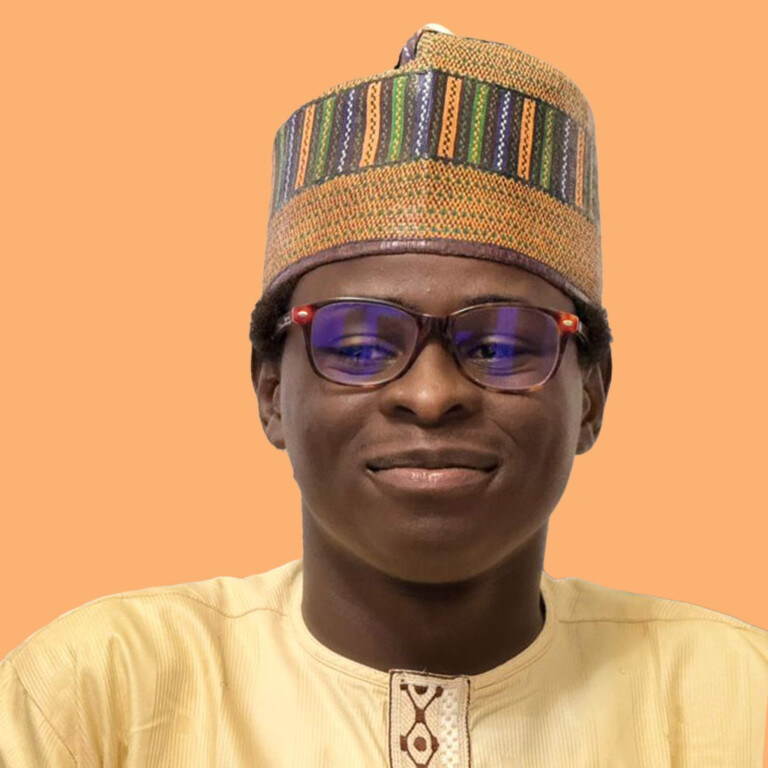
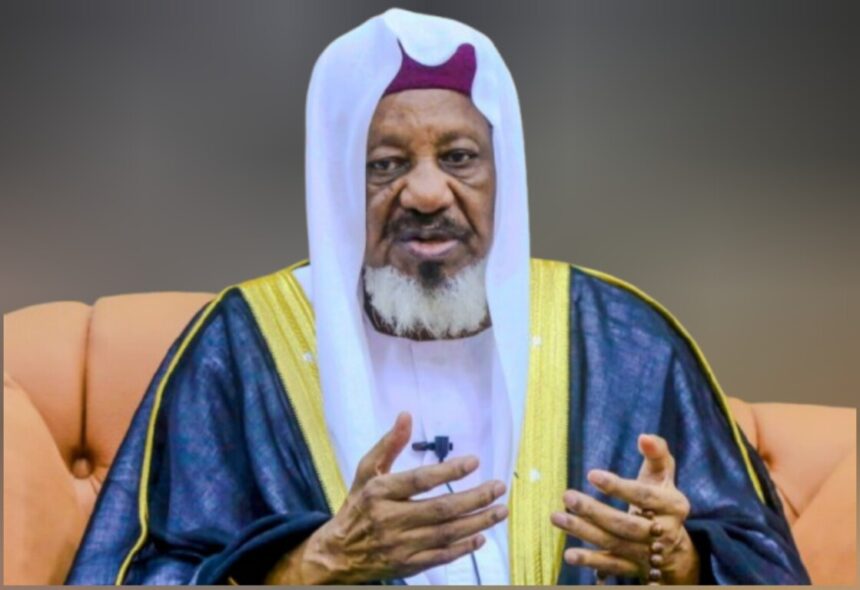
Sheikh Ibrahim Ibn Saleh al-Hussaini, widely known as Sheikh Sharif Saleh, is one of Nigeria’s most prominent Islamic scholars, teachers and interpreters of the Qur’an. Born on May 12, 1938, in al-Fadhaa, near Dikwa in present-day Borno State, he has spent decades combining religious scholarship, teaching, writing, and public service.
He is widely identified as the Grand Mufti of Nigeria and has served in several national and international Islamic institutions. Nigeria’s Inter-Religious Council lists him as Chairman of the Fatwa Committee of the Nigeria Supreme Council for Islamic Affairs (NSCIA), while the General Secretariat for Fatwa Authorities Worldwide identifies him as the Grand Mufti of Nigeria. (NIREC)
His journey is particularly notable because it began in a traditional Islamic learning environment in northeastern Nigeria and eventually developed into an international scholarly career spanning Africa and the wider Muslim world.
Early Life and Foundation in Islamic Learning
Sheikh Ibrahim Saleh was born into a family with a strong Islamic scholarly tradition. His father, Sheikh Saleh, was himself a religious scholar, and Ibrahim began his early education in his father’s madrasa.
That early exposure established the foundation for what would become a lifelong commitment to Islamic scholarship. Rather than treating education as a short stage of life, Sheikh Ibrahim Saleh developed a reputation for continuously pursuing knowledge and engaging with scholars from different intellectual traditions.
His educational journey eventually took him beyond Nigeria. He studied under renowned scholars in countries including Saudi Arabia, Egypt, Morocco, India, Pakistan, Senegal, Niger and Sudan. The Muslim 500 describes his early pursuit of knowledge as beginning through accompanying his father before continuing his studies with prominent scholars across several countries. (Religions for Peace)
He also studied English in London, demonstrating an effort to broaden his ability to engage beyond the traditional Arabic and Islamic scholarly environment.
A Scholar of Qur’an, Hadith and Islamic Jurisprudence
Sheikh Ibrahim Saleh’s scholarship covers several major areas of Islamic learning, including Qur’anic exegesis, Hadith, jurisprudence, Islamic philosophy, ethics and Islamic sciences.
He is particularly associated with Tafsir—the interpretation and explanation of the Qur’an—and has delivered lectures on Qur’anic sciences and Prophetic traditions to audiences in Nigeria and beyond. The Mohammed VI Foundation of African Oulema describes him as a scholar with extensive teaching and research engagements and notes his numerous students and disciples across Muslim and Arab countries. (مؤسسة محمد السادس للعلماء الأفارقة)
His career therefore represents more than religious preaching. It reflects a sustained engagement with Islamic intellectual traditions, legal questions and contemporary issues affecting Muslim communities.
The General Secretariat for Fatwa Authorities Worldwide has also highlighted the importance of bringing qualified jurists and fatwa specialists together to combat irresponsible or extremist interpretations of Islamic law. Sheikh Ibrahim Saleh has participated in this international scholarly conversation as Nigeria’s representative. (Ifta World)
A Remarkable Literary Legacy
One of the most striking aspects of Sheikh Ibrahim Saleh’s career is the scale of his writing.
Available biographies attribute more than 600 books and pamphlets, alongside more than 200 commissioned conference papers, to him. His writings cover areas such as Qur’anic sciences, Prophetic traditions, history, philosophy and Islamic studies. (Wikipedia)
A biography published by the Mohammed VI Foundation also records his extensive writing and research activities, alongside his involvement in numerous national and international Islamic organisations. (مؤسسة محمد السادس للعلماء الأفارقة)
The significance of this literary output goes beyond the number of publications. It demonstrates an approach to scholarship in which knowledge is preserved through writing and made available for subsequent generations.
For a scholar who began learning in a traditional madrasa in Borno, the development of such a large body of written work illustrates how traditional Islamic scholarship can evolve into an enduring intellectual legacy.
Leadership in Islamic Organisations
Throughout his career, Sheikh Ibrahim Saleh has occupied important positions in Nigerian and international Islamic organisations.
The Mohammed VI Foundation lists him as chairman of the Fatwa Committees of the Supreme Council of Islamic Affairs and Jama’at Nasril Islam, chairman of the Assembly of Muslims in Nigeria, and founder and chairman of the Islamic Renaissance Organization International. (مؤسسة محمد السادس للعلماء الأفارقة)
He has also been associated with the Nigeria Inter-Religious Council, the International Forum for Muslim Scholars, the International Union for Muslim Scholars and the Council of Muslim Elders.
His involvement has extended into Islamic finance. He has served as chairman of the Financial Regulation Advisory Council of Experts (FRACE) at the Central Bank of Nigeria and has been involved in Islamic commercial jurisprudence. (مؤسسة محمد السادس للعلماء الأفارقة)
This aspect of his career is significant because it illustrates that his scholarship has not been restricted to theological discussions. He has also engaged with questions concerning economics, financial systems, law and contemporary society.
Bridging Religion and Contemporary Society
Sheikh Ibrahim Saleh has repeatedly argued that Islamic teachings should not be viewed as incompatible with modern development.
In an article discussing Islamic economics, he argued that Islamic principles could contribute to addressing economic and social problems and rejected the idea that Islam necessarily stands in the way of modernisation. He also emphasised the importance of science, intellectual effort and benefiting from modern achievements. (Sheikh Ibrahim Saleh Al Hussaini)
His position on Islamic finance similarly reflects an attempt to connect religious principles with contemporary economic institutions. In an interview published on his official website, he described Islamic banking as an important component of Islamic economic methodology and encouraged confidence in legitimate Islamic financial institutions. (Sheikh Ibrahim Saleh Al Hussaini)
This provides an important dimension to understanding his legacy: his scholarship has sought to address not only classical religious questions but also practical challenges confronting contemporary Muslim communities.
Recognition in Nigeria and Abroad
Sheikh Ibrahim Saleh’s contribution to Islamic scholarship has earned him numerous national and international honours.
Among the awards attributed to him are the Egyptian First Class Award in Arts and Sciences, presented in 1993; an Islamic Da’wah honour from Syria in 1997; awards associated with Islamic scholarship and writing; and the Commander of the Order of the Niger (CON), one of Nigeria’s national honours, conferred in 2008.
He also received an honorary Doctorate of Science from Nigerian-Turkish Nile University in Abuja in 2015. The Mohammed VI Foundation records these recognitions alongside his contributions to scholarship and peaceful coexistence. (مؤسسة محمد السادس للعلماء الأفارقة)
In 2017, he received the First International Royal Award in Islamic Thought and Research from King Mohammed VI of Morocco, according to biographical records. (Manhaja – Blueprint Hausa version)
His international scholarly influence has also been recognised through his inclusion in editions of The Muslim 500, which identified him among influential Muslim scholars. (Religions for Peace)
His Message of Peace and Responsible Scholarship
Perhaps one of the most important elements of Sheikh Ibrahim Saleh’s legacy is his emphasis on responsible religious scholarship.
The international fatwa institutions with which he has been associated have stressed the danger posed by unqualified individuals issuing religious rulings and by interpretations that promote extremism or division. Sheikh Ibrahim Saleh has participated in these efforts to strengthen scholarly standards around the issuance of fatwas. (Ifta World)
This is particularly relevant in an age when religious information can spread instantly through social media. A religious statement made without adequate knowledge can reach thousands or millions of people within minutes.
His career consequently offers an example of why religious authority requires education, discipline, intellectual responsibility and accountability.
The Broader Lesson From His Life
The story of Sheikh Ibrahim Saleh is ultimately a story about the power of knowledge.
He began his journey in a relatively small community in Borno State, learning from his father. Decades later, he became an internationally recognised Islamic scholar who studied across several countries, taught generations of students, participated in national and international institutions, produced an extensive body of literature and received major honours.
One lesson is that serious education requires patience. His journey was not built around instant recognition. It developed through years of study, mentorship, travel, teaching, research and writing.
Another lesson is that knowledge becomes more valuable when it is transferred to others. His numerous students, lectures, books and institutional engagements demonstrate the importance of creating intellectual successors rather than simply accumulating personal knowledge.
There is also a lesson for young Nigerians: where you begin does not necessarily determine how far you can go. A person can begin in a traditional learning environment in a community far from the country’s major intellectual centres and still develop an international reputation through discipline and commitment.
His life also demonstrates the importance of combining tradition with intellectual openness. His education remained deeply rooted in Islamic scholarship while extending across countries, languages, disciplines and contemporary institutions.
Finally, his career provides a lesson about the responsibility that comes with influence. Religious scholarship is not merely about having followers; it carries the responsibility to promote knowledge, ethical conduct, peaceful coexistence and careful interpretation.
A Legacy Built on Knowledge
At more than eight decades of life, Sheikh Ibrahim Ibn Saleh al-Hussaini’s public legacy extends across scholarship, education, writing, religious leadership, Islamic jurisprudence and interfaith engagement.
From the madrasa of his childhood in Borno to international scholarly institutions, his journey illustrates what sustained commitment to learning can produce.
His greatest legacy may therefore not be the titles he has held or the awards he has received, but the knowledge he has accumulated, documented and passed to others.
For Nigeria, his story is a reminder that religious scholarship remains an important part of the country’s intellectual heritage—and that education, when pursued with discipline and used in service of society, can transcend generations.
The central lesson is simple: knowledge acquired with patience, preserved through writing and shared with others can become a legacy far greater than personal achievement.