“They don’t fear the poor man with anger. They fear the poor man with knowledge.”
Malcolm X captured power and control with those words. Throughout history, anger has been dismissed, contained, or punished. But knowledge is different. Knowledge changes how people see the world. It exposes injustice, challenges authority, and gives ordinary people the tools to reshape their future.
That is why education, awareness, and critical thinking have always been forces for social change. Malcolm X understood that a person who knows their history, rights, and potential becomes far harder to control.
How They Killed the Man Who Exposed Shell
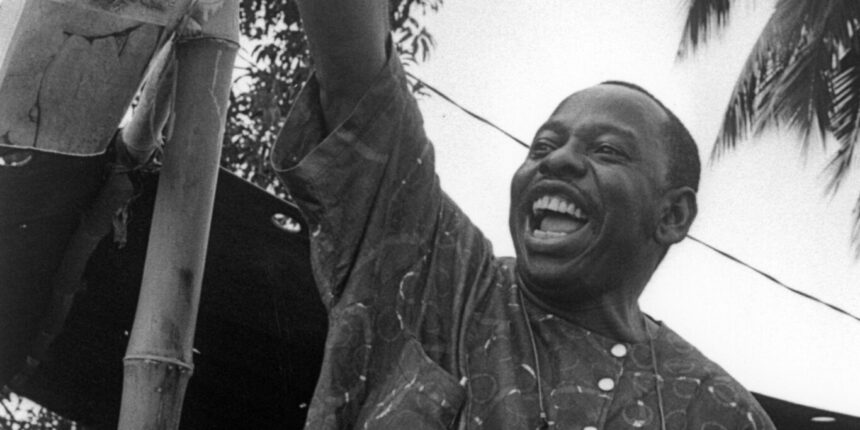
Ken Saro-Wiwa carried no weapon. He carried words—more dangerous than anger because they carried knowledge. For that, Nigeria’s military government sentenced him to death.
In the 1990s, while oil money flowed out of the Niger Delta, the Ogoni people were left with poisoned rivers, dead farmland, polluted air, and destroyed livelihoods. International oil giant Shell extracted billions from the land, but the people living there paid the real price.
One Man Who Refused to Stay Silent
Ken Saro-Wiwa—writer, television producer, and activist—became the voice of the Ogoni resistance. He exposed how oil extraction was devastating communities while political elites and foreign corporations looked away.
What made him dangerous was not violence. It was influence.
He organized peaceful protests that drew global attention to environmental destruction in Nigeria. For the first time, the world began asking hard questions about Shell’s operations and the military regime protecting them.
Then came the crackdown.
In 1995, under General Sani Abacha’s dictatorship, Ken Saro-Wiwa and eight other Ogoni activists who spoke for human rights were executed after a trial that Amnesty International, Human Rights Watch, and the UN condemned as deeply unfair.
The executions shocked the world. Nigeria was suspended from the Commonwealth. Governments condemned the regime. For years after, human rights groups accused Shell of complicity, arguing the company maintained close ties with the military authorities. Shell has repeatedly denied involvement, but the controversy has never disappeared.
Empty Chairs Across the Nation
And that is why Ken Saro-Wiwa’s story still matters. It forces us to ask uncomfortable questions:
What happens when profit becomes more valuable than human life?
Why are activists and journalists punished simply for telling the truth?
How often does the world only pay attention after the damage is done?
Today the pattern repeats. Poor citizens cannot afford to visit family. Students cry over transport costs at the park while oil companies post record profits. Traders cannot move goods from Kano to Lagos without spending hundreds of thousands on fuel and levies.
From Ogun to Kwara, Kogi to Borno, Oyo to every state, there are empty chairs where children should be learning, playing, and dreaming—not living in fear or captivity.
Ken Saro-Wiwa died at 54. But the questions he raised are still alive across Africa and beyond. His story is not just Nigerian history. It is a warning to the world.
Sources: Amnesty International, Human Rights Watch, United Nations Environmental Assessment of Ogoniland, historical records on the execution of Ken Saro-Wiwa and the Ogoni Nine.