
Pablo Picasso remains one of the most famous artists in history, he transformed modern art through bold ideas and constant experimentation with his paintings, sculptures, and drawings shaping the direction of 20th-century art.
Picasso was born on October 25, 1881, in Málaga. His father worked as an art teacher and noticed his son’s talent very early. Picasso began drawing as a child and quickly showed unusual artistic ability.
The family later moved to Barcelona, where Picasso studied at the School of Fine Arts. Teachers admired his skills because he mastered difficult techniques at a young age. Although he performed well in school, he disliked strict academic rules. Instead, he wanted to explore new artistic ideas. In the early 1900s, Picasso moved to Paris, the center of the European art world. Life there was difficult. He struggled with poverty and loneliness, and those experiences influenced his paintings.
Between 1901 and 1904, Picasso entered what became known as the Blue Period. During this time, he used mostly blue and blue-green colors in his work. His paintings often focused on sadness, isolation, and suffering.
One of the most important works from this era is The Old Guitarist. The painting shows a thin blind musician holding a guitar and captures deep emotion and human pain.
After the Blue Period, Picasso’s style became brighter and more cheerful. This stage became known as the Rose Period.
From 1904 to 1906, he painted circus performers, acrobats, and harlequins. He also used warmer colors such as pink and orange. These paintings reflected a more hopeful mood in his life and work.
In 1907, Picasso created Les Demoiselles d’Avignon, one of the most revolutionary paintings in art history.
The artwork shocked many people because it rejected traditional painting styles. Picasso used sharp angles, broken shapes, and abstract figures inspired partly by African masks.
Soon after, Picasso worked closely with Georges Braque to develop Cubism. This movement changed the way artists painted objects and people.
Cubism showed subjects from different angles at the same time. Instead of realistic images, artists used geometric shapes and fragmented forms. The movement later influenced architecture, sculpture, and modern design.
Pablo Picasso remains one of the most famous artists in history. He transformed modern art through bold ideas and constant experimentation. His paintings, sculptures, and drawings shaped the direction of 20th-century art.
Picasso was born on October 25, 1881, in Málaga. His father worked as an art teacher and noticed his son’s talent very early. Picasso began drawing as a child and quickly showed unusual artistic ability.
The family later moved to Barcelona, where Picasso studied at the School of Fine Arts. Teachers admired his skills because he mastered difficult techniques at a young age. Although he performed well in school, he disliked strict academic rules. Instead, he wanted to explore new artistic ideas.
In the early 1900s, Picasso moved to Paris, the center of the European art world. Life there was difficult. He struggled with poverty and loneliness, and those experiences influenced his paintings.
Between 1901 and 1904, Picasso entered what became known as the Blue Period. During this time, he used mostly blue and blue-green colors in his work. His paintings often focused on sadness, isolation, and suffering.
One of the most important works from this era is The Old Guitarist. The painting shows a thin blind musician holding a guitar and captures deep emotion and human pain.
After the Blue Period, Picasso’s style became brighter and more cheerful. This stage became known as the Rose Period.
From 1904 to 1906, he painted circus performers, acrobats, and harlequins. He also used warmer colors such as pink and orange. These paintings reflected a more hopeful mood in his life and work.
In 1907, Picasso created Les Demoiselles d’Avignon, one of the most revolutionary paintings in art history.
The artwork shocked many people because it rejected traditional painting styles. Picasso used sharp angles, broken shapes, and abstract figures inspired partly by African masks.
Soon after, Picasso worked closely with Georges Braque to develop Cubism. This movement changed the way artists painted objects and people.
Cubism showed subjects from different angles at the same time. Instead of realistic images, artists used geometric shapes and fragmented forms. The movement later influenced architecture, sculpture, and modern design.
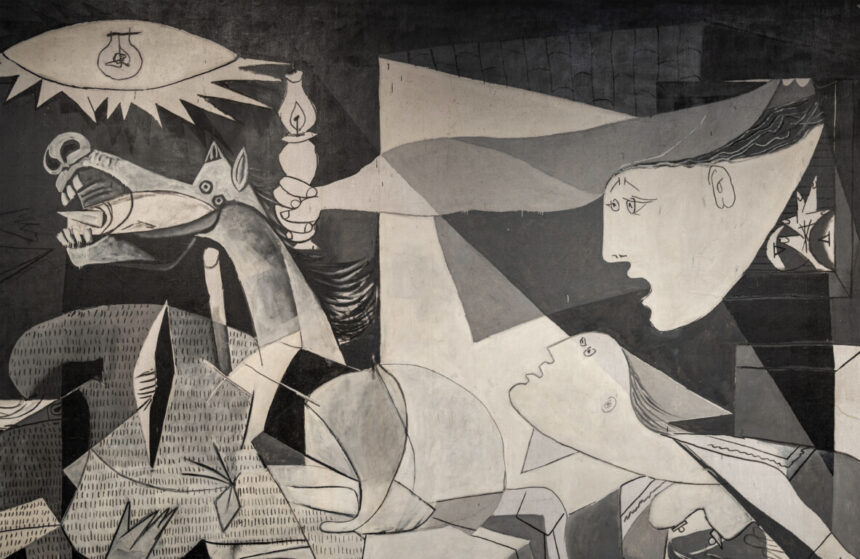
Among Picasso’s many masterpieces, Guernica stands out as his most powerful political work.
Picasso painted it in 1937 after the bombing of the Spanish town of Guernica during the Spanish Civil War. The massive black-and-white painting shows fear, destruction, and suffering.
The artwork became a global symbol against war and violence. Today, visitors can see it at the Museo Reina Sofía in Madrid.
Picasso created thousands of artworks during his long career. Some of his most famous paintings include Girl Before a Mirror and The Weeping Woman.
These paintings explored beauty, grief, identity, and emotion. Picasso constantly changed his style, which kept his work fresh and innovative.
Picasso died in 1973 at the age of 91. By then, he had become one of the world’s most celebrated artists.
Today, his works appear in major museums across the world, including the Museum of Modern Art and the Art Institute of Chicago.
More importantly, Picasso changed the direction of modern art forever. His bold creativity encouraged artists to break rules and experiment with new ideas. Even decades after his death, his influence remains visible in art, design, and popular culture.
Among Picasso’s many masterpieces, Guernica stands out as his most powerful political work.
Picasso painted it in 1937 after the bombing of the Spanish town of Guernica during the Spanish Civil War. The massive black-and-white painting shows fear, destruction, and suffering.
The artwork became a global symbol against war and violence. Today, visitors can see it at the Museo Reina Sofía in Madrid.
Picasso created thousands of artworks during his long career. Some of his most famous paintings include Girl Before a Mirror and The Weeping Woman.
These paintings explored beauty, grief, identity, and emotion. Picasso constantly changed his style, which kept his work fresh and innovative.
Picasso died in 1973 at the age of 91. By then, he had become one of the world’s most celebrated artists.
Today, his works appear in major museums across the world, including the Museum of Modern Art and the Art Institute of Chicago.
More importantly, Picasso changed the direction of modern art forever. His bold creativity encouraged artists to break rules and experiment with new ideas. Even decades after his death, his influence remains visible in art, design, and popular culture.