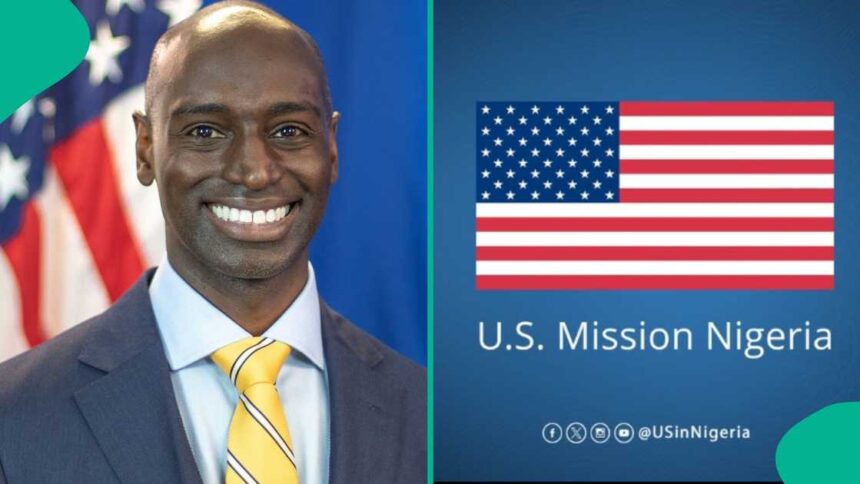
The United States has named Brandon Hudspeth as the new Consul General at the U.S. Consulate General in Lagos.
The U.S. Mission in Nigeria announced his appointment on Friday, August 14, 2026.
Hudspeth will serve as the senior U.S. government representative across 17 states in southern Nigeria. He succeeds Rick Swart, who retired from the U.S. Foreign Service in July 2026.
Hudspeth is returning to Nigeria with previous experience in the country.
From 2020 to 2022, he served as the Political-Economic Section Chief at the U.S. Consulate General in Lagos.
Before his new appointment, Hudspeth served as Deputy Chief of Mission at the U.S. Embassy in Namibia.
He has also held diplomatic positions in the Philippines, Mali, Cuba and Afghanistan. In addition, he has served in several roles in Washington.
Therefore, his return to Lagos gives him previous knowledge of Nigeria’s political and economic environment.
Speaking about his appointment, Hudspeth said he was honoured to return to Lagos.
He also highlighted the strong relationship between Nigerians and Americans. In addition, he said he plans to reconnect with old contacts and develop new partnerships during his tenure.
According to him, stronger cooperation between both countries can create opportunities for shared prosperity.
Meanwhile, Hudspeth has identified trade and investment, technology, innovation and the creative industries as key areas of interest.
These sectors could provide more opportunities for Nigerian and American businesses to work together.
Furthermore, stronger partnerships in technology and innovation could support new investments and business opportunities in Nigeria.
The new consul general will therefore play an important role in advancing economic and diplomatic relations between both countries.
Hudspeth’s appointment also comes at a time when the U.S. Consulate in Lagos has taken on additional responsibilities.
From August 1, 2026, routine U.S. visa services for Nigerians were transferred from the U.S. Embassy in Abuja to the U.S. Consulate General in Lagos.
As a result, the Lagos consulate has become an even more important point of contact between Nigerians and the United States.
Hudspeth’s return could strengthen ongoing cooperation between Nigeria and the United States.
In particular, his focus on trade, investment, technology and the creative sector could create more opportunities for businesses and young innovators.
However, the success of his tenure will depend on how these priorities translate into practical partnerships.
For now, the new consul general is expected to deepen engagement with Nigerian officials, businesses and other stakeholders across southern Nigeria.