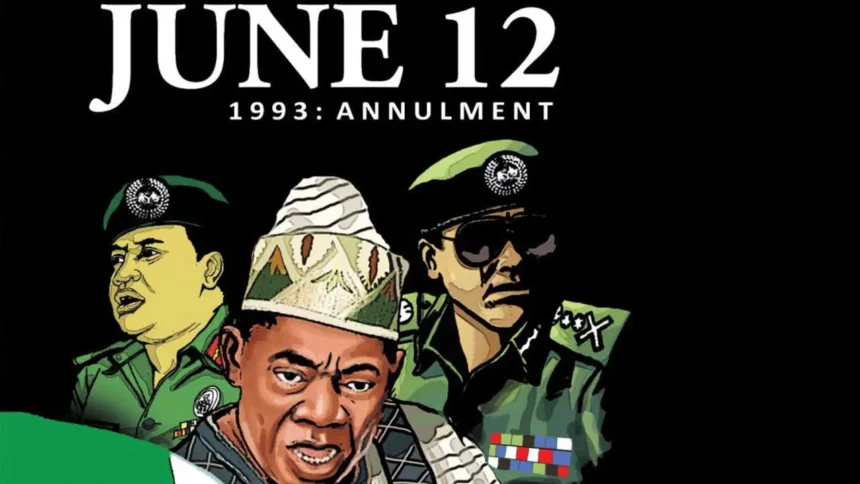
On June 12, 1993, Nigeria held what many political analysts still describe as the freest and fairest election in the country’s history.
More than 14 million Nigerians across ethnic, religious and regional lines went out to vote in an election that was expected to mark the end of military rule and return the country to democratic governance.
The presidential contest was between Moshood Kashimawo Olawale Abiola of the Social Democratic Party and Bashir Tofa of the National Republican Convention.
What made the election remarkable was that Nigerians voted beyond ethnicity and religion.
Abiola, a Muslim from the South-West, picked another Muslim, Babagana Kingibe, from the North-East as his running mate. Despite concerns over a Muslim-Muslim ticket, Nigerians focused more on competence and national unity.
Early results showed Abiola was clearly leading.
He reportedly won 19 of Nigeria’s then 30 states, including Kano, the home state of his opponent, Bashir Tofa.
Unofficial figures showed Abiola securing about 8.1 million votes, representing around 58 percent of total votes cast, while Tofa polled about 5.9 million votes.
But before the final official declaration could be made, the military government led by General Ibrahim Babangida annulled the election on June 23, 1993.
The decision shocked the nation.
It triggered nationwide protests, civil unrest and international condemnation.
The annulment plunged Nigeria into one of its worst political crises.
Many Nigerians saw it as a direct attack on democracy and the people’s will.
Abiola later declared himself president in 1994 and was arrested by the military government.
He spent four years in detention without trial.
On July 7, 1998, just weeks after the death of General Sani Abacha, Abiola died in custody under controversial circumstances.
His death intensified demands for democratic rule.
By May 29, 1999, Nigeria returned to civilian rule, ending nearly 16 years of uninterrupted military dictatorship.
In 2018, President Muhammadu Buhari officially recognised June 12 as Nigeria’s Democracy Day, replacing May 29.
Today, June 12 stands as more than just a date.
It is a symbol of sacrifice, electoral justice and the struggle for democratic freedom.
Thirty-three years later, the lesson remains clear: democracy only survives when the people’s votes are respected.