
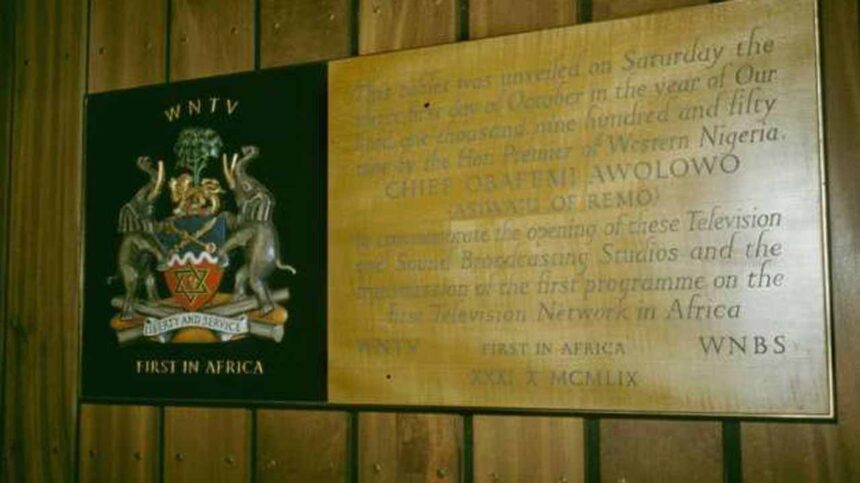
Television has shaped how Nigerians receive news, enjoy entertainment, follow sports and understand the world around them for more than six decades. The journey began with a single television station in Ibadan in 1959. Since then, Nigeria has moved from black and white screens and limited channels to private broadcasting, satellite television, digital platforms and streaming services that allow viewers to watch content almost anywhere.
THE BEGINNING IN IBADAN
Nigeria entered the television age on October 31, 1959, when Western Nigeria Television, popularly known as WNTV, began broadcasting from Ibadan. The Western Region government, led by Premier Chief Obafemi Awolowo, established the station with the support of his Minister of Information, Chief Anthony Enahoro.
The station did more than entertain people. The government saw television as a powerful tool for education and public information. WNTV carried news, educational programmes, cultural content and entertainment to viewers across the region.
Its arrival changed the way Nigerians experienced information. Radio had already become an important part of everyday life, but television added pictures to the experience. Viewers could now watch events, performances and personalities instead of relying only on sound.
TELEVISION SPREADS ACROSS NIGERIA
WNTV soon inspired the growth of television broadcasting in other parts of the country. Regional governments established stations that reflected the culture, language and interests of their communities.
Television gradually became part of public life. Stations covered political events, promoted local traditions, aired educational programmes and created opportunities for Nigerian performers, journalists and broadcasters.
The regional stations also gave different parts of Nigeria a stronger voice. Viewers could see local festivals, music, drama and community events on their screens. Television therefore became more than a source of entertainment. It became a way for Nigerians to see themselves represented.
THE RISE OF NTA
The Federal Government later moved toward a national television network. In 1977, the Nigerian Television Authority, known as NTA, emerged and expanded television coverage across the country.
NTA became a major part of Nigerian broadcasting. Its news programmes reached households across the country, while sports, drama, children’s programmes and entertainment attracted large audiences.
For many Nigerians, NTA presenters, journalists, actors and programme hosts became familiar faces. Television gave these personalities a direct connection with audiences and helped create a new generation of broadcasting professionals.
WHEN TELEVISION BECAME A FAMILY AFFAIR
As television sets became more common in Nigerian homes, they changed how families spent their evenings. Parents, children and neighbours often gathered around one screen to watch the news, football, drama series, films and comedy.
Television also created shared national experiences. Major sporting events, political developments and important national occasions brought millions of Nigerians together.
The medium also created jobs. Actors, presenters, journalists, producers, directors, camera operators, editors and technicians found new opportunities as the industry expanded.
PRIVATE BROADCASTING CHANGES THE INDUSTRY
For many years, government owned stations dominated Nigerian television. The arrival of private broadcasting changed that landscape.
Private television stations introduced new programming styles and gave audiences more choices. They competed for viewers, advertisers and talented professionals.
The competition also encouraged broadcasters to experiment with different forms of entertainment and news. Viewers could now choose between stations with different personalities, programmes and approaches to storytelling.
This period helped create a more diverse television industry and gave Nigerian audiences more control over what they watched.
SATELLITE TELEVISION OPENS THE WORLD
Satellite and pay TV services brought another major change. Nigerian viewers gained access to international news, sports, films, documentaries and entertainment channels from around the world.
Sports became a major attraction. Football fans could follow international leagues and major competitions from their homes, while families gained access to a wider range of films and children’s programmes.
At the same time, Nigerian content continued to grow. Nollywood became a major force in African entertainment, and television helped Nigerian films, actors and stories reach wider audiences.
THE DIGITAL REVOLUTION
The internet changed television once again. Viewers no longer had to depend entirely on a television set or wait for a programme at a particular time.
News organizations began publishing video reports online. Television stations started using websites and social media to reach audiences. YouTube and other digital platforms created new spaces where Nigerian creators could produce and distribute their own content.
The smartphone pushed this transformation even further. Nigerians can now watch live news, films, interviews, sports and entertainment from a device that fits into their hands.
STREAMING CHANGES HOW WE WATCH
Streaming has changed the relationship between audiences and television. Viewers can now choose what they want to watch and when they want to watch it.
Instead of waiting for a programme to start at a fixed time, audiences can watch episodes on demand. Streaming platforms have also created opportunities for Nigerian filmmakers and producers to reach viewers outside the country.
This shift has forced traditional broadcasters to rethink their strategies. Television stations now compete not only with other stations but also with streaming services, YouTube creators, podcasts and social media platforms.
THE FUTURE OF NIGERIAN TELEVISION
Nigeria’s television industry now stands at another turning point. Artificial intelligence, digital production, streaming and social media continue to change how broadcasters create and distribute content.
Yet television’s basic role remains strong. It informs, educates, entertains and connects people.
From the first WNTV transmission in Ibadan to today’s digital screens, Nigeria’s television journey mirrors the country’s wider technological and cultural changes. The industry has moved from a few regional stations to a crowded digital space where audiences have more choices than ever.
What began on October 31, 1959, as a pioneering television service has grown into an industry that reaches Nigerians through traditional television, satellite services, websites, social media and streaming platforms.
The screen may have changed, but the story continues. Nigeria’s television journey is no longer limited to television sets. It now lives wherever Nigerians go online.