The Central Bank of Nigeria (CBN) and the Federal Ministry of Finance have signed a Memorandum of Understanding to improve economic policy coordination.
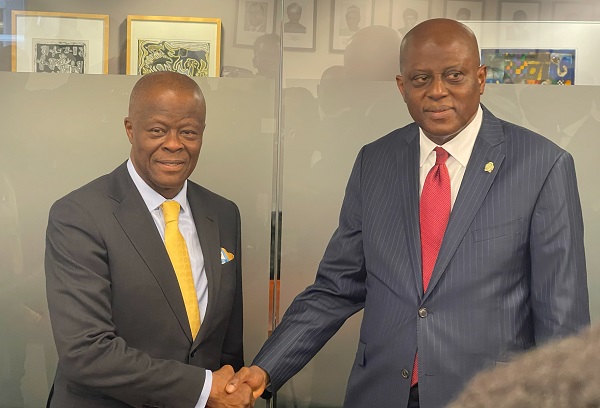
CBN Governor Olayemi Cardoso and Finance Minister Taiwo Oyedele signed the agreement in Abuja. According to both institutions, the agreement will improve economic management and support stability and sustainable growth.
Speaking at the signing, Cardoso said fiscal and monetary policies must work together to support the economy.
Fiscal policy covers government spending, taxation and borrowing. Meanwhile, monetary policy focuses on interest rates, money supply and price stability.
With the new agreement, both institutions will have a clearer framework for cooperation. In addition, it will support regular meetings, information sharing and policy discussions.
The agreement covers several areas of economic management. These include government cash management, debt planning, liquidity forecasts and macroeconomic analysis.
As a result, the CBN and Finance Ministry will share information more regularly. They will also discuss economic policies and possible risks.
Cardoso said better coordination will help both institutions make more informed decisions. At the same time, the arrangement is expected to improve the way both agencies respond to economic challenges.
Government spending and central bank policies can affect businesses and households. For example, government borrowing can influence liquidity and interest rates.
Similarly, monetary policy can affect the cost of borrowing. Changes in exchange rates and tariffs can also affect prices and government revenue.
For this reason, coordination between fiscal and monetary authorities remains important for economic planning.
The agreement comes as the CBN continues its move towards an inflation-targeting framework. In this regard, Cardoso said the framework needs support from fiscal policy to work effectively.
He added that cooperation between the CBN and Finance Ministry will help create a more stable economic environment.
The two institutions have worked together for years on inflation, government borrowing and other economic issues. However, the new agreement provides a more structured framework for that cooperation.
For ordinary Nigerians, the agreement may not bring immediate changes to the prices of goods and services.
Instead, its impact will depend on how both institutions implement the new framework. In the coming months, Nigerians will be watching key economic indicators.
These include inflation, interest rates, exchange rates and government borrowing. Meanwhile, businesses will also be watching the cost of credit and the wider economic environment.
Ultimately, the government wants to improve policy coordination and create conditions for sustainable economic growth.
For Nigerians, however, the key test will be whether the agreement leads to greater economic stability, lower inflation and a more predictable business environment.