President Bola Ahmed Tinubu has declared the elimination of child labour a national development priority, setting a 2030 target for ending the practice across Nigeria.
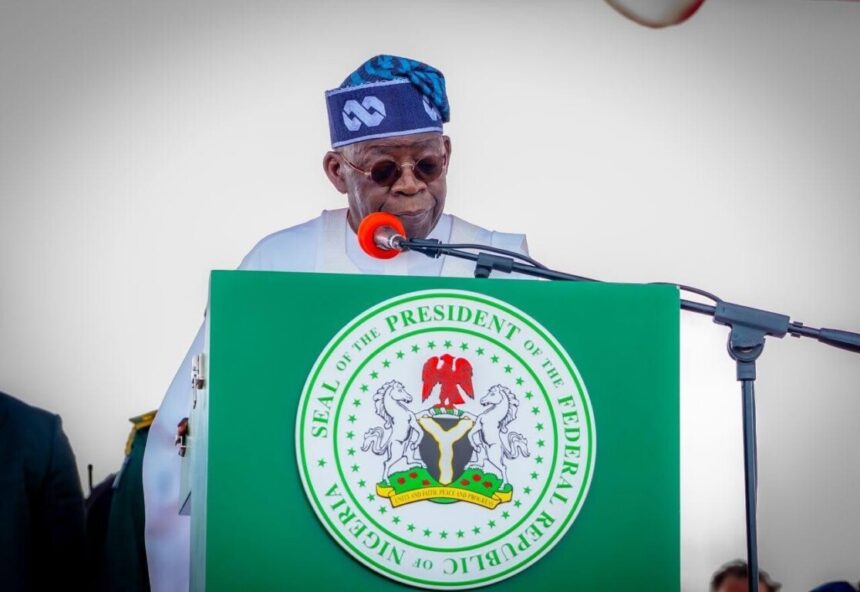
Tinubu made the declaration on Wednesday in Abuja at the National Dialogue on the Implementation of Nigeria’s National Child Labour Policy and National Action Plan, 2026–2030, where he also launched the 2024 National Child Labour Survey Report.
The President, represented by the Secretary to the Government of the Federation, Senator George Akume, said the Federal Government would intensify efforts to address the social and economic conditions that push children into exploitative labour.
He stressed that child labour has consequences beyond the workplace, affecting education, poverty reduction, economic growth, food security, human capital development and national security.
“Every nation is judged by how well it protects its children. A child who is forced into labour instead of attending school loses more than an education. That child loses opportunities, confidence, health and the chance to fully contribute to national development,” Tinubu said.
He added that the Federal Government viewed the elimination of child labour not simply as a labour issue but as a broader national development priority.
“For this reason, the Federal Government considers the elimination of child labour not merely as a labour issue, but as a national development priority. It is linked to education, social protection, economic growth, poverty reduction, food security, human capital development and national security,” he said.
Tinubu identified access to quality education as one of the major safeguards against child labour, saying his administration was implementing reforms targeting out-of-school children, education data, teacher development and skills acquisition.
He also highlighted the Renewed Hope National Home-Grown School Feeding Programme as part of efforts to improve school attendance while reducing hunger among children from vulnerable households.
According to him, social protection programmes, including the NG-CARES Additional Financing Programme and the Human Capital Opportunities for Prosperity and Equity Programme, are being implemented to strengthen household resilience and support parents in securing decent livelihoods.
The President said tackling the root causes of child labour would require coordinated action from government institutions, development partners, employers, communities and other stakeholders.
He called for sustained implementation of the National Child Labour Policy and National Action Plan 2026–2030 to ensure that children are protected from exploitation and given opportunities to access education and develop their potential.
Meanwhile, Akume said Nigeria’s expanding digital identity system was strengthening access to the country’s growing digital economy.
Speaking separately at the National Day of Identity 2026 on Wednesday, the SGF described the National Identity Management Commission as one of the Tinubu administration’s “clearest delivery stories.”
He said verified digital identity was increasingly supporting access to banking, telecommunications, social protection and cross-border trade.
The Federal Government said strengthening social protection, education and economic opportunities remains central to its efforts to address the conditions that contribute to child labour and improve the welfare of Nigerian children.