
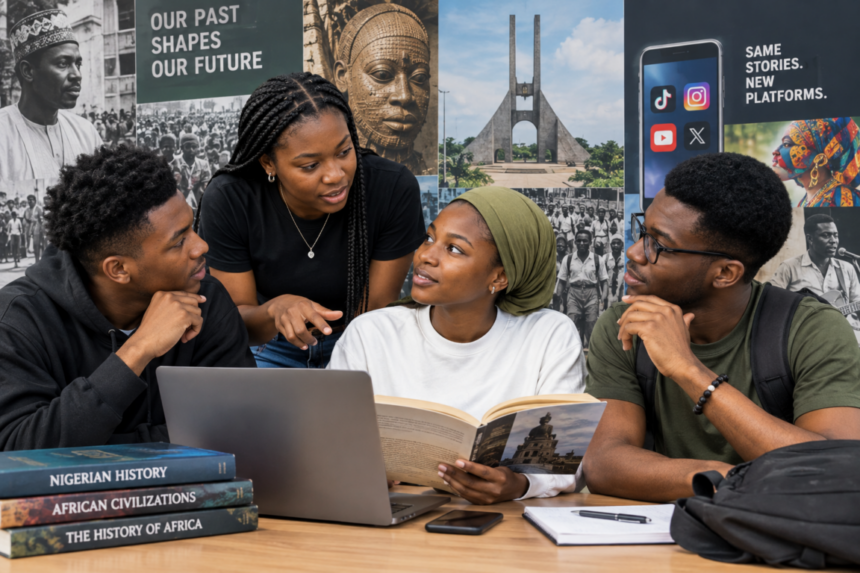
For a generation raised on smartphones, short videos and rapidly changing digital trends, history may seem like a subject that belongs to the past.
But beyond the classroom, young people continue to encounter it in music, films, fashion, family stories, social media and conversations about identity. The question is not simply whether Generation Z cares about history, but whether history is being presented in ways that speak to their experiences.
In Nigeria, where the past continues to shape politics, culture, language and national identity, understanding history remains important, yet many young people may struggle to connect with lessons that focus heavily on dates, names and events without explaining why they matter today.
As digital platforms change how information reaches audiences, a new question emerges: Is Gen Z losing interest in history, or is it discovering new ways to engage with it?
Beyond Dates, Names and Textbooks
For generations, schools have served as one of the main places where young people encounter history. Students learn about independence, colonialism, traditional kingdoms, major conflicts and influential personalities.
However, the way these lessons are delivered can influence whether students see history as meaningful or simply another subject to pass.When history becomes a list of dates to memorise, students may struggle to understand its relevance.
But when lessons connect past events to present-day realities, the subject can become more engaging. A discussion about Nigeria’s political development, for example, can lead to questions about democracy, leadership, inequality and the country’s future.
How Social Media Is Changing Historical Learning
Social media has created new opportunities for young people to encounter historical information. Platforms such as TikTok, YouTube and Instagram allow creators to explain historical events through short videos, animations, photographs and storytelling. A young person who may never open a history textbook voluntarily might still watch a video about an ancient civilisation, a forgotten activist or a major event in African history.
This access, however, comes with challenges. Social media can simplify complicated events, repeat inaccurate claims or present historical figures without proper context. While digital storytelling can make history more accessible, young people also need reliable sources and critical-thinking skills to distinguish historical evidence from attractive but misleading content.
History Lives in Music, Fashion and Culture
History does not exist only in museums or classrooms. It lives in the music people listen to, the languages they speak, the food they eat and the clothes they wear. For many young Nigerians, cultural identity offers a more personal entry point into the past. Afrobeats, traditional fabrics, indigenous languages, festivals and Nollywood productions often carry stories about migration, resistance, family, religion and social change.
A young person may not describe themselves as a history enthusiast, yet still connect deeply with the heritage represented in their culture. This suggests that interest in history may take forms that traditional education does not always recognise.
Why Nigerian History Still Matters
Nigeria’s history contains stories that can help young people understand the country they live in. The Aba Women’s War, the rise of precolonial kingdoms, the struggle for independence, the Nigerian Civil War and the country’s democratic transitions all offer opportunities to examine how the past continues to influence the present.These stories also raise questions that remain relevant to Gen Z: Who has the power to tell history?
Whose experiences receive attention? What happens when communities remember the same event differently? Exploring such questions can help young people see history not as a distant subject, but as a living conversation about identity, justice and national development.
A Generation Looking for Relevance
Gen Z’s relationship with history is not uniform. Some young people actively seek documentaries, historical books, podcasts and educational content, while others may show little interest in the subject.
Their engagement can depend on how history is taught, the availability of resources, personal background and whether the stories connect with their lives.Rather than describing an entire generation as indifferent, it may be more useful to ask what kinds of history attract its attention.
Stories about resistance, cultural identity, social movements, technology and ordinary people can create connections that a purely textbook-based approach may not achieve.
Making History More Engaging for Gen Z
Educators, museums, media organisations and cultural institutions can explore more creative ways to present history. Interactive exhibitions, documentaries, podcasts, digital archives, historical fiction, visual storytelling and conversations with older generations can help bring the past closer to young audiences.
The goal should not be to replace accuracy with entertainment. Instead, engaging storytelling should work alongside careful research, context and credible sources.
When young people can ask questions, examine evidence and relate historical events to their own experiences, they are more likely to see history as something worth exploring.
The Past Is Still Part of the Future
Gen Z may not always engage with history in traditional ways, but that does not mean the past has lost its value. Young people continue to debate historical events, celebrate cultural traditions, revisit old music, question national narratives and use digital platforms to share stories that might otherwise remain forgotten.
The challenge is to make history accessible without making it shallow, and relevant without distorting its facts. Perhaps the better question is not whether Gen Z cares about history, but whether society is giving young people enough meaningful opportunities to connect with it.
After all, the past is not simply what happened before. It is part of the explanation for who we are, how we live and the future we hope to build.