
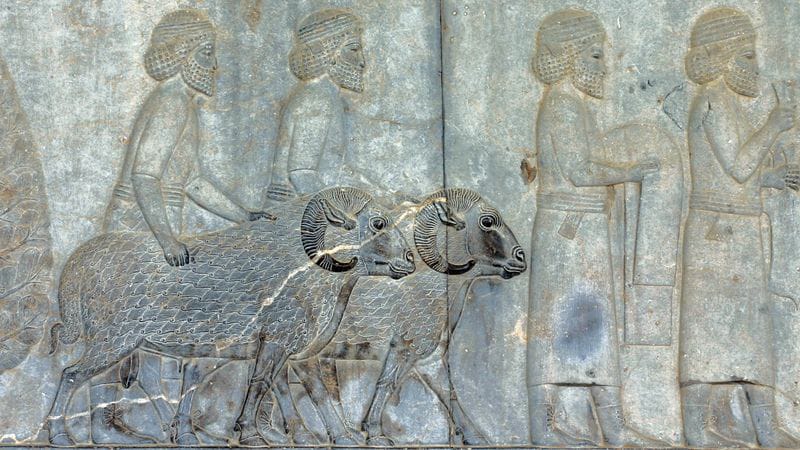
Long before skyscrapers transformed modern cities and technology connected the world at the touch of a screen, some of humanity’s greatest innovations emerged from a land between two rivers.
This was Mesopotamia.
The name comes from the ancient Greek words mesos, meaning “between,” and potamos, meaning “river.” It described the fertile region between the Tigris and Euphrates rivers in Southwest Asia.
Today, Mesopotamia is not a country or a single defined territory. The ancient region corresponds largely to modern-day Iraq, with parts extending into Syria, southeastern Turkey and western Iran.
At the heart of this historic region are the Tigris and Euphrates, two rivers that helped make agriculture and permanent settlement possible.
THE CRADLE OF CIVILIZATION
Mesopotamia is often called the “cradle of civilization” because it witnessed some of the earliest developments that transformed human societies.
Communities that once depended heavily on hunting and gathering began settling permanently, cultivating crops and developing irrigation systems.
As farming became more productive, populations grew.
And as populations grew, cities emerged.
One of the most famous was Uruk, an ancient Sumerian city often regarded as one of the world’s earliest major urban centres.
These cities became centres of trade, religion, government and culture.
But larger and more complex societies needed a way to keep records.
That led to one of Mesopotamia’s greatest contributions to human history: writing.
WHEN HUMANS BEGAN WRITING
The Sumerians developed cuneiform, one of the earliest known writing systems.
Using a reed-like instrument, scribes pressed wedge-shaped marks into wet clay tablets. What began largely as a way to record economic transactions eventually became a system for documenting laws, literature, administration, religion and everyday life.
Thousands of years later, these tablets continue to provide historians with remarkable insight into ancient Mesopotamian society.
KINGDOMS THAT SHAPED HISTORY
Mesopotamia was home to several powerful civilizations, including the Sumerians, Akkadians, Babylonians and Assyrians.
Among the most famous rulers was Hammurabi, king of Babylon.
He is remembered for the Code of Hammurabi, one of the best-known surviving collections of laws from the ancient world.
The code dealt with issues including property, trade, family relationships and personal injury, revealing how ancient societies attempted to establish rules and maintain order.
MORE THAN WRITING AND LAWS
Mesopotamian innovation extended far beyond writing.
The region saw important developments in mathematics, astronomy, architecture, irrigation and technology.
The wheel also emerged in ancient Mesopotamia during the 4th millennium BCE, although historians continue to study exactly how and where its earliest forms developed.
Ancient Mesopotamians also developed sophisticated mathematical and astronomical systems, carefully observing the movement of celestial bodies and creating methods of measurement that influenced later civilizations.
What makes Mesopotamia particularly remarkable is how these developments connected.
Agriculture supported larger populations.
Larger populations produced cities.
Cities required administration.
Administration required writing, record-keeping and laws.
Together, these developments helped create increasingly complex societies.
MESOPOTAMIA TODAY
The ancient kingdoms are gone, but the land itself remains.
Much of historic Mesopotamia lies within modern Iraq, where the Tigris and Euphrates continue to flow through the country.
The region has experienced dramatic political, environmental and social changes over thousands of years, but its rivers remain central to life.
Modern Iraq is therefore home to landscapes that once witnessed the rise of Sumer, Babylon and Assyria.
Places such as Babylon, Ur and Nineveh remain important archaeological sites, offering physical links to civilizations that existed thousands of years ago.
Yet the modern region also faces challenges that would have been unimaginable to its ancient inhabitants, including water scarcity, environmental pressures, population growth and the effects of conflict.
The Tigris and Euphrates once the foundation of Mesopotamian prosperity remain crucial sources of water and agriculture today.
A LEGACY THAT REFUSES TO DISAPPEAR
Mesopotamia’s ancient cities may have fallen, its kingdoms may have disappeared and its rulers may have become historical figures.
But its influence remains woven into modern civilization.
Writing. Cities. Laws. Agriculture. Mathematics. Administration.
These are not simply relics of a distant past. They are foundations upon which later civilizations continued to build.
And perhaps that is the most fascinating story about Mesopotamia.
It was not simply a place where ancient people lived between two rivers.
It was a place where humanity experimented with new ways of living, governing, recording knowledge and building societies.
Thousands of years later, those experiments still shape the world we live in.
Between the Tigris and Euphrates, civilization found its footing m,and its story continues today.