Samoan Culture is one of the world’s oldest and most vibrant cultural traditions, rooted in family, respect, community, and centuries-old customs, Samoan culture continues to thrive through its traditional tatau tattoos, the Fa’a Samoa way of life, colourful festivals, and rich Polynesian heritage.
From the sacred tatau to the annual Teuila Festival, Samoa proudly preserves traditions that continue to inspire people around the world.
Fa’a Samoa: The Samoan Way of Life
At the heart of Samoan society is Fa’a Samoa, meaning “The Samoan Way.” It values family, respect, service, and community above individual interests.
Families work together and support one another. Village chiefs guide community affairs, while customs influence daily life. These traditions continue to unite Samoan communities at home and abroad.
The Meaning Behind the Tatau
The traditional tattoo, known as tatau, remains one of Samoa’s strongest cultural symbols. It represents honour, courage, responsibility, and identity.
Samoans have practiced traditional tattooing for more than 2,000 years. Many young people continue the tradition today as a way to honour their ancestors and preserve their heritage.
Men wear the pe’a, an elaborate tattoo that stretches from the waist to the knees. Women receive the malu, a lighter design that symbolizes grace, service, and cultural pride.
Traditionally, young men received the pe’a between the ages of 14 and 18. Elders chose this period because the body had reached full growth.
The word tatau means correctness and precision. It reflects the balanced geometric designs that define Samoan tattoo art. Many historians believe the English word “tattoo” came from the Samoan word tatau.
A Tradition That Demands Courage
Receiving a traditional tattoo requires strength and determination. A master tattooist, called a tufuga ta tatau, performs the work using handmade tools.
The artist crafts the tools from bamboo, tortoiseshell, and small bone combs. He dips them into black ink made from burnt candlenut soot before tapping them into the skin with a wooden mallet.
Completing a pe’a often takes several days or weeks. The recipient rests between sessions to allow the skin to heal.
The process tests both physical endurance and mental strength. Many Samoans view the experience as an important rite of passage.
Modern tattoo designs still feature ancient geometric patterns. Artists also include symbols such as the va’a (canoe), fale (traditional house), kava bowl, fish, shells, birds, waves, and centipedes.
Celebrating Culture at the Teuila Festival
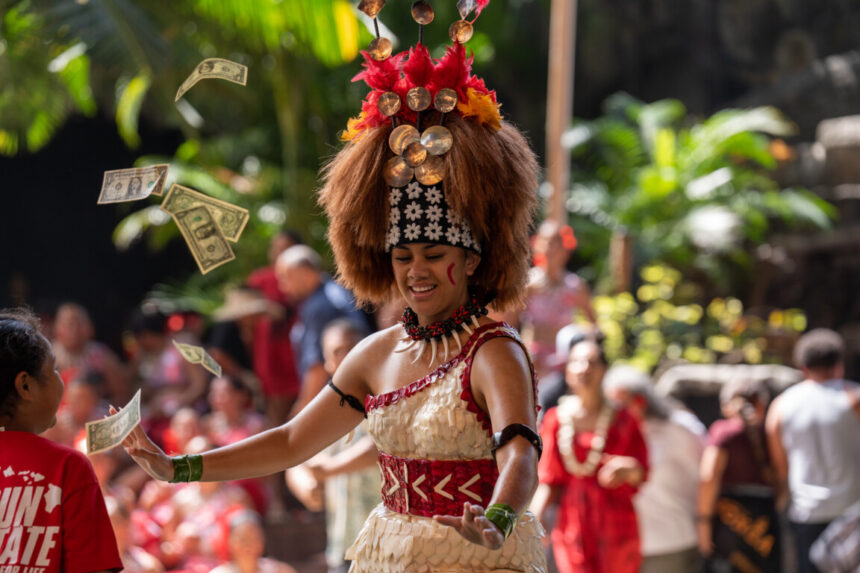
Every September, Samoa celebrates its culture during the famous Teuila Festival in the capital city of Apia.
Named after Samoa’s vibrant red Teuila flower, the festival attracts visitors from around the world. It showcases the country’s traditions through music, dance, crafts, food, and sporting events.
One of the biggest attractions is the spectacular Siva Afi, or fire knife dance. Skilled performers spin and throw flaming knives with speed, precision, and confidence.
Visitors also enjoy wood carving, weaving, tattoo demonstrations, canoe racing, and cultural exhibitions. Many gather to watch the preparation of the traditional umu, an underground oven that produces authentic Samoan meals.
The festival ends with the crowning of Miss Samoa. Judges recognize contestants for their cultural knowledge, leadership, confidence, and commitment to their communities.
Keeping a Proud Heritage Alive
The Teuila Festival offers more than entertainment. It brings generations together and strengthens national identity. The celebration also introduces visitors to the values that define Samoan society.
Today, Samoa continues to protect its traditions while embracing the modern world. Its language, festivals, and tattooing practices keep its rich heritage alive.
Every tatau, every dance, and every celebration tells the story of a people who remain deeply connected to their history. Through these traditions, Samoa proudly shares its cultural legacy with the world.