
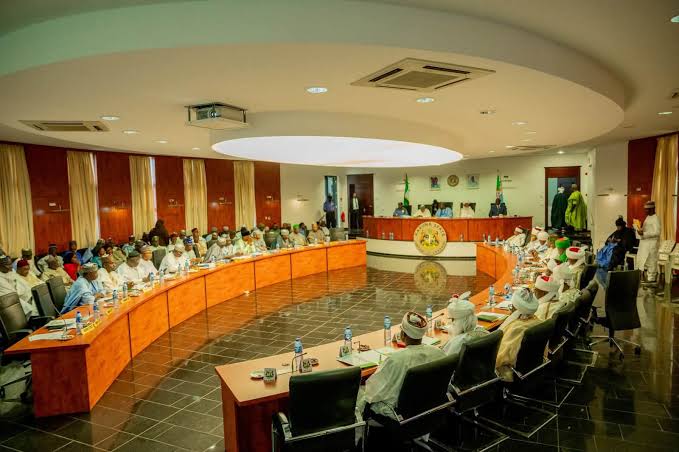
The decision by the 19 Northern Governors to establish the Northern Nigeria Security Trust Fund (NNSTF), accompanied by a commitment of ₦1 billion monthly, has been celebrated as a landmark intervention against the escalating insecurity ravaging Northern Nigeria. In principle, regional cooperation on security is both timely and necessary. Decades of terrorism, banditry, kidnapping, communal violence and farmer-herder conflicts have inflicted enormous human and economic costs on the region.
Any serious initiative that promises to strengthen intelligence, logistics and inter-state collaboration deserves careful consideration.
Nevertheless, public policy should be judged not merely by its promises but by its context, timing and implementation. It is against this backdrop that the NNSTF invites legitimate scrutiny.
My concern is that the initiative appears to coincide with an increasingly active political season. A significant number of the governors promoting the fund are expected to seek second-term mandates in 2027, while others completing their constitutional tenure are widely viewed by political observers as potential contenders for Senate seats or other federal appointments. Although these political ambitions are entirely legitimate in a democratic system, they inevitably raise questions about whether the NNSTF is motivated solely by public interest or whether it also serves broader political objectives.
Political scientists have long argued that governments often introduce high-profile public initiatives before elections to reinforce their image as responsive and effective. This phenomenon, sometimes described as political signalling or credit claiming, enables political actors to associate themselves with solutions to pressing public problems. Security, being the foremost concern of Northern Nigeria today, naturally becomes one of the most powerful issues through which political legitimacy can be cultivated.
Northern Nigeria has endured years of devastating insecurity. Thousands have been killed, millions displaced, schools have been shut, agricultural productivity has declined, and local economies have been severely disrupted. During much of this period, citizens frequently complained about inadequate coordination among state governments despite the constitutional responsibility of governors as Chief Security Officers of their states. Against this historical background, the sudden emergence of an ambitious regional security framework inevitably provokes public scepticism.
This scepticism does not imply that the NNSTF is destined to fail. Rather, it reflects the accumulated disappointment arising from previous committees, intervention programmes and security summits whose announcements generated optimism but whose long-term impact proved limited. Consequently, citizens are justified in demanding evidence rather than assurances.
Furthermore, there is a legitimate concern that the NNSTF could function as a political instrument for strengthening the governors’ collective relationship with the Presidency. Demonstrating commitment to tackling insecurity may enhance their national political relevance and position them favourably within evolving political alignments ahead of the 2027 electoral cycle. Whether intentional or not, such perceptions can undermine public confidence if transparency and accountability are lacking.
The success of the NNSTF will therefore depend not on the magnitude of monthly financial contributions or the prominence of its governing board, but on measurable outcomes. Citizens should expect publicly available audited accounts, independent oversight, clearly defined performance indicators, periodic evaluation reports and tangible improvements in security across the region.
Ultimately, security cannot be reduced to political symbolism. It must translate into safer highways, thriving rural communities, reopened schools, productive farmlands and the safe return of displaced families. If the NNSTF delivers these outcomes, history will judge it as a transformative intervention. If it merely becomes another institution producing meetings, communiqués and political headlines without improving the lives of ordinary people, it will reinforce the growing belief that public security has once again been subordinated to political ambition.
As citizens and political analyst , our responsibility is neither to celebrate nor condemn prematurely, but to insist that public institutions be evaluated by results, transparency and accountability. In a region where insecurity has become an existential challenge, anything less would be a profound disservice to the people of Northern Nigeria.
Cliff Stanley
Political Scientist / Public Theologician.
Cliffstanley3@gmail.com 07032826319.