Residents of Karofin Madaki in Bauchi metropolis have been left in shock following the killing of a respected Islamiyyah teacher, Rilwanu Dauda.
Dauda, 42, was allegedly killed on Sunday after a dispute over political posters with two brothers suspected to be political thugs.
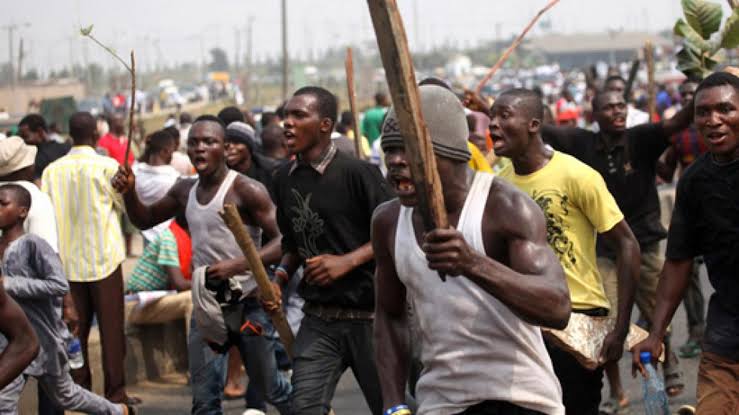
According to reports, the incident began around 10 a.m. when Dauda asked the suspects to remove political posters pasted on a billboard beside his family home. The request reportedly led to a confrontation.
His elder brother, Hamza Dauda, alleged that the younger suspect struck the cleric with a stick while the elder brother hit him on the head with a knife. He said bystanders intervened and forced the suspects to leave the scene after Dauda collapsed.
Hamza further claimed that one of the suspects later returned armed with a knife, confronted Dauda at the family’s gate, and stabbed him in the stomach before fleeing.
“People only realised he was bleeding after the attacker had escaped. He was rushed to the Bauchi State Specialist Hospital but died on the way,” Hamza said.
He described his late brother as a peaceful man who rarely had disagreements with anyone and appealed to the government and security agencies to ensure those responsible are brought to justice.
“My brother was not a troublesome person. He was killed unjustly, and we want justice. The perpetrators should be arrested and prosecuted,” he said.
Days after the incident, sympathisers continued to visit the family’s residence to offer condolences.
Residents who spoke about the late cleric described him as humble, generous, and devoted to his faith and community.
One resident, Muhammad Aminu, lamented what he described as the growing disregard for human life, saying minor disagreements now too often end in violence.
“I still find it difficult to believe that Malam Rilwanu was killed. He was peaceful and related well with everyone. The fact that one of the attackers returned after the initial confrontation suggests there may have been more to the incident,” he said.
Another resident, Musa Yusuf, described Dauda’s death as a huge loss to his family and the entire Karofin Madaki community.
A neighbour, Bello Ibrahim, said the disagreement escalated after the suspects allegedly insisted on pasting the political posters despite objections, leading to a heated argument and the fatal attack.
Residents said Dauda was rushed to hospital after the stabbing but was pronounced dead on arrival.
Another resident, Sani Musa, described the deceased as a hardworking Islamiyyah teacher from a respected family who was committed to providing for his wife and children.
Bauchi State Governor Bala Abdulkadir Mohammed later paid a condolence visit to the bereaved family and pledged to sponsor the education of Dauda’s children from primary school through university.
The governor assured the family that justice would be pursued through due process and vowed that anyone found responsible would face the full weight of the law.
He also reiterated his administration’s commitment to protecting lives and property across the state and urged residents to avoid violence in resolving disputes while cooperating with security agencies by providing useful information.
Responding on behalf of the family, Mallam Bala Dauda thanked the governor for the visit and the support shown to the family during their period of grief.
The governorship candidate of the Allied Peoples Movement (APM) in Bauchi State, Dr. Yakubu Adamu, also visited the family to offer condolences.
Meanwhile, the Bauchi State Police Command confirmed that an investigation into the killing is ongoing.
Police spokesperson, ASP Nafi’u Habib, said officers are working to apprehend those responsible.
“No stone will be left unturned until the killers are arrested and brought to justice,” he said, adding that no arrests had been made at the time of his statement.
He urged residents to continue providing credible information that would assist security agencies in tackling crime.
Commenting on the incident, retired Commissioner of Police Muhammad Wakil blamed the rising cases of violent crime among young people on drug abuse, poor moral upbringing, illiteracy, peer pressure, and broken homes.
He called for stronger family values, better education, and collective community efforts to address the root causes of youth violence and restore peaceful coexistence.