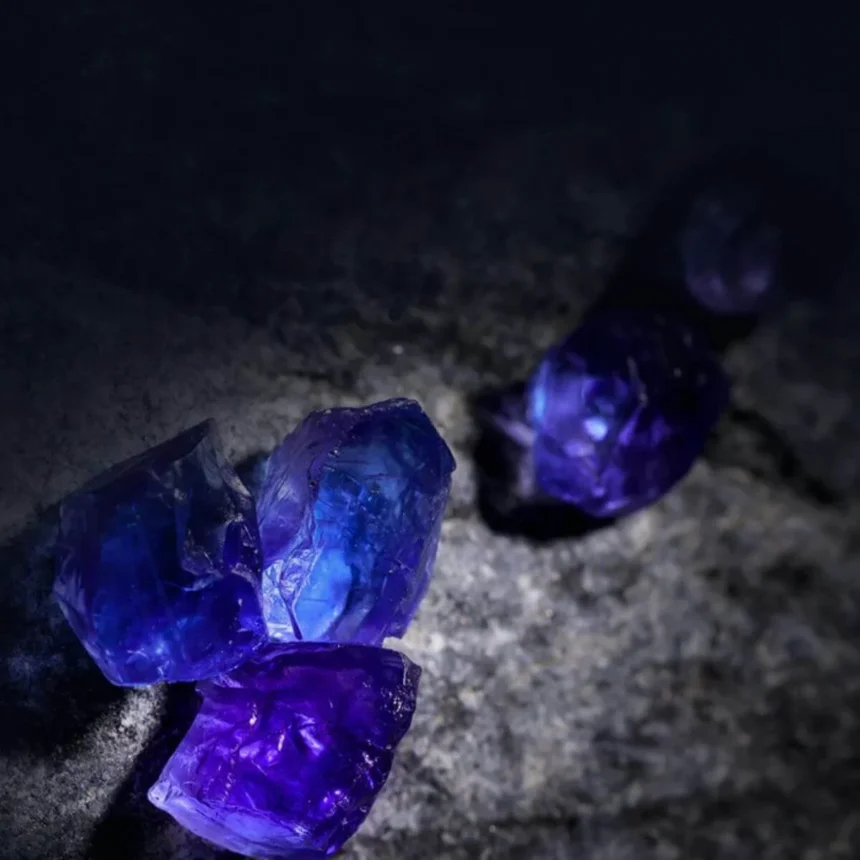
The tanzanite gemstone is one of the world’s rarest natural treasures, found in only one small area of northern Tanzania and celebrated for its striking blue-violet colours, remarkable history and extraordinary geological origin.
Unlike diamonds, sapphires or emeralds that are mined in several countries, tanzanite comes from a single location near the Merelani Hills at the foot of Mount Kilimanjaro. That unique origin, combined with its limited supply, has transformed the gemstone into one of the most valuable and sought-after jewels in the global market.
The story of tanzanite began in 1967 after a grassfire swept through the Merelani Hills in northern Tanzania.
According to widely accepted accounts, a Maasai herder noticed bright blue crystals lying on the ground after the fire cleared away thick vegetation, revealing stones that had previously remained hidden beneath the surface.
When geologists examined the crystals, they identified them as a rare blue variety of the mineral zoisite. Although scientifically accurate, the name “blue zoisite” was considered commercially unattractive and unlikely to appeal to jewellery buyers.
Luxury jewellery company Tiffany & Co. recognised the stone’s potential and renamed it tanzanite in honour of Tanzania, the only country where it has ever been found. The new name helped introduce the gemstone to international markets, where it quickly gained popularity among collectors and jewellery enthusiasts.
Geologists estimate that the tanzanite gemstone is approximately 1,000 times rarer than a diamond because it exists in only one known mining area measuring just a few square kilometres.
Scientists believe the gemstone formed about 585 million years ago during intense tectonic activity beneath what is now northern Tanzania.
Extreme heat, enormous pressure and a unique combination of minerals created the perfect conditions for the formation of tanzanite. Researchers say this precise geological process has not been replicated anywhere else on Earth, explaining why no other commercial deposits have ever been discovered.
This exceptional rarity continues to increase the gemstone’s value as mining reserves gradually decline.
A Gem That Changes Colour
One of the tanzanite gemstone’s most remarkable features is its pleochroism, an optical property that allows the stone to display different colours depending on the viewing angle.
A single gemstone may reveal:
- Deep sapphire blue
- Rich violet
- Burgundy or reddish-purple
This natural colour-changing effect gives every tanzanite its own unique appearance.
Skilled gemstone cutters carefully position each stone to maximise its brilliant blue and violet shades, making every finished gem slightly different from the next.
Its captivating play of colour is one of the reasons tanzanite has become highly prized in the international jewellery industry.
Beautiful but Delicate
Although tanzanite is admired for its beauty, it requires more care than many other precious gemstones.
The gemstone ranks between 6.5 and 7 on the Mohs hardness scale, making it softer than diamonds, sapphires and rubies.
Jewellers often use tanzanite in rings, necklaces, earrings and bracelets, but owners are advised to protect it from hard knocks, rough handling and harsh chemicals that could damage its surface.
With proper care, however, the gemstone can retain its brilliance for generations.
A Valuable Resource for Tanzania
Beyond its beauty, tanzanite plays an important role in Tanzania’s economy.
The gemstone industry supports thousands of people through mining, cutting, polishing, jewellery manufacturing, exports and tourism. It has also strengthened Tanzania’s reputation as one of Africa’s leading producers of rare and valuable gemstones.
For many visitors, buying a piece of tanzanite represents more than purchasing jewellery. It is an opportunity to own a unique piece of Tanzania’s natural and geological heritage.
Ethical Mining Is Becoming More Important
As global demand for tanzanite continues to grow, responsible sourcing has become increasingly important.
Organisations such as Tanzania’s Cultural Heritage Centre work with responsible mining initiatives in the Merelani region to promote ethical mining practices, certify authentic gemstones and support local communities that depend on the industry.
Experts encourage buyers to purchase certified tanzanite only from reputable dealers to ensure the gemstone is genuine and responsibly sourced.
A Gemstone With a Limited Future
Unlike many other precious stones, tanzanite has no known alternative source anywhere else in the world.
Because mining takes place in a single location and reserves are finite, experts believe authentic tanzanite will become increasingly scarce in the coming decades.
Its rarity, remarkable colours and extraordinary history ensure that every tanzanite gemstone remains more than just a luxury item. It represents millions of years of geological history, the uniqueness of Tanzania’s natural landscape and one of nature’s rarest creations.
As supplies continue to decline, the tanzanite gemstone is expected to remain one of the world’s most treasured and valuable natural wonders.