The Federal Government has described the Dangote Petroleum Refinery and Petrochemicals as a cornerstone of Nigeria’s plan to build a $1 trillion economy, pledging closer collaboration with the private sector to drive industrialisation, jobs, and growth.
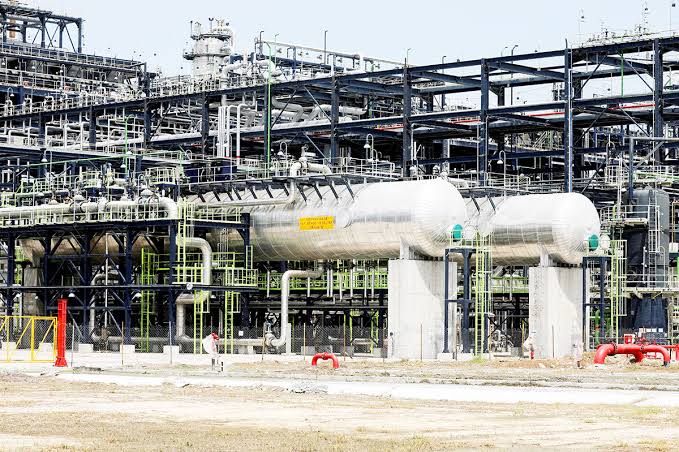
Minister of State for Industry, Senator John Owan Enoh, made the statement on Wednesday, July 29, 2026, after touring the 700,000 barrels-per-day refinery, petrochemicals complex, and fertiliser plant in Lagos.
Enoh called the integrated facilities one of Africa’s most significant investments and a model for Nigeria’s industrial ambitions. “You cannot be Minister in charge of Industry and not visit the Dangote Refinery,” he said. “This facility matters because of what it represents for Nigerian industry, for our people and for the realisation of President Bola Tinubu’s vision of a one trillion-dollar economy.”
He went further to say the refinery symbolises value addition and competitiveness. “The more a country adds value to its products, the more respect it earns globally. The Dangote Refinery stands today as one of the strongest demonstrations of that principle,”
The Minister added that the refinery has changed global perceptions of Nigeria by turning the country from a major importer of refined petroleum into an exporter. “When global supply disruptions occurred, Nigeria was able to export petroleum products to markets in the Middle East and beyond. That is an extraordinary achievement and one that deserves recognition,” he said.
Enoh dismissed concerns about the single-train configuration. “The issues surrounding the single-train configuration are much clearer now. Even during scheduled maintenance, operations continued,” he explained. He pledged continued government support through policy engagement and financing initiatives.
He also praised Aliko Dangote’s role in launching the Nigeria Industrial Policy. “We want to be judged by the extent to which we implement this policy. Achieving these targets will require a strong partnership between government and industry leaders like Aliko Dangote,” Enoh stated.
Speaking during the visit, Dangote urged government to prioritise industrialisation. “There is no way to create jobs and prosperity without industrialisation,” he said. “The greatest attraction for foreign investors is the success of domestic investors. When local investors thrive, they send a powerful signal that the environment is conducive for investment.”
Dangote revealed that his company recently raised an unsecured bond below Nigeria’s sovereign benchmark, showing investor confidence in credible Nigerian firms. He stressed that policy consistency is vital. “Frequent policy reversals undermine investor confidence more than the absence of incentives,” he warned.
Reflecting on the refinery, Dangote called it the biggest risk of his career. Despite challenges from COVID-19, currency volatility, and lender skepticism, he said its completion proves Nigerian entrepreneurs can deliver projects of global scale. “What we have achieved here has never been done before on this scale. Once one person succeeds, many others will be encouraged to follow,” he said.
Dangote disclosed that at full capacity the refinery will equal about 10 percent of U.S. refining capacity and consume 2.5 percent of globally traded crude oil. “If Nigeria is to achieve sustainable growth and become a trillion-dollar economy, industrialisation must be the foundation. Indigenous investors remain the strongest catalysts for that transformation,” he stated.