Kanem-Borno Empire Nigeria Before Colonization was one of Africa’s longest-lasting and most powerful pre-colonial states. It existed for over a thousand years around the Lake Chad region and played a major role in trade, governance, and Islamic scholarship long before European colonization.
Long before colonial rule, the area now known as Nigeria was home to many advanced societies with organized political systems and strong economies.
One of the most important of these states was the Kanem-Bornu Empire. It lasted for more than a thousand years. It also developed advanced systems of governance, trade, diplomacy, and Islamic scholarship.
Its story challenges the idea that pre-colonial Africa lacked organized political systems. The empire ruled large areas around the Lake Chad Basin from around the eighth century to the early twentieth century.
Yet Kanem-Bornu was not alone. The region that is now Nigeria had many thriving societies. In the north, Hausa city-states grew as centers of trade and craft. Later, the Sokoto Caliphate became a major political power.
In the southwest, the Oyo Empire built a strong military system and wide trade networks. The kingdoms of Ife and Benin became known for advanced leadership, city planning, and art.
In the southeast, Igbo communities developed local systems of governance and active trade networks. Along the Niger Delta, coastal communities also grew rich through trade with nearby regions.
These societies were different in culture and structure. However, they all shared one thing. They had organized systems of government and economy long before colonial rule.
Among them, the Kanem-Bornu Empire stands out. It lasted longer than most African states. It also left a strong legacy of leadership, learning, and trade.
Nigeria’s history before colonization was shaped by many strong kingdoms. Each region developed in its own way. Together, they formed a complex and active pre-colonial society.
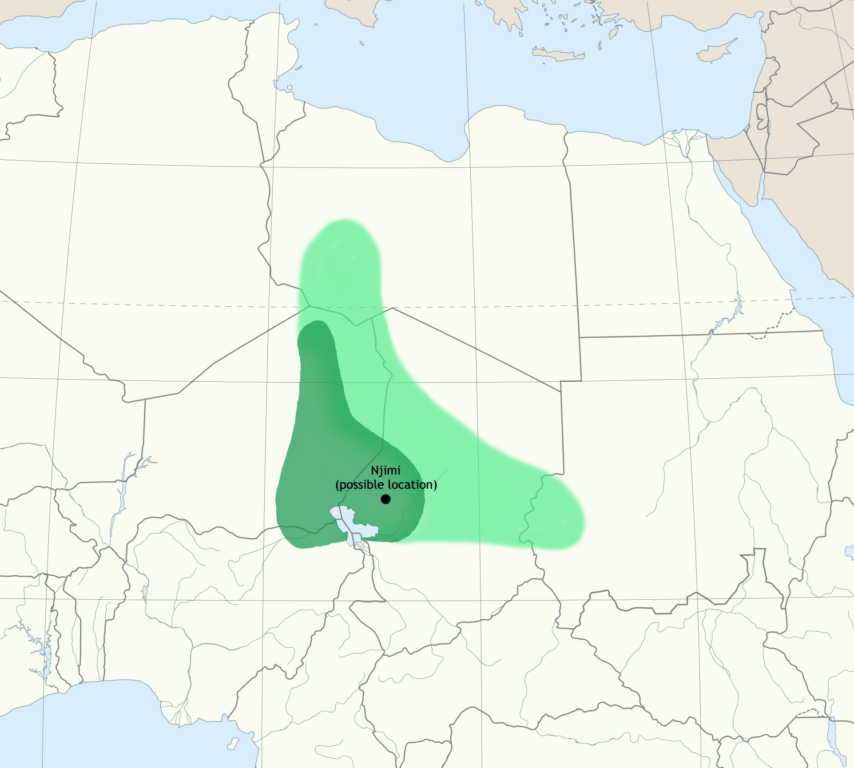
At its peak, the Kanem-Bornu Empire covered parts of modern Nigeria, Niger, Chad, Cameroon, and Libya. It was centered around the Lake Chad region.
From this location, it controlled major trans-Saharan trade routes. These routes connected West Africa with North Africa and the wider Mediterranean world.
Merchants moved across the Sahara with goods like salt, horses, textiles, and copper. Trade brought wealth and helped the empire grow stronger.
The empire formed through alliances between groups such as the Kanembu and Zaghawa. Over time, they built a strong central government that managed a large and diverse population.
Trade played a key role in the empire’s success. Goods moved across long desert routes linking different regions of Africa.
These trade connections helped Kanem-Bornu grow into an important economic center. They also strengthened ties with North African and Mediterranean societies.
The Sayfawa Dynasty ruled the empire for more than 770 years. Few dynasties in world history lasted this long.
The rulers carried the title “Mai,” meaning king. They built a system of government that connected local leaders to the royal court.
This system helped maintain order across the empire for many generations. It also created a sense of stability and continuity.
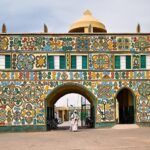
Today, historians study royal items such as weapons, regalia, and manuscripts. These objects help us understand how the empire was governed.
They also show how strong and organized the political system was at the time.
A major change came in the eleventh century when Mai Umme Jilmi accepted Islam.
This decision changed the empire’s political and legal systems. Islamic scholars became important advisers in government.
Islam also influenced law, taxation, and administration. Schools and mosques appeared across the empire.
Students traveled between Kanem-Bornu and cities like Cairo, Tripoli, Tunis, and Morocco. The empire also welcomed scholars from other regions.
Arabic literacy improved record-keeping and made governance easier.
In the fourteenth century, the empire faced internal conflict and outside attacks. The Bulala people were one of the main threats.
Rather than collapse, the rulers moved west into Bornu, in present-day northeastern Nigeria.
This move marked a new phase in the empire’s history. From Bornu, the state rebuilt its power and influence.
The empire reached its peak under Mai Idris Alooma, who ruled from about 1570 to 1603.
He is remembered as one of the empire’s strongest leaders. He improved the military and strengthened the government.
Alooma introduced firearms obtained through trade with North African and Ottoman merchants. His army became more powerful and better organized.
He also improved administration and expanded Islamic law. Fortified towns were built, and trade routes became safer.
During his rule, the empire became more stable and prosperous.
Kanem-Bornu was not only a military power. It was also a center of learning and trade.
The empire built strong ties with North African states. It also maintained diplomatic relations with other regions.
Scholars and traders visited the royal court. Ideas and knowledge moved across borders.
This helped the empire grow as a cultural and intellectual center in West Africa.
Over time, the empire began to weaken. Environmental changes and internal conflict played a role.
New political forces also emerged, including the Sokoto Caliphate.
In response, Muhammad al-Amin al-Kanemi helped defend the state. He later founded the Shehu ruling house.
By the late nineteenth century, external invasions further weakened the empire. European colonial powers soon took control.
By the early twentieth century, Kanem-Bornu had ended as an independent state.
The history of Kanem-Bornu shows that Nigeria had strong political systems long before colonization.
The empire managed trade, diplomacy, law, and education at a high level. It also connected West Africa with the wider world.
Its legacy reminds us that Nigerian history did not begin with colonial rule. It began long before that, with powerful African civilizations that shaped the region for centuries.