
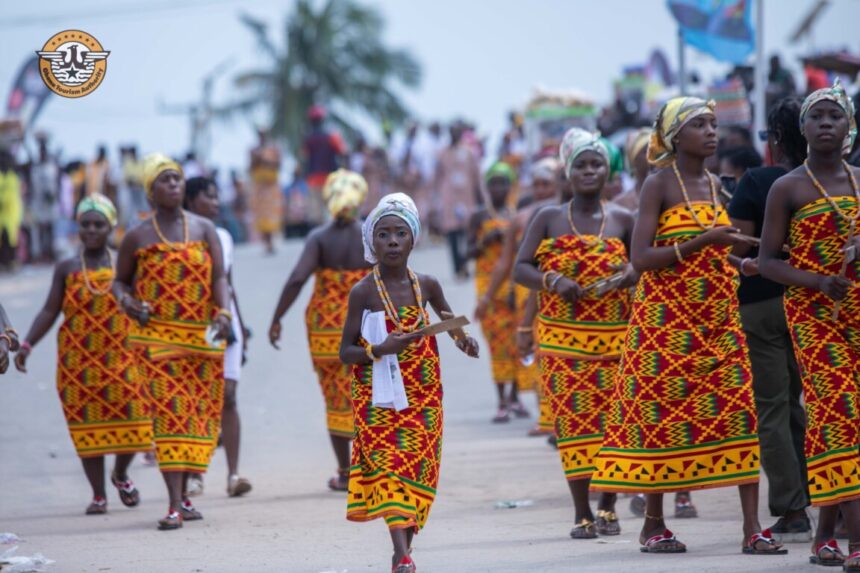
The Asante people are one of the largest ethnic groups in Ghana, belonging to the Akan ethnic family and mainly live in the Ashanti Region.
In addition, millions of people speak Asante Twi, making it one of the most widely used languages in the country.
For centuries, the Asante have played a major role in Ghana’s history, politics, and economy. Furthermore, their traditions, leadership system, and cultural values continue to shape modern Ghanaian society.
Historically, the Asante rose to power in the late 17th century. King Osei Tutu I united several Akan states and, with the spiritual guidance of Okomfo Anokye, established the powerful Asante Kingdom. As a result, Kumasi became the kingdom’s capital.
Because Kumasi was strategically located along major trade routes, it quickly developed into a major commercial centre.
Traders exchanged gold, kola nuts, and other valuable goods there. Consequently, as trade expanded, the kingdom’s wealth and influence grew significantly.
In addition, the Asante expanded their territory through strong leadership, military strength, and strategic alliances. In 1701, they defeated the Denkyira Kingdom, which further established them as one of the most powerful states in West Africa.
As the empire expanded, its leaders strengthened governance systems and improved the justice structure. These reforms helped create a more stable and organized state that endured for generations.
However, the Asante strongly resisted British attempts to control their territory. Throughout the 19th century, they engaged in several conflicts with British forces, known as the Anglo-Asante Wars.
Although Britain eventually gained control after the War of the Golden Stool in 1900, the Asante people preserved much of their cultural identity and traditional authority. Today, the Asantehene continues to serve as a highly respected traditional ruler.
In Asante society, family plays a central role. Notably, many communities follow a matrilineal system, meaning lineage is traced through the mother’s side.
As a result, this system strongly influences inheritance, leadership, and social responsibilities. In addition, women often hold important positions within families and communities. Queen mothers and female elders frequently advise traditional leaders and help guide community affairs.
The Asante mark womanhood through a traditional ceremony known as Bragoro. Families usually perform this rite when a girl reaches puberty.
During the ceremony, older women teach young girls about adulthood, responsibility, marriage, and family life. At the same time, the celebration features music, dancing, traditional attire, and community gatherings.
Importantly, Bragoro remains a vital cultural practice because it helps pass values and traditions from one generation to the next.
The Asante also celebrate several important festivals throughout the year. One of the most prominent is Akwasidae, which honours ancestors and celebrates the kingdom’s heritage.
Furthermore, traditional music and dance play a key role in these events. Instruments such as the Seperewa and Fontomfrom drums help create the vibrant atmosphere associated with Asante celebrations.
Economically, the Ashanti Region contributes significantly to Ghana’s development. For instance, the area produces cocoa, timber, and various agricultural products. In addition, it contains rich deposits of gold and other valuable minerals.
Meanwhile, Kumasi continues to serve as a major commercial hub. Its markets, industries, and transport networks support economic growth across the country.
Despite centuries of change, the Asante people have preserved their cultural identity. Their language, traditions, festivals, and leadership systems remain strong today.
Ultimately, from building one of Africa’s most powerful kingdoms to shaping modern Ghana, the Asante continue to leave a lasting legacy. Their story highlights the importance of cultural identity and the value of preserving history for future generations.