
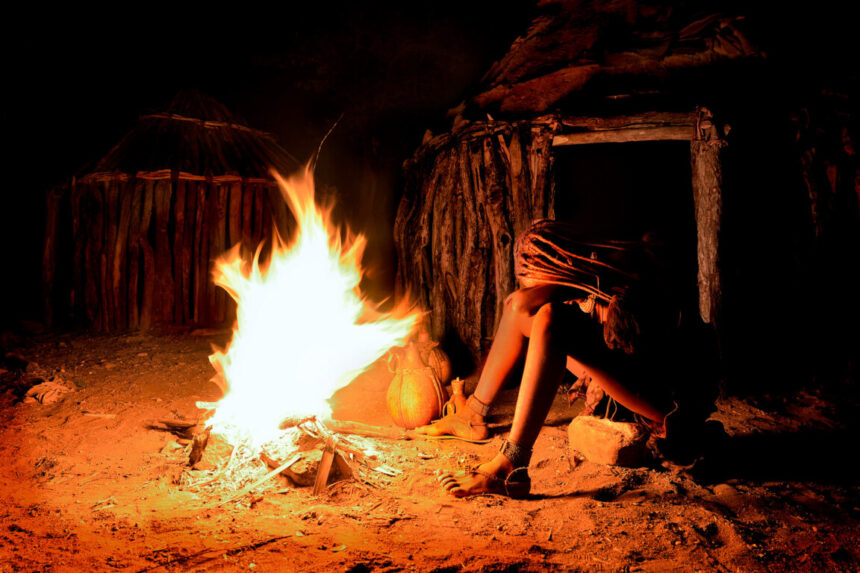
In northern Namibia, the Himba practice a powerful cultural tradition known as the Holy Fire, or Okuruwo. This fire is not used only for cooking or warmth. Instead, it carries deep spiritual meaning and connects families with their ancestors.
The Holy Fire burns continuously inside Himba homesteads. Families treat it as a sacred bridge between the living and the spiritual world. They believe their ancestors remain present through the fire and continue to guide and protect them.
Community members gather around the fire during important life events such as marriages, naming ceremonies, healing rituals, and major family decisions. During these moments, elders speak to the ancestors through the fire and ask for guidance, blessings, and protection. As a result, the tradition strengthens the belief that the living and the dead remain closely connected.
The head of the family or a chosen elder takes responsibility for keeping the fire burning. This role carries deep respect because the fire represents the spiritual balance of the household. In most homes, families place the fire at the center of the homestead to highlight its importance in daily life.
However, when the Holy Fire goes out, the Himba consider it a serious spiritual issue. They believe the connection with their ancestors has been disrupted. Therefore, elders perform rituals to restore balance and relight the fire. Through these ceremonies, the family regains spiritual harmony and connection.
In addition, the Holy Fire plays a role in everyday life, not just ceremonies. It promotes respect for elders, strengthens family unity, and preserves cultural identity. It also helps pass traditions and values from one generation to the next.
Despite modern influences, the Himba continue to preserve the Okuruwo tradition. Ultimately, it remains a strong symbol of identity, spirituality, and heritage, showing how deeply the community values its connection to ancestors and cultural roots.