
UNIMAID Alumni Boost Geography Department With Modern Equipment

Abubakar Turaki
5 Min Read
CISLAC/TI DEMANDS PROBE OF ALLEGED ₦36.9 BILLION KOGI SECURITY FUND DIVERSION, SEEKS RECOVERY OF PUBLIC FUNDS The Civil Society Legislative Advocacy Centre (CISLAC), the national chapter of Transparency International in Nigeria, has expressed grave concern over disturbing financial intelligence findings indicating possible large-scale diversion, misappropriation, and abuse of public funds linked to the management of security-related accounts in Kogi State. The latest revelations emerge against the backdrop of CISLAC/TI Nigeria’s sustained advocacy and monitoring of the use of security votes and security intervention funds across Nigeria. For over a decade, CISLAC/TI has tracked the administration of security votes at federal and state levels and consistently raised concerns over the absence of transparency, accountability, and oversight mechanisms governing these expenditures. Our findings over the years have revealed systemic vulnerabilities that have enabled the diversion and misappropriation of public resources under the guise of security spending. Information available to CISLAC/TI Nigeria reveals that an account identified as the Kogi State Security Operation Account reportedly received over ₦36.9 billion within a nine-month period from Kogi State Government SRA. Preliminary findings further indicate that approximately ₦23.7 billion was transferred to a finance company known as Real Striker Finance Limited owned by Mr Ameh Joseph Erico, while additional billions of naira were reportedly disbursed to various individuals and corporate entities without clear public justification. The beneficiaries identified in the financial records include individuals and companies such as Abdullahi Ayisat Omonale, Peter Enehezeyi Ozavize, Dange Security Patrol, G and T Motors Nigeria Limited, among others. Available records suggest that transfers to individuals and private entities exceeded ₦12.53 billion during the period under review. Of particular concern are reports that Real Striker Finance Limited was established shortly after the election of the current administration and is allegedly linked to politically exposed persons, including a former Security Adviser to former Governor Yahaya Bello. The company reportedly received substantial transfers from the state security account and subsequently disbursed significant sums through cash withdrawals and transfers to several companies and individuals. Further findings indicate that some of the entities that received funds may have connections to politically exposed persons and individuals linked to previous administrations. While investigations remain ongoing, these transactions raise serious concerns regarding the management and accountability of public funds earmarked for security purposes. These allegations, if established through an independent investigation, point to a disturbing pattern of possible misuse of public resources intended for critical security interventions at a time when citizens continue to face severe security challenges. As part of its ongoing efforts to promote transparency and accountability in the management of security-related expenditures, CISLAC/TI Nigeria will continue to monitor and investigate allegations of abuse, diversion, and misappropriation of security funds across states of the federation and expose practices that undermine public trust and good governance. CISLAC/TI Nigeria notes that security votes and security intervention funds are public resources that must be managed transparently, responsibly, and in strict compliance with existing financial regulations. The diversion of such funds undermines public trust, weakens the fight against insecurity, and deprives citizens of essential protection and public services. Consequently, CISLAC/TI Nigeria calls on the Economic and Financial Crimes Commission (EFCC), the Independent Corrupt Practices and Other Related Offences Commission (ICPC), the Nigeria Financial Intelligence Unit (NFIU), and other relevant anti-corruption and law enforcement agencies to immediately launch a comprehensive investigation into all transactions associated with the Kogi State Security Operation Account and all related beneficiary accounts. Specifically, CISLAC/TI Nigeria demands: 1. An immediate forensic investigation into the inflows and outflows of the Kogi State Security Operation Account. 2. Investigation of Real Striker Finance Limited, its ownership structure, operations, and all transactions linked to the company. 3. Identification and public disclosure of all ultimate beneficiaries of the funds. 4. Recovery of any public funds found to have been diverted, misappropriated, or unlawfully obtained. 5. Prosecution of all individuals and entities found culpable, regardless of political status or affiliation. 6. Strengthening transparency and accountability mechanisms governing security-related expenditures across all states of the federation. Beyond the Kogi case, CISLAC/TI Nigeria reiterates its longstanding position that the current security vote system remains one of the weakest links in Nigeria’s public finance management architecture. Despite the enormous resources allocated annually under security votes, the absence of legal frameworks, public reporting requirements, and independent oversight has created opportunities for abuse and diversion. CISLAC notes that in its report titled, “Camouflaged Cash: How Security Votes Fuel Corruption in Nigeria,” the organisation recommended comprehensive reforms, including: • The abolition or fundamental restructuring of the security vote system through legislation that establishes clear budgeting procedures, expenditure criteria, transparency standards, and accountability mechanisms for all security-related spending. • The establishment of independent oversight structures for confidential security expenditures, including legislative and audit review mechanisms that balance national security concerns with public accountability. • Increased public awareness and engagement on the risks associated with opaque security spending and the need for reforms that prioritise transparency and effectiveness. • Support for credible and transparent Security Trust Funds as transitional mechanisms to replace discretionary security votes, with clear governance structures, independent audits, and public reporting obligations. CISLAC/TI Nigeria further calls on Governor Ahmed Usman Ododo and all relevant officials of the Kogi State Government to fully cooperate with investigators and provide complete transparency regarding the management of public funds under their administration. This further exposes the incapacitation of the State Assembly to conduct effective oversight on public spending, especially as it relates to the security challenges that have become worrisome in Kogi State, characterized by almost daily kidnappings, killings, and perpetual unrest. The fight against corruption must remain non-partisan and consistent. No public official, past or present, should be shielded from scrutiny where credible evidence of financial misconduct exists. Nigerians deserve accountability, particularly where resources earmarked for security and public welfare are concerned. CISLAC/TI Nigeria will continue to monitor developments and advocate for full accountability, transparency, and justice in the management of public resources. The Kogi allegations underscore the urgent need to reform Nigeria’s security funding architecture and ensure that public resources serve the public interest rather than private enrichment. Signed Auwal Ibrahim Musa (Rafsanjani) Executive Director CISLAC/Head of Transparency International Nigeria

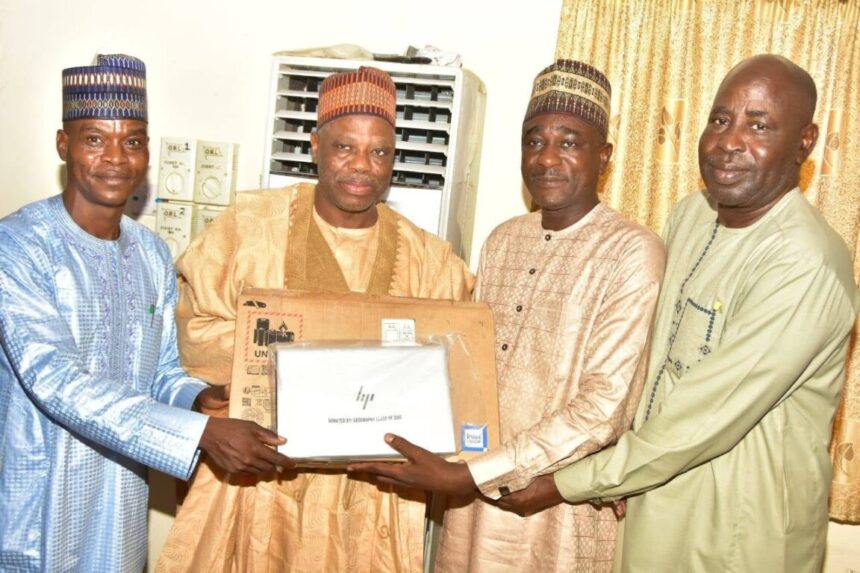
The Department of Geography at the University of Maiduguri (UNIMAID) has received a major academic and technological boost following the donation of modern equipment and 180 specialized textbooks by members of its alumni community.

The donations, spearheaded by the Geography Class of 1999/2000 and renowned scholar Dr. Maria James Tada, were presented as part of efforts to support teaching, research and postgraduate studies within the department.

Representing the Vice-Chancellor of the University of Maiduguri, Professor Mohammed Laminu Mele, the Deputy Vice-Chancellor (Central Administration), Professor Babagana Bako, described the intervention as a landmark achievement that reflects the lasting impact of the department on its graduates.

Professor Bako commended the Class of 1999/2000 and Dr. Tada for demonstrating exceptional commitment to their alma mater. He noted that their professional success and willingness to give back serve as an inspiration to current students and future generations.

He particularly praised Dr. Tada for donating copies of her textbook, describing the gesture as a timeless intellectual contribution that would continue to benefit geography students for years to come.

According to him, the continuous support from alumni is a testament to the quality of training, mentorship and leadership that have characterized the Geography Department over the decades.

“The confidence and pride with which these graduates return to support the department is evidence of the strong academic foundation laid by their teachers and predecessors,” he said.

Professor Bako emphasized the strategic importance of Geography as a discipline, noting that geographers play a vital role in understanding environmental realities, mapping development trends and addressing global challenges. He assured the donors that the university management appreciates the intervention and remains committed to providing an enabling environment for academic excellence.

At the event, Professor Bako formally presented an award of recognition to Dr. Maria James Tada in appreciation of her generous donation and intellectual contributions to the development of the department.

Also speaking, former Vice-Chancellor of the University of Maiduguri and senior academic in the department, Professor Mala Daura, applauded the initiative, describing it as a significant step toward strengthening research and learning.

He noted that the donated facilities would improve the academic environment and support postgraduate scholars and researchers. Professor Daura also challenged other graduating classes to emulate the Class of 1999/2000 by investing in the growth of the department.

Highlighting future aspirations, he called for the establishment of a modern weather station within the department to enhance meteorological research and address emerging climate-related challenges.

Earlier, the Head of Department, Professor John Abdullahi, expressed appreciation to the university management, alumni and faculty members for their support.

He revealed that shortly after assuming office on June 24, 2025, he received a delegation from the Geography Alumni Class of 1999/2000. During discussions, he highlighted key infrastructural and academic challenges facing the department.

Professor Abdullahi explained that the decision to strengthen postgraduate programmes became necessary following a decline in undergraduate enrolment after Geography was made an optional subject in secondary schools.

According to him, the alumni responded promptly by providing critical facilities needed to enhance teaching and research activities.

The donated items include a 72-inch smart television, a high-performance HP laptop computer, a modern public address system and a high-resolution projector. The alumni group also pledged the installation of a fibre-optic internet facility that will provide seamless connectivity for both the Department of Geography and the Centre for Disaster Risk Management and Development Studies.

Speaking on her motivation for the donation, Dr. Maria James Tada credited her academic success to the mentorship she received from senior scholars within the department, including Professor Mala Daura and Professor Ibrahim Waziri.

She explained that her textbook was inspired by the academic difficulties many students face, particularly in understanding practical geographical concepts such as map reading.

Dr. Tada said her goal was to simplify learning, improve students’ academic experience and make quality educational resources more accessible.

She added that although she initially preferred a quiet donation, the recognition ceremony organized by the department would encourage a culture of collective responsibility and alumni engagement.

The event highlighted the growing role of alumni contributions in strengthening higher education institutions and advancing academic excellence through partnerships, mentorship and strategic investments in learning infrastructure.

TAGGED:
Share This Article
Follow:
Abubakar Muhammad Turaki is a political scientist with a strong passion for leadership and education. He is committed to promoting informed public discourse and contributing to societal development through knowledge and communication. Currently, he works as a reporter at S24 Television, where he focuses on delivering news and engaging stories that highlight key social, political, and developmental issues.