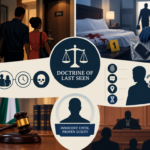
The Feres Doctrine remains one of the most controversial legal principles in the United States. Established by the U.S. Supreme Court in 1950, the doctrine generally prevents active-duty military personnel from suing the federal government for injuries that arise out of or occur during military service.
Supporters argue that the doctrine helps preserve military discipline, prevents excessive litigation, and protects the unique command structure of the armed forces. They contend that military service differs fundamentally from civilian life and therefore requires different legal standards.
Critics, however, see the doctrine as an exception to one of the most basic principles of justice: accountability.
They argue that while civilians can seek compensation when harmed by government negligence, soldiers and their families are often denied the same opportunity simply because the injury occurred within the context of military service. This has fueled decades of debate over whether military personnel should have fewer legal rights than the citizens they are sworn to protect.
At its core, the controversy raises an important question:
Should serving one’s country limit one’s ability to seek justice when harm results from negligence?
Beyond America: A Universal Issue
Although the Feres Doctrine is unique to the United States, the broader issues it raises resonate around the world.
Citizens in every country expect governments and public institutions to be accountable when their actions or failures cause harm. The mechanisms for achieving that accountability may differ from one nation to another, but the principle remains the same.
In many developing countries, including Nigeria, the challenge is often not the absence of legal remedies but the difficulty of enforcing them effectively.
Nigerian law generally permits individuals to seek redress against hospitals, government agencies, institutions, and private entities for negligence. However, many citizens encounter practical obstacles when attempting to pursue justice.
Court proceedings can be lengthy and expensive. Investigations may take years to conclude. Regulatory agencies frequently face capacity and enforcement challenges. Many victims and their families lack the financial resources needed to sustain prolonged legal battles.
As a result, accountability can exist in theory while remaining difficult to obtain in practice.
When Accountability Becomes Difficult
The issue extends beyond healthcare and legal disputes.
Across multiple sectors, there is a growing public perception that some institutions are increasingly measured by the revenue they generate rather than by the quality of oversight and public protection they provide.
Transport systems offer a familiar example.
Commercial drivers, motorcycle operators, and transport workers often pay various levies, permits, and operational fees. Yet unsafe driving practices, traffic violations, and inconsistent enforcement remain common concerns in many cities.
Citizens frequently question whether regulatory systems are performing their primary role of ensuring safety and compliance or merely focusing on collections.
The same questions are often directed at government agencies and public institutions.
While revenue generation is important for public administration, many citizens argue that institutions should be judged equally, if not more by their ability to deliver services, enforce standards, protect lives, and uphold public trust.
Measuring Success Beyond Revenue
The Nigerian Customs Service is frequently cited in discussions about institutional performance.
Revenue collection is a key component of its mandate, and record-breaking collections are often celebrated. However, security experts continue to raise concerns about border security, smuggling activities, and the movement of illegal weapons and contraband.
Critics argue that institutional effectiveness should not be measured solely by financial performance. Equally important are the institution’s ability to fulfill its core responsibilities and protect the public interest.
The same principle applies across government.
Whether in healthcare, transportation, border management, infrastructure, or public safety, citizens increasingly expect measurable outcomes rather than statistics that focus exclusively on money collected.
The Larger Lesson
The debate surrounding the Feres Doctrine ultimately highlights a universal challenge facing governments and institutions worldwide.
Accountability is not simply about whether a lawsuit can be filed. It is about whether systems exist to ensure responsibility when mistakes occur, negligence causes harm, or public institutions fail in their duties.
In the United States, critics of the Feres Doctrine argue that legal protections should not shield governments from responsibility.
In Nigeria and many other developing countries, citizens increasingly argue that institutions must be judged not only by how much revenue they generate but also by how effectively they protect lives, enforce standards, deliver services, and provide meaningful avenues for justice.
Because at the heart of every functioning democracy lies a simple principle:
No institution should be beyond accountability, and every citizen should have confidence that justice remains accessible when the systems designed to protect them fail.