Residents of the Federal Capital Territory (FCT) have raised concerns over soaring house rents, accusing landlords of taking advantage of recent infrastructure projects executed by the FCT Administration under Minister Nyesom Wike to impose what they describe as arbitrary and exploitative rent increases.
Across Abuja and its satellite communities, tenants say the completion of new roads, bridges and interchanges has become the latest justification for landlords to double rents, despite making no improvements to their properties.
The complaints come amid a worsening housing affordability crisis in the nation’s capital, where residents say accommodation costs, alongside agency fees, legal charges, caution deposits and service charges, are consuming an increasing share of household incomes.
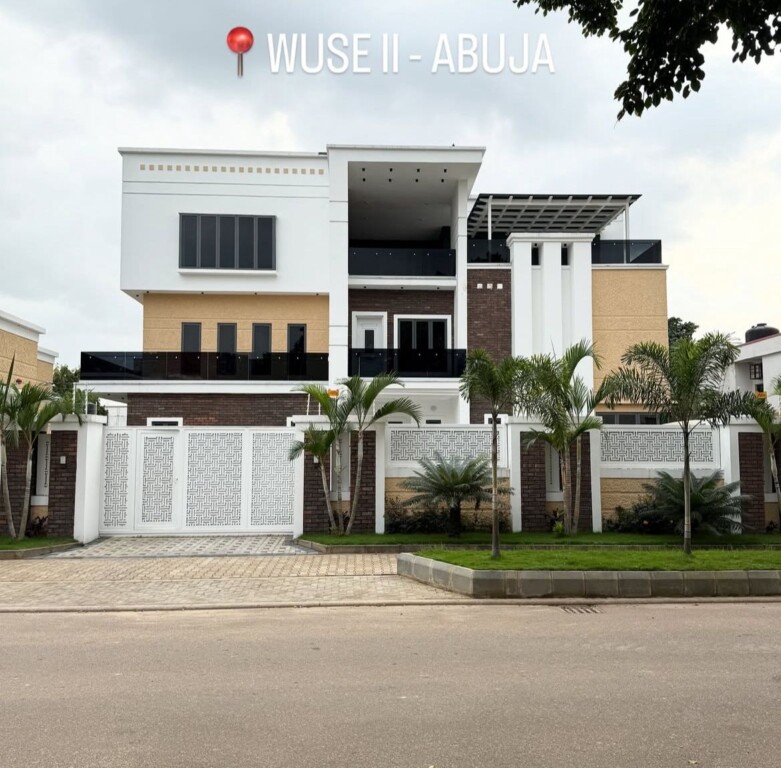
A Daily Trust survey across Karu, Apo, Kado, Gwarinpa, Wuye, Jahi, Wuse, Lugbe and Lokogoma found that rents have increased by between 50 and 100 per cent over the past three years, coinciding with major road projects and broader economic reforms, including the removal of fuel subsidy and exchange rate unification.
Many residents argue that while improved infrastructure has enhanced accessibility and property values, the benefits have largely accrued to landlords rather than ordinary Nigerians struggling with stagnant incomes and rising living costs.
Basil Bature, a resident of Apo Resettlement, said the rent for a two-bedroom apartment that previously cost about N1.5 million has risen to between N3 million and N4 million.
He blamed the increase on the reconstruction of the Apo Road, arguing that landlords capitalised on public infrastructure funded by taxpayers.
“Immediately the Apo road was completed, landlords started increasing rents as if they personally financed the project. It is pure exploitation,” he said.
Similar concerns were expressed by Abigail Bawa, who lives in Wuye. She said her landlord increased the rent for a one-bedroom apartment from N2 million to N3.5 million shortly after the completion of the Wuye flyover linking the district to Wuse.
According to her, no renovation or additional facilities were provided to justify the increase.
“He simply woke up one day and increased the rent because the area now has better road access. We are asking what exactly changed inside the house to warrant such an increase,” she said.
Mary Musa, another tenant in Jahi, said residents in her estate also received notices of significant rent increases earlier this year.
She explained that one-bedroom apartments rose from N1 million to N1.5 million, while rents for two-bedroom apartments increased from N2 million to N3 million. Three-bedroom apartments were similarly raised from N3 million to N4.5 million.
She attributed the increases solely to improved road networks connecting Jahi to Gwarinpa, Katampe and other parts of Abuja.
“The roads are better, but nothing has changed inside our houses. Housing now takes a huge portion of people’s incomes, leaving almost nothing for savings or investment,” she said.
Musa also criticised the activities of estate agents, saying desperate tenants are often forced to pay excessive agency fees, legal fees and other arbitrary charges.
She called on government authorities to regulate the housing sector and introduce limits on unjustified rent increases.
Civil servant Ismaila Ado described the situation in Karu as particularly disturbing.
He recalled that during the COVID-19 pandemic in 2020, self-contained apartments rented for as little as N200,000, while one-bedroom apartments averaged N500,000.
Today, he said, self-contained apartments now cost between N1 million and N1.2 million, while two-bedroom apartments command between N2 million and N4 million.
He attributed the sharp rise to the construction of dual carriage roads and improved infrastructure in the area.
“What should have been a source of joy for residents has become a burden because landlords are using the development to make life unbearable,” he said.
Lawyer Chinedu Eze, who resides in Kado, also criticised landlords after his rent for a two-bedroom apartment doubled from N2 million to N4 million.
“I thought infrastructure development should benefit everyone. Instead, only landlords appear to be enjoying it while tenants bear the burden,” he said.
Beyond rising rents, residents say additional charges imposed by estate agents have further worsened the situation.
Adeife Moses, who lives in Lokogoma, said her rent increased from N500,000 to N900,000 after negotiations with her landlord.
However, agency fees, legal charges and service fees pushed the total payment to approximately N1.4 million.
She urged FCT Minister Nyesom Wike to regulate the activities of estate agents.
Similar frustrations were expressed by residents in Wuse and Gwarinpa.
Bayo Adeyinka said his one-room apartment now costs N4 million, double its previous rent, while agency and legal fees can account for more than 30 per cent of total rental costs.
John Bassey, a resident of Gwarinpa, said his three-bedroom apartment increased from N3 million to N5.5 million during his last renewal.
He noted that many civil servants can no longer afford accommodation within Abuja and are relocating to satellite towns such as Gwagwalada, Mararaba, Suleja and Masaka, where rents are also rising rapidly.
He added that financial pressures have forced many public servants to use their private vehicles for commercial transport after work to supplement their incomes.
Responding to the criticism, landlords defended the increases, citing soaring construction and maintenance costs.
Ferdinand Onouha said the price of cement has risen from around N4,000 per bag three years ago to approximately N10,000 today, making it difficult to maintain lower rents.
He argued that landlords also face rising expenses in maintaining their properties.
Another landlord, Ganiyu Ajibola, acknowledged that infrastructure development naturally increases property values.
“When roads improve, security gets better and public services expand, more people want to live there. That increases demand, and property values rise,” he said.
However, he cautioned against arbitrary rent increases that are not supported by market realities.
Abdulkadir Musa, who owns commercial properties in Abuja, similarly argued that premium locations command higher rents because businesses benefit from improved accessibility and increased customer traffic.
Industry stakeholders say the absence of a comprehensive legal framework has allowed arbitrary practices to flourish.
Former President of the Real Estate Developers Association of Nigeria (REDAN), Aliyu Wamakko, said a proposed Real Estate Regulatory Council Bill designed to regulate the sector was passed by the Ninth National Assembly in 2023 but did not receive presidential assent.
According to him, the lack of regulation allows landlords and estate agents to continue increasing rents without adequate oversight.
He noted, however, that any effort to regulate rents must also address the high cost of building materials.
Meanwhile, human rights lawyer Deji Adeyanju has called on President Bola Tinubu to declare a state of emergency in Nigeria’s housing sector.
In an open letter, Adeyanju described the country’s rental market as “predatory,” arguing that millions of Nigerians are being driven into poverty by excessive rents, arbitrary agency fees and exploitative practices.
He urged the Federal Government to establish a Special Presidential Task Force on Rental Reform with a 90-day mandate to develop a comprehensive National Housing and Tenancy Policy and propose legislation on fair rent standards.
Adeyanju argued that access to decent housing is both a constitutional responsibility of government and a fundamental human right, warning that without urgent intervention, Nigeria’s housing affordability crisis will continue to worsen as incomes fail to keep pace with rising accommodation costs.