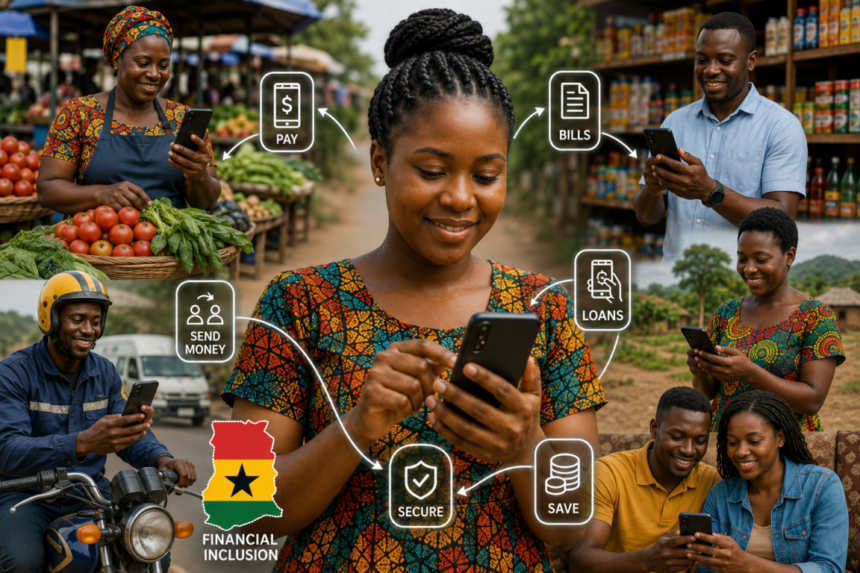
Across Africa’s low-income communities, smartphones are becoming the first point of access to formal financial services.
Many people now use mobile devices to access credit, insurance, savings products, and digital services. This trend is reducing reliance on traditional banking systems.
M-KOPA’s expansion in Ghana highlights this shift. The company now uses smartphone financing as a platform to deliver multiple financial products through a single payment structure.
M-KOPA Unlocks More Than $103 Million In Credit
According to M-KOPA’s Ghana Impact Report released on May 20, 2026, the company has provided more than GHS1.2 billion, equivalent to over $103 million, in credit to customers since 2021.
More than 550,000 Ghanaians have benefited from the financing programme.
The report shows that M-KOPA is doing more than selling smartphones. The company is using mobile devices to connect underserved communities to financial services.
Affordability Remains A Major Challenge
Despite the growth of digital finance across Africa, smartphone affordability remains a major barrier.
A 2025 GSMA study found that an entry-level smartphone can cost the poorest 20 percent of Africans up to 87 percent of their monthly income.
As a result, many households struggle to access the tools needed to participate in digital economies.
Industry experts say device financing helps overcome this challenge by spreading costs into smaller daily payments.
‘More Than A Phone’ Model Drives Growth
M-KOPA launched its “More Than a Phone” platform in Ghana in January 2025.
The programme combines smartphone financing with health insurance, device protection, and data services.
Customers pay for these services through affordable daily instalments.
The company reported a fourfold increase in sales after expanding the programme across all 16 regions of Ghana through more than 3,000 agents.
According to the report, 44 percent of customers accessed a formal financial product for the first time through M-KOPA.
In addition, 36 percent said the financed smartphone was the first phone they had ever owned.
Embedded Insurance Expands Financial Inclusion
Health insurance has emerged as one of the programme’s strongest attractions.
M-KOPA partners with Turaco to provide embedded insurance coverage alongside smartphone financing.
The company said 67 percent of insured customers obtained health insurance for the first time through the programme.
Furthermore, 43 percent of women said they selected the package because it included health coverage.
Experts say this model reflects the growing adoption of embedded finance across Africa.
Regulators Support The Shift To Embedded Finance
Financial regulators are increasingly supporting the development of embedded financial services.
Speaking at the 2026 3i Africa Summit in Accra, Bank of Ghana Governor Johnson Pandit Asiama said Africa is entering a new phase of financial innovation.
He identified digital credit, embedded finance, merchant payments, supply chain finance, and cross-border services as key growth areas.
According to Asiama, Africa’s next challenge is not access alone but building the infrastructure needed to scale financial services sustainably.
Mobile Money Continues To Drive Inclusion
While smartphones are expanding access, regulators say mobile money remains critical to financial inclusion.
Bank of Ghana Deputy Governor Matilda Asante Asiedu said Ghana’s financial inclusion rate has reached 81 percent.
She attributed much of this progress to mobile money agents and USSD-based services.
According to her, millions of people still access financial services through basic mobile phones without internet connections.
She stressed that Africa must build digital systems that reflect local realities and consumer needs.
Smartphones Create New Economic Opportunities
M-KOPA reports that smartphones are also helping users increase their income.
More than half of the company’s customers now use their devices for business or income-generating activities.
The report found that 54 percent of users earn more money after acquiring a smartphone through the programme.
Additionally, 76 percent reported an improvement in their quality of life.
The company said the financing structure allows households to access digital opportunities without large upfront payments.
Fintech And Telecom Firms Expand Embedded Finance
The embedded finance model is gaining momentum across Africa.
Several fintech and telecom companies now offer financial services through digital platforms.
Companies such as Stitch, JUMO, 4G Capital, and Africell are integrating lending, payments, insurance, and savings products into mobile ecosystems.
Industry analysts believe these innovations are accelerating financial inclusion and reducing barriers to entry.
The Future Of Africa’s Digital Finance Ecosystem
Experts say Africa’s next phase of financial inclusion will depend on trusted digital infrastructure, interoperable payment systems, and strong consumer protection frameworks.
They also believe regulatory coordination will play a crucial role in supporting growth.
For companies such as M-KOPA, smartphones have become more than communication tools.
They now serve as gateways to credit, insurance, digital services, and economic opportunity.
As embedded finance expands across the continent, smartphones are likely to play an even greater role in connecting millions of Africans to the formal economy.