

Several prominent politicians, including former Ogun State governorship candidate Ladi Adebutu, former Minister of Communications and Digital Economy Professor Isa Ali Pantami, Kano State politician Aminu Abdussalam Gwarzo are missing from the Independent National Electoral Commission’s (INEC) final lists of governorship candidates for the 2027 elections.
Their omission has drawn attention to disputes over party primaries, membership registers, candidate substitutions and compliance with the Electoral Act 2026.
The development comes weeks after the Supreme Court restored key provisions of the Electoral Act governing political party membership registers and participation in primaries, raising questions about the eligibility of aspirants who changed political parties or contested under disputed nomination arrangements.
While some of the affected politicians had secured party tickets through fresh primaries or substitution processes, their absence from the published lists has created uncertainty about their participation in the 2027 governorship elections.
Ladi Adebutu — Ogun State
The Peoples Democratic Party’s (PDP) governorship candidate in Ogun State, Ladi Adebutu, is among the prominent politicians missing from INEC’s final list.
Adebutu and his running mate, Yemi Sowunmi-Kolapo, were reportedly absent from the 13 governorship tickets published for the state.
Adebutu has remained a significant political figure in Ogun State, having contested the governorship election in 2023 under the PDP.
His omission from the 2027 list raises questions about the status of the PDP’s nomination arrangements and the party’s participation in the forthcoming election.
The development has attracted attention because of the political implications for the PDP in a state where the governorship contest is expected to involve competing political parties and interests.
However, the omission from the published list does not, by itself, establish the specific legal or administrative reason for the decision. Further clarification from INEC and the PDP would be necessary to determine the circumstances surrounding the absence of Adebutu and his running mate.
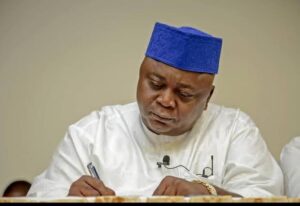
Isa Ali Pantami — Gombe State
Professor Isa Ali Pantami, the PDP governorship aspirant in Gombe State, is another prominent politician whose name is missing from INEC’s final list of governorship candidates.
Pantami emerged from a fresh PDP governorship primary following a Federal High Court ruling that affected the party’s earlier nomination process.
However, his candidacy subsequently faced uncertainty amid questions surrounding party membership registers and the legal requirements governing participation in primaries.
The Supreme Court’s September 24, 2026 judgment restoring key provisions of the Electoral Act 2026 added another dimension to the controversy, particularly the requirement that parties submit their membership registers to INEC at least 21 days before primaries.
Pantami’s absence from the final list raises questions about the status of the PDP’s nomination in Gombe and the implications for the party’s governorship campaign.
The development is significant in a state where the 2027 contest is expected to attract considerable political attention. Pantami’s supporters will be watching for clarification on the reasons for his omission and whether any further legal or administrative steps could affect the situation.
Aminu Abdussalam Gwarzo — Kano State
Aminu Abdussalam Gwarzo, associated with the Nigeria Democratic Congress (NDC) in Kano State, is also missing from INEC’s final list of governorship candidates.
His omission comes amid broader questions about party nominations and compliance with the electoral framework ahead of the 2027 elections.
The Supreme Court’s ruling on party membership registers has heightened scrutiny of nomination processes, particularly where aspirants have changed political platforms or encountered disputes over their eligibility to participate in primaries.
Gwarzo’s absence from the published list raises questions about the status of the NDC’s governorship ticket in Kano State.
However, without a definitive explanation from INEC or the party, the precise reason for his omission remains unclear. The circumstances surrounding his candidacy would need to be established before drawing conclusions about whether the decision resulted from a membership-register dispute, a nomination issue or another administrative or legal consideration.

Electoral Law and the 2027 Governorship Elections
The omission of these politicians highlights the growing importance of compliance with electoral laws and party nomination procedures as preparations for the 2027 general elections continue.
The Supreme Court’s September 24 judgment restored provisions requiring political parties to submit their membership registers to INEC at least 21 days before their primaries, congresses or conventions. The provisions also restrict participation in those exercises to members whose names appear on the relevant submitted registers.
The judgment has brought renewed attention to the documentation of party membership, the timing of defections and the procedures for replacing candidates.
For political parties, the situation underscores the need to ensure that nomination processes comply with statutory requirements. For aspirants, it demonstrates that securing a party ticket does not necessarily guarantee that their names will appear on the final list published by the electoral commission.
For INEC, the publication of candidates is an important stage in the electoral process, while any disputes arising from nominations must be addressed within the applicable legal framework.
As the 2027 elections approach, clarification over the omissions could prove important for the affected politicians, their parties and voters seeking to understand who will ultimately contest the governorship elections in their respective states.
The key outstanding question is why each candidate was omitted. Although the four cases have attracted attention amid the debate over party membership registers and nomination procedures, the specific reasons should be established individually rather than assuming that the same legal issue accounts for every omission.