


In a 22-page document titled Why and How the Structure of Governance Must Fundamentally Change Before 2027, Fapohunda identifies seven major weaknesses in Nigeria’s governance system. They include winner-takes-all politics, excessive concentration of power at the centre, an expensive bureaucracy, too many layers of government, the limitations of political zoning and unresolved questions of national identity.
His central argument is that Nigeria’s challenges are not simply the result of individual political failures. Rather, he believes they are embedded in the structure of governance itself. Without fundamental changes, he warns, the 2027 elections could reproduce the same political divisions and frustrations that have characterised previous electoral cycles.
Why Nigeria’s Winner-Takes-All Political System Is Under Scrutiny
One of Fapohunda’s strongest criticisms concerns the winner-takes-all nature of Nigeria’s electoral system. Under the current arrangement, a candidate or party can secure executive control without winning the support of most voters.
He points to the 2023 presidential election, in which President Bola Tinubu emerged victorious with approximately 37 per cent of the votes cast. According to Fapohunda, this left nearly two-thirds of voters who supported other candidates without direct representation in the federal executive.
He argues that asking opposition candidates to withdraw in favour of a single challenger does not address the underlying problem. Instead, he proposes a system that distributes political offices and representation according to the proportion of votes received.
The proposal seeks to make political participation less dependent on an outright electoral victory. It also aims to reduce the pressure on parties to spend heavily on nationwide campaigns, which Fapohunda links to corruption and the misuse of public resources.
Six Geopolitical Zones at the Centre of a New Federal Structure
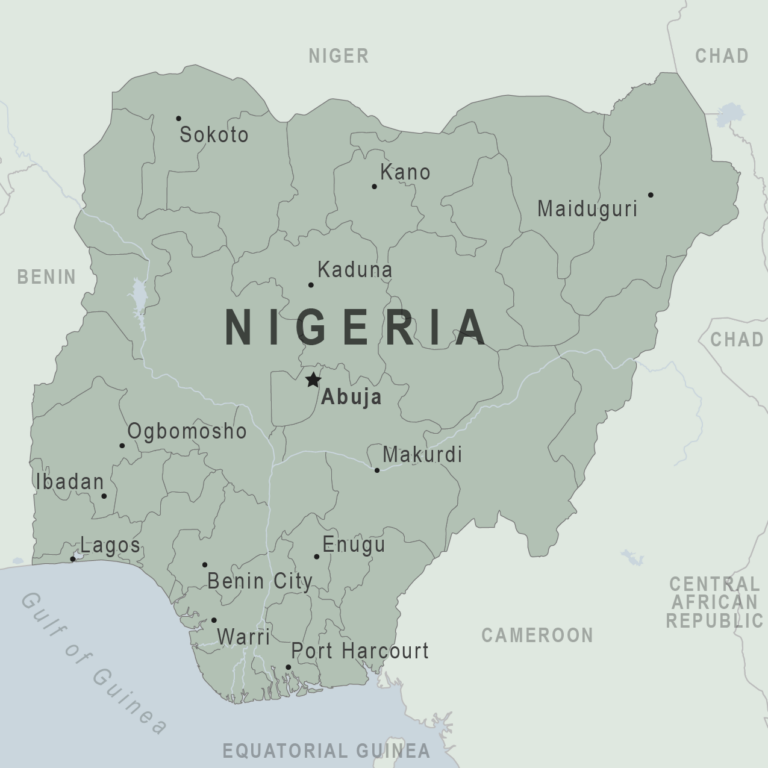
At the heart of the proposed reform is a shift from Nigeria’s existing 36-state federal arrangement to a federation built around six geopolitical zones of equal constitutional status.
The proposed zones are the Middle Belt, North-East, North-West, South-East, South-South and South-West. Each would become a recognised federating unit with its own constitution, government and greater control over its internal affairs.
Under this arrangement, the 36 states would remain within their respective zones but operate with reduced executive powers. They would become leaner administrative and service-delivery units, while the zones would take responsibility for broader policymaking, legislation and socioeconomic development planning.
Fapohunda also proposes that each zone should have at least three capital cities, with the executive, legislature and judiciary located in different states. The arrangement, he argues, would distribute the benefits of governance and prevent a single city from becoming another centre of overwhelming political influence.
The proposal further recognises the right of communities and sub-national groups to seek adjustments to zonal boundaries through a time-limited commission and local referendums. It also envisages self-governing units within each zone, with authority over matters such as language, culture, land and local institutions.
However, the model raises questions about how equal representation would work in a country where the six zones differ significantly in population and number of states. Fapohunda acknowledges this tension and argues that the shift of important political decisions to the zones would make equal representation at the federal level more acceptable.
A Collegiate Presidency to Replace the Single-President Model
Another major feature of the proposal is the replacement of Nigeria’s single-person presidency with a seven-member collegiate executive.
The proposed Presidency would consist of one Coordinating President and six Vice Presidents, each representing and serving as Premier of a geopolitical zone. Together, they would exercise federal executive authority, with decisions taken by majority vote.
The Coordinating President would serve as Head of State, chair the Presidency, represent Nigeria internationally and act as Commander-in-Chief. However, the office would not carry a veto over the other members, who would retain their positions through their respective zones.
Under the proposed arrangement, the National Assembly would elect the Coordinating President from the zone scheduled to produce the office-holder under a predetermined rotation. Each Coordinating President would serve a single four-year term.
Fapohunda argues that this model would prevent the concentration of executive authority in one individual and give all six zones a direct stake in federal governance. It would also eliminate the need for costly nationwide presidential campaigns.
The proposal draws comparisons with collegiate executive arrangements in other countries, including Switzerland. However, it also recognises the danger of political deadlock and proposes majority decision-making, clear voting rules and limited emergency powers to address potential disagreements.
Reducing the Cost of Governance and the Size of Government
The document also questions the financial burden of Nigeria’s current political and administrative structure. Fapohunda argues that the country maintains too many expensive institutions and political offices, leaving limited resources for public welfare and development.
He proposes reducing the National Assembly from its current 469 members to a single chamber of 180 members, with 30 representatives from each zone. The existing Senate and House of Representatives would therefore be replaced by one legislative body.
The proposed federal executive would also have 18 ministers, with three drawn from each zone. Ministries, departments and agencies would be reorganised into six administrative groups, known as spans, each headed by a Vice President.
A Federal Bodies Rationalisation Commission would review existing federal institutions and determine which should remain, merge, transfer to the zones or be dissolved. Agencies not classified within the stipulated period would automatically be transferred to the zones under the proposed framework.
To prevent future governments from rebuilding an expensive political structure, Fapohunda recommends a constitutional ceiling on the cost of political administration. This would cover the salaries, allowances, aides and running costs of political office-holders and legislatures.
The proposal also calls for public asset declarations, audited accounts, stronger accountability duties and the removal of immunity from investigation or prosecution for corruption for political office-holders.
Devolution of Powers and Greater Control of Natural Resources
A central argument in the reform document is that Nigeria’s federal government currently exercises too much authority over matters that could be managed closer to the people.
Fapohunda proposes reducing the 68-item Exclusive Legislative List to just 12 areas of federal responsibility. These would include defence, foreign affairs, citizenship, currency, federal taxation, customs, aviation, federal security, major inter-zonal infrastructure, national standards and federal institutions.
All other powers would belong to the zones, with no Concurrent Legislative List.
Under this arrangement, responsibilities such as education, healthcare, agriculture, ordinary policing, land administration and electricity distribution would move to the zonal governments. The zones would also control natural resources within their territories and collect taxes not reserved for the Federation.
The proposal would consequently reverse the existing revenue-sharing structure, in which the Federal Government collects and distributes much of the country’s public revenue. Instead, the zones would retain most of their internally generated revenue and contribute an agreed percentage towards financing federal responsibilities.
However, Fapohunda recognises that resource control could deepen economic inequalities between zones with different revenue capacities. To address this, he proposes an Equalisation Fund to support zones whose revenue per person falls below a defined national benchmark.
An independent Fiscal Commission would verify revenue figures, administer the fund and publish regular reports.
National Identity, Minority Rights and the Question of Inclusion
Beyond political offices and revenue distribution, the document addresses Nigeria’s unresolved questions of identity, representation and national belonging.
Fapohunda raises concerns about the limitations of rotating the presidency between the North and South, particularly in a country with more than 250 ethnic nationalities. He questions whether the existing arrangement can guarantee meaningful inclusion for communities that may never have a realistic opportunity to produce a president.
The proposal also identifies grievances surrounding the political representation of the Igbo, Middle Belt, Hausa and Ijaw communities, alongside concerns about the influence of religious divisions on national politics.
Its proposed solution is not simply to rotate the presidency among six zones. It seeks to distribute executive authority across all six through the collegiate Presidency and to recognise the autonomy of communities within the zones.
The document also proposes a federal Bill of Rights that would guarantee citizens the right to live, work, own property, vote and contest for office in any zone on equal terms, subject to a uniform period of residence.
This safeguard is particularly important because the proposed decentralisation could create new centres of political dominance. Without enforceable protections, transferring power from Abuja to the zones could reproduce the same exclusionary practices at a different level.
Can Nigeria Enact Such a Fundamental Reform Before May 2027?
Perhaps the most ambitious aspect of Fapohunda’s proposal is its proposed timeline. It seeks the enactment of a reformed constitutional framework between the January 2027 elections and the presidential handover scheduled for May 29, 2027.
The document proposes that political parties, presidential candidates, the National Assembly leadership and state governors sign a National Accord before the elections. Under this agreement, they would commit to implementing the proposed reforms regardless of who wins.
It also outlines a process involving a Declaration of Necessity and constitutional alteration under Section 9 of the 1999 Constitution. The proposed framework would then commence on May 29, 2027, with further institutional changes taking place over the following two years.
However, Fapohunda acknowledges that the timetable carries serious legal and political risks. He notes that reliance on the doctrine of necessity alone could face a constitutional challenge, arguing that Section 9 must provide the legal basis for the proposed changes.
The document also raises unresolved questions about whether Nigerians should approve the new arrangement through a referendum, how the six zones should rotate the presidency and whether equal zonal representation can work without a population-based legislative chamber.
These are not minor details. They go to the heart of whether the proposal can secure sufficient political support and public legitimacy.
Restructuring or Better Leadership: What Should Come First?
The proposed reforms are likely to generate debate over whether Nigeria’s problems require a fundamental restructuring of its political system or stronger accountability within the existing framework.
Critics of restructuring may argue that poor leadership, weak institutions and the misuse of public resources are the main problems, and that transferring more powers to the zones could simply reproduce these failures at a different level.
Fapohunda’s response is that the concentration of authority and revenue at the centre contributes to weak accountability. In his view, decentralisation, clearer constitutional responsibilities and stronger safeguards would make governments more answerable to the people they serve.
Ultimately, his proposal presents the 2027 elections as more than another contest for political office. It challenges political leaders and citizens to consider whether Nigeria’s existing governance structure can adequately address its economic, political and social pressures.
Whether the country adopts this model or pursues a different path to reform, the questions it raises remain central to the debate about Nigeria’s future: how should power be shared, how much should the centre control, and what kind of political system can give citizens a stronger voice in governance?