
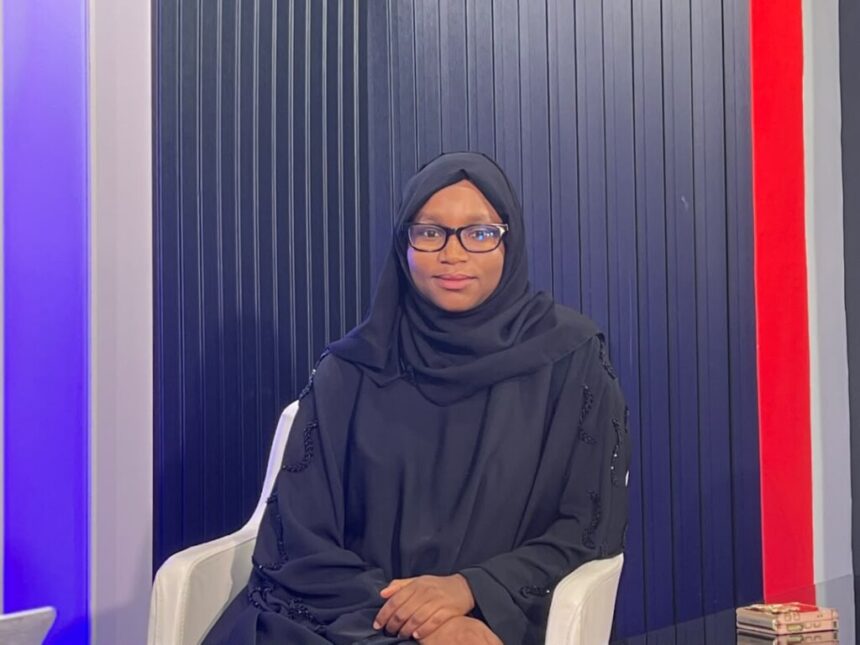
Dr. Maryam Ahmed Almustapha, has called for improved welfare for medical professionals, increased investment in Nigeria’s healthcare system, and urgent government action to curb the growing migration of doctors abroad, warning that the country’s health sector cannot continue to function effectively without adequate support.
Speaking on S24 Television’s Spotlight programme in Abuja, Dr. Almustapha reflected on her journey into medicine, her academic background, and the sacrifices required to become a medical doctor, stressing that healthcare professionals deserve special recognition because of the enormous responsibilities they shoulder in saving lives.
The University of Bahrain graduate said her passion for medicine began with her love for Physics, Chemistry, Biology and Mathematics, as well as her fascination with understanding the human body.
According to her, the journey through medical school is one of the most demanding academic and professional paths, requiring years of study, financial commitment and personal sacrifice before one can qualify to practise.
“Medical practitioners sacrifice their time, comfort and even their personal lives to save others. From medical school to internship, housemanship and specialist training, the expectations are enormous. Medical experts deserve to be treated better because of what they contribute to society,” she said.
Dr. Almustapha lamented Nigeria’s poor doctor-to-patient ratio, describing it as one of the major challenges confronting the country’s healthcare system.
She noted that inadequate funding, poor working conditions and limited opportunities have continued to push many Nigerian doctors to seek employment abroad under what is popularly known as the “Japa” syndrome.
While acknowledging the growing wave of migration, she commended the thousands of medical professionals who have remained in Nigeria despite difficult working conditions.
“There are still many dedicated doctors who have chosen to remain in Nigeria. They continue to do their best despite enormous challenges, and they deserve appreciation and support,” she said.
She urged governments at all levels to significantly increase funding for the health sector, improve hospital infrastructure, procure modern medical equipment and create better welfare packages for healthcare workers.
According to her, the misconception that doctors are only interested in higher salaries is far from the truth.
She explained that most medical professionals would rather see resources invested in strengthening the healthcare system through modern equipment, improved facilities, research funding and quality healthcare delivery.
“People often assume doctors simply want more money, but that is a misconception. Many doctors would prefer to see hospitals properly equipped and the healthcare system strengthened because that ultimately benefits patients,” she explained.
Dr. Almustapha highlighted the enormous financial burden borne by medical practitioners throughout their careers, listing medical school tuition, MBBS examinations, National Youth Service Corps (NYSC), induction fees, housemanship, postgraduate membership examinations, medical textbooks, journals and continuous research as expenses largely financed by individuals.
She argued that government funding for healthcare and medical education remains grossly inadequate compared to international standards.
“The amount Nigeria allocates to healthcare is nothing compared to what many countries invest. If we truly want quality healthcare, government must prioritise funding,” she stated.
She further advocated increased investment not only in healthcare but also in education and security, describing the three sectors as the foundation of national development.
Addressing patients, the nephrologist advised Nigerians against self-medication and patronising unqualified roadside health providers.
She stressed that early diagnosis by qualified medical professionals remains the safest and most effective way to manage illnesses.
“People should visit hospitals for proper diagnosis instead of bypassing the healthcare system or seeking treatment from unqualified individuals,” she advised.
Dr. Almustapha expressed concern that the rising cost of healthcare has made medical treatment unaffordable for many Nigerians, leaving numerous patients unable to access essential services.
She argued that improving healthcare financing would reduce out-of-pocket expenses and improve access to quality medical care.
Speaking on what she would prioritise if appointed Minister of Health, she identified increased funding, rehabilitation of public hospitals, procurement of modern medical equipment, improved staff welfare and healthcare infrastructure as immediate priorities.
She recalled seeing videos showing deteriorating hospital facilities and obsolete MRI machines, describing the situation as unacceptable for a country of Nigeria’s size and population.
The nephrologist also proposed a policy barring public office holders from seeking medical treatment abroad while serving in government.
According to her, such a policy would compel leaders to improve Nigeria’s healthcare facilities and restore public confidence in government hospitals.
“If political leaders use the same public hospitals as ordinary Nigerians, they will have every reason to ensure those hospitals function effectively. That is how confidence in the healthcare system can be restored,” she said.
Dr. Almustapha also decried the growing spread of misinformation about healthcare, noting that many people without medical expertise now make misleading public health claims through social media and other platforms.
She called for stronger regulatory measures to discourage the spread of false medical information capable of endangering lives.
Reflecting on the COVID-19 pandemic, she said the global health crisis exposed significant weaknesses in Nigeria’s healthcare system and should serve as a wake-up call for policymakers.
She urged authorities to strengthen emergency preparedness, disease surveillance and healthcare infrastructure to better respond to future public health emergencies.
The medical expert also encouraged Nigerians to adopt healthier lifestyles, maintain good personal hygiene and remain committed to preventive healthcare practices, noting that individual responsibility remains an important component of disease prevention.
She concluded by urging government, healthcare professionals and citizens to work together to rebuild confidence in Nigeria’s healthcare system, saying sustainable investment in hospitals, medical personnel and public health remains essential for achieving quality healthcare for all Nigerians.