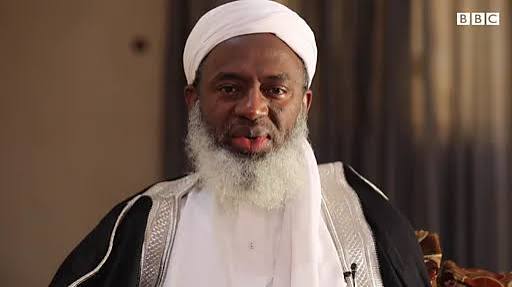
Prominent Islamic scholar, Sheikh Ahmad Gumi, has argued that religious clerics who actively participate in politics are more beneficial to society than those who merely offer prayers for politicians while remaining detached from governance.
Speaking on the role of religious leaders in public affairs, Gumi said clerics should not shy away from political participation if they genuinely seek positive change, stressing that politics plays a critical role in shaping society and influencing policies that affect the lives of citizens. (Daily Trust)
According to him, active involvement in politics gives clerics the opportunity to promote justice, accountability and good governance, rather than limiting their influence to offering prayers for elected officials.
The cleric maintained that many of the societal challenges confronting Nigeria require practical engagement, adding that religious leaders can contribute meaningfully to nation-building by participating directly in the political process instead of remaining on the sidelines.
Gumi’s remarks come amid ongoing debates over whether religious leaders should engage in partisan politics or maintain neutrality. While some argue that clerics should focus solely on their spiritual responsibilities, others believe they have a civic duty to participate in governance, provided they uphold ethical standards and serve the public interest. (Daily Trust)
Over the years, Gumi has consistently criticised what he describes as the growing closeness between some clerics and political office holders. He has previously warned that politicians have turned some religious leaders into “bootlickers” by making them dependent on political patronage, thereby weakening their ability to speak truth to power. (Daily Trust)
His latest comments have reignited discussions on the appropriate role of religious leaders in Nigeria’s democratic process, particularly as political activities continue to gather momentum ahead of the 2027 general elections. Critics argue that partisan involvement could compromise the moral authority of clerics, while supporters contend that principled political participation can help drive reforms and strengthen democratic governance.