

The mission’s closure follows a diplomatic standoff between the United States and Russia, raising fresh concerns about regional security and the future of thousands of displaced Sahrawis.
The United Nations has begun winding down its peacekeeping mission in Western Sahara after 35 years, following a failure by the Security Council to agree on extending its mandate.
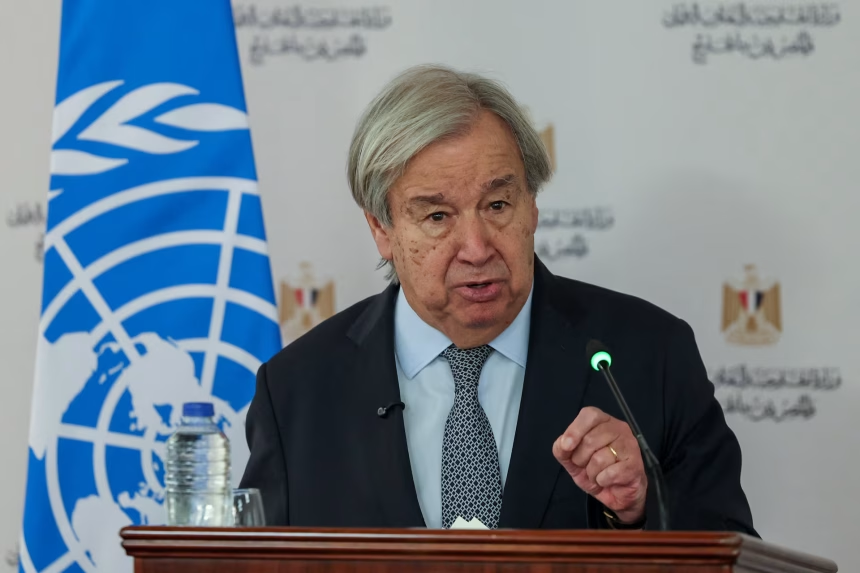
UN Secretary-General António Guterres confirmed the development on Sunday, November 1, 2026. The decision ends the deployment of the United Nations Mission for the Referendum in Western Sahara, known as MINURSO. The mission began in 1991 to monitor a ceasefire between Morocco and the Polisario Front. It also had a mandate to organise a referendum on the territory’s political future.
However, disagreements over who qualified to vote prevented the referendum from taking place. The mission continued monitoring the ceasefire and reporting security developments despite the absence of a political settlement.
US-Russia Dispute Triggers the Closure
The mission’s future became uncertain after the United States and Russia failed to agree on competing proposals at the Security Council on October 30.
Washington presented a draft resolution that would have extended the mission’s mandate for another year. However, the proposal also supported Morocco’s autonomy plan as the basis for negotiations over the disputed territory.
Russia vetoed the American proposal, arguing that it favoured Morocco’s position and could prejudge the question of sovereignty.
Moscow subsequently introduced a separate resolution seeking a straightforward one-year extension of MINURSO’s mandate. The proposal received only three votes in favour, while the United States voted against it. Eleven other members abstained, leaving the resolution short of the nine votes required for adoption.
With neither proposal securing approval, the mission’s mandate expired on October 31. Its winding-down process began the following day.
A Conflict That Has Lasted for Five Decades
The dispute over Western Sahara dates back to 1975, when Spain ended its colonial administration of the territory.
Morocco subsequently took control of most of the region, while the Polisario Front continued its campaign for independence on behalf of the Sahrawi people. The movement, which receives support from Algeria, seeks to establish an independent Sahrawi state.
The United Nations brokered a ceasefire between Morocco and the Polisario Front in 1991. Both sides accepted a settlement framework that included a referendum allowing residents to choose between independence and integration with Morocco.
However, disagreements over voter eligibility and the terms of the vote stalled the process for decades.
Tensions escalated again in November 2020 when the Polisario Front announced that it would no longer observe the ceasefire. Low-level hostilities have continued since then, despite international efforts to revive negotiations.
Thousands of Sahrawis Remain in Refugee Camps
The dispute has also created a prolonged humanitarian crisis. Thousands of Sahrawis fled the fighting and settled in refugee camps around Tindouf in southwestern Algeria.
The Polisario Front administers five camps in the area. Algeria and the movement estimate that more than 160,000 people live there, although Morocco disputes the figure. The United Nations refugee agency, UNHCR, provides assistance to about 90,000 vulnerable refugees.
Many families have spent decades in the camps, with younger generations growing up without ever visiting the territory their families consider home.
According to Reuters, more than 80 per cent of camp residents rely on humanitarian assistance to meet basic food needs. Residents also face water shortages and difficult living conditions.
The end of MINURSO has therefore renewed concerns about the future of these communities and the possibility of a lasting political solution.
Morocco, Algeria and Polisario React
Morocco welcomed the failure to renew the mission’s mandate, describing it as a significant development in its efforts to advance its autonomy proposal.
The country wants Western Sahara to remain under Moroccan sovereignty, with the territory managing its internal affairs through an autonomy arrangement.
Algeria, however, criticised the outcome and accused the United States of showing excessive bias towards Morocco. The Polisario Front also expressed concern over the Security Council’s failure to reach an agreement.
The disagreement reflects the wider regional tensions between Morocco and Algeria, which severed diplomatic relations in 2021.
UN Warns of Possible Security Consequences
Guterres has expressed concern about the security situation in Western Sahara and the possibility of renewed hostilities following the mission’s closure.
He has urged all parties to exercise restraint and avoid actions that could threaten regional stability.
Although MINURSO’s peacekeeping operations have ended, the United Nations will oversee the withdrawal of its personnel, equipment and other assets. A smaller team will handle the administrative and logistical process.
The UN has also reaffirmed its commitment to supporting dialogue and pursuing a peaceful, mutually acceptable solution that respects the right of the people of Western Sahara to self-determination.
The end of the mission marks a major shift in the UN’s involvement in the territory. However, it does not resolve the decades-long dispute. Instead, it leaves fresh questions about security, diplomacy and the future of a population that has waited generations for a final settlement.