
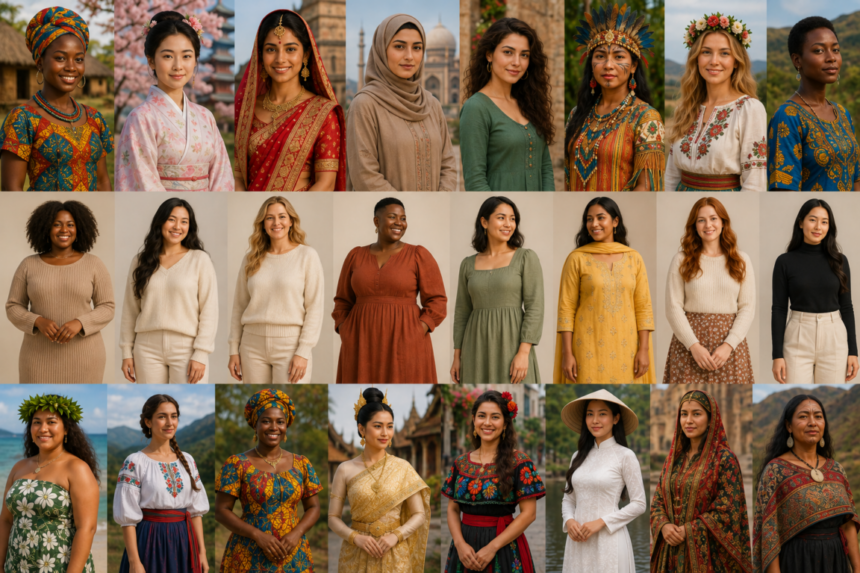
Why should there be a single beauty standard in a world where people are born with different genes, different body shapes, and different body types?
Every day, millions of people try to change their appearance to match society’s idea of the “perfect” body, some follow strict diets, while others spend hours exercising, use beauty treatments, or undergo cosmetic procedures.
As a result, many people spend years chasing an image that may not reflect who they naturally are. However, the reality is simple: human bodies are naturally diverse. Yet society often promotes one narrow version of beauty and encourages everyone to strive for it.
How Beauty Standards Have Changed Over Time
History shows that beauty standards are not permanent. Instead, they change from one era to another and from one culture to another. For example, thousands of years ago, fuller bodies represented health, fertility, and wealth. The Venus of Willendorf statue reflects a time when people admired larger body shapes because they symbolized survival and prosperity.
Similarly, people in ancient Egypt admired soft and rounded female figures, while ancient Greeks valued balance and proportion rather than extreme thinness. Later, during the Renaissance, artists celebrated women with broad hips, fuller stomachs, and curvy figures.
Consequently, many paintings from this period display body types that differ greatly from today’s fashion ideals. The Victorian era introduced yet another trend, with women wearing tight corsets to create very small waists. As a result, many endured discomfort and health problems to achieve the fashionable hourglass figure.
The Rapid Changes of the Twentieth Century
The twentieth century transformed beauty ideals faster than ever before. In the 1920s, flappers rejected traditional expectations and embraced a slim, boyish look. Furthermore, women cut their hair short and abandoned restrictive corsets.
By the 1950s, curves returned to fashion, and Hollywood stars such as Marilyn Monroe influenced women to seek an hourglass shape with a small waist and fuller hips. Meanwhile, the 1960s celebrated extreme thinness through models like Twiggy.
Decades later, the trend returned in the 1990s with the rise of the “heroin chic” look that dominated many fashion campaigns. Therefore, these dramatic shifts prove that beauty standards do not stay the same for long.
The Influence of Social Media
Today, social media plays a major role in shaping beauty standards. Platforms like Instagram expose people to thousands of carefully edited images every day.
Moreover, influencers, celebrities, and brands often present highly polished versions of themselves. Filters, photo editing apps, and cosmetic procedures can make these images appear flawless. Consequently, many people compare themselves to standards that are difficult or even impossible to achieve. Young people face particular pressure because they grow up in a digital world where likes, comments, and followers can make appearance seem more important than ever.
The Hidden Cost of Perfection
The pressure to meet beauty standards can affect both physical and mental health. For instance, many people struggle with low self-esteem because they believe their bodies are not good enough. Others develop unhealthy eating habits or become obsessed with changing their appearance.
Moreover, the problem becomes even more frustrating because beauty standards continue to change. A feature that society praises today may fall out of fashion tomorrow. Indeed, history has shown this pattern again and again. As a result, chasing perfection can become a never-ending race with no finish line.
A Shift Toward Acceptance
Fortunately, attitudes are beginning to change, body positivity and inclusivity movements encourage people to appreciate different body shapes, sizes, skin tones, and abilities. In addition, many brands now feature a wider range of models in their advertisements.
These changes reflect an important truth: beauty does not come in one shape or size. After all, genes play a major role in how people look. Some people naturally have broad shoulders, while others have wider hips or smaller frames.
Likewise, body proportions vary from person to person. These differences are normal, healthy, and natural. Therefore, expecting everyone to fit the same beauty standard ignores the diversity of human bodies.
Beauty Beyond Trends
Perhaps the biggest lesson from history is that beauty standards never stay the same. What society calls beautiful today may not be considered beautiful a century from now. Trends change, fashion changes, and cultural values change.
Nevertheless, qualities such as confidence, kindness, health, and self-acceptance remain important across generations. Instead of asking how our bodies can fit society’s standards, perhaps we should ask why society expects so many different people to fit one standard in the first place.
Ultimately, beauty has never belonged to one body type. It exists in diversity, individuality, and the many ways people express themselves. Our differences are not flaws. Rather, they are part of what makes us human, and that may be the most beautiful truth of all.