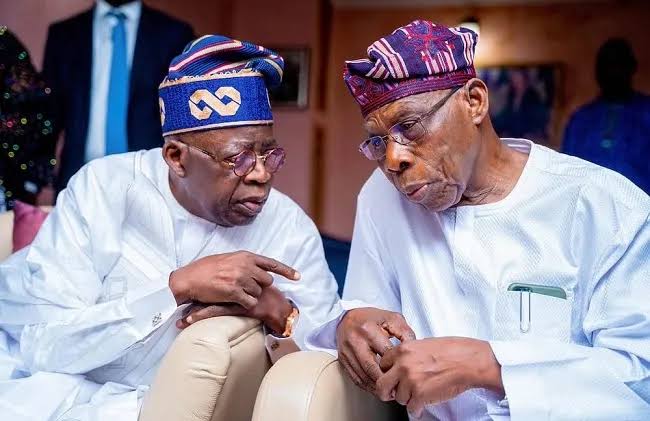
Former President Olusegun Obasanjo has criticised President Bola Tinubu’s economic reforms, saying the depreciation of the naira and the removal of petrol subsidy have worsened poverty and reduced Nigerians’ purchasing power.
Obasanjo made the remarks on Wednesday at the Financial Times Africa Summit 2026 in London, United Kingdom, where he questioned the impact of the administration’s economic policies on the living conditions of citizens.
According to the former president, the sharp fall in the value of the naira against the United States dollar has significantly weakened the financial position of Nigerians.
“We do not live in isolation as a country. We interact with the rest of the world. And overnight, you devalue the currency by 300 percent. The naira went from N500 to a dollar to N1,500 to a dollar,” he said.
Obasanjo argued that the currency depreciation had made Nigerians poorer and contributed to the country’s high poverty levels.
He said the outcome of the reforms could not be considered beneficial if millions of citizens continued to struggle with the rising cost of living.
“You cannot say to me that that is good for Nigeria. You cannot say to me that that is good for us in any sense,” he added.
Obasanjo Questions Economic Progress
The former president also expressed doubts about whether Nigeria’s economy was improving under Tinubu’s administration.
He questioned the argument that the president should be given another term to consolidate his economic reforms, insisting that the policies should be assessed based on their effects on citizens.
Obasanjo maintained that economic programmes should improve the welfare of the population rather than deepen financial hardship.
His comments come amid continuing concerns over the cost of food, transportation, housing and other essential goods and services.
Background to Tinubu’s Reforms
Tinubu announced the removal of the petrol subsidy during his inauguration on May 29, 2023. The decision was followed by increases in petrol prices and transportation costs across the country.
In June 2023, the administration also introduced foreign exchange reforms aimed at allowing the naira to trade more freely and addressing distortions in Nigeria’s currency market.
The policies were designed to reduce government expenditure, improve foreign exchange market efficiency and attract investment.
However, the subsequent depreciation of the naira and rising prices placed considerable pressure on households and businesses, particularly those dependent on imported goods and raw materials.
Call for Production and Accountability
Obasanjo has repeatedly argued that Nigeria needs to address corruption, reduce wasteful government spending and strengthen domestic production to improve its economic performance.
His latest remarks have renewed debate over whether the Tinubu administration’s reforms have delivered sufficient benefits to Nigerians to justify the hardship associated with their implementation.
While supporters of the reforms argue that the policies are necessary to correct longstanding economic distortions, critics maintain that the government has not adequately protected vulnerable citizens from their effects.
The debate over the reforms continues to centre on how Nigeria can achieve economic stability while improving living standards, reducing poverty and creating employment opportunities.