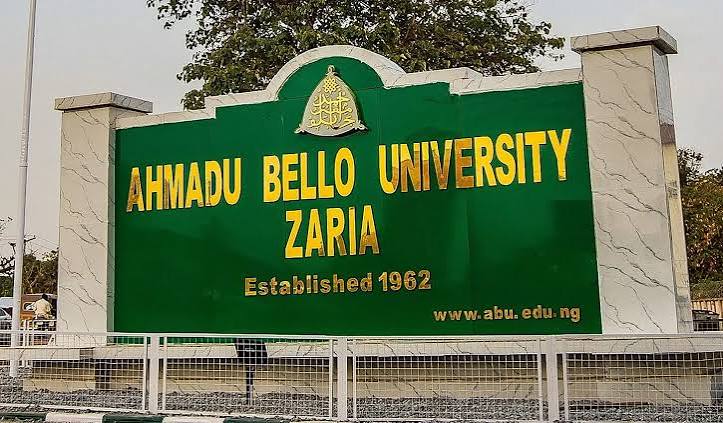
Ahmadu Bello University (ABU), Zaria, has increased registration charges for the 2026/2027 academic session, with students expected to pay between N143,000 and N298,000, depending on their programmes and levels of study.
The revised charges represent a significant increase from the N62,000 to N84,000 range paid by students during the previous academic session, raising concerns about the affordability of public university education amid Nigeria’s rising cost of living.
The Governing Council approved the new charges at its 218th Special Meeting held on September 29, following a resolution of the university Senate and consultations with stakeholders.
The increase has particularly affected students in professional, medical, engineering and science-based programmes, attracting criticism from students and the National Association of Nigerian Students (NANS).
Under the new fee structure, 100-level students studying Medicine and Surgery will pay N242,000, compared with N82,000 previously, while Dentistry fees have increased from N82,625 to N242,000.
Law students will now pay N182,000, up from N82,625, while students in Civil, Computer, Electrical and Mechanical Engineering will pay N172,000, compared with the previous N82,625.
Nursing Science fees have risen from N78,875 to N212,000. Medical Laboratory Science and Medical Radiography students will also pay N212,000 at the 100-level.
Similarly, Veterinary Medicine fees have increased from N82,625 to N232,000, while Computer Science students will pay N172,000, up from N82,625.
Students studying Accounting, Economics and Public Administration will now pay N152,000, compared with N75,125 in the previous academic session.
Students Protest Fee Increase
The revised charges have triggered reactions among students, some of whom have taken to social media to express concerns about the financial implications of the increase.
Bisallah Abuhaneefah described the latest adjustment as excessive, recalling that students had recently paid significantly lower charges.
“Things are getting worse, this is the same ABU we recently paid N31,500 as tuition fee. The series of increments are not just surprising but outrageous. There’s no education for the common man anymore,” she said.
Gbadebo Adesiyan, a Medicine student at ABU, also criticised the scale and timing of the increase, arguing that it would further burden students and their families.
He called for those responsible for approving the new charges to be held accountable, describing the increase as particularly concerning given the economic hardship facing Nigerians.
Adesiyan also questioned the decision to raise fees so sharply ahead of the 2027 general elections, arguing that it could undermine public confidence in the Federal Government.
NANS Rejects Arbitrary Fee Hikes
The National Association of Nigerian Students has also rejected arbitrary increases in tuition and other institutional charges, warning against shifting the financial burden of public education to students.
Reacting to the ABU development in a statement on Thursday, NANS President, Akinteye Babatunde Afeez, said the association supported the Nigerian Education Loan Fund (NELFUND) but insisted that the scheme should not replace adequate government funding of public universities.
According to him, NELFUND provides loans rather than grants, meaning beneficiaries are expected to repay the funds after graduation and securing employment.
“I support NELFUND. I have consistently supported NELFUND because I believe no Nigerian student should be denied access to tertiary education simply because his or her parents cannot immediately afford the cost of education.
“However, supporting NELFUND does not mean that NANS should outrightly support every increase in tuition fees. NELFUND is a loan scheme, and not a grant. Hence, students have to come back to repay whatever amount is obtained from NELFUND,” he said.
Afeez maintained that the existence of a student loan scheme should not encourage universities to continuously increase their charges.
He stressed that determining how public universities should be funded was different from deciding how much students should pay, adding that government responsibility for education financing should not be transferred entirely to students and their families.
Fee Increases Revive Debate Over University Funding
The latest development has renewed debate over the cost of university education in Nigeria, particularly following a wave of fee increases by federal universities after the eight-month industrial action by the Academic Staff Union of Universities (ASUU) in 2022.
Several institutions reviewed their charges after the strike, citing rising operational expenses, teaching materials, infrastructure costs and other financial pressures.
Although the increases triggered student protests in various institutions, many of the revised charges were not fully reversed.
Concerns about the funding of public universities have also intensified following a Federal Government directive in May 2026 requiring public universities to finance lecturers’ allowances through internally generated revenue.
The directive has raised fears that some institutions could increase student charges to address funding gaps.
A former Vice-Chancellor of Lagos State University, Professor Ibiyemi Olatunji-Bello, had also argued that public universities might need to charge at least N1 million per student annually to achieve financial sustainability.
She said LASU’s monthly wage bill had exceeded N1 billion, while its annual internally generated revenue stood at about N13 billion, which she described as insufficient to cover salaries alone.
“Good quality education needs money,” she said, arguing that universities seeking financial independence would need to substantially increase their fees.
However, there are no indications that the latest ABU increase has prompted similar decisions at some other federal universities contacted by Daily Trust.
BUK Denies Increasing Fees
Bayero University Kano (BUK) has denied increasing tuition or other charges payable by its students.
The university’s Director of Information, Lamara Garba, said the institution was already in the second semester of the current academic session without any adjustment to its fees.
“The university is even in session. We are now in the second semester; we have not increased any tuition fee or any other fee in the university,” he said.
Garba urged students, parents and members of the public to disregard reports suggesting that the university had increased its charges.
University of Abuja Rules Out Fee Increase
The University of Abuja, now known as Yakubu Gowon University, has also said it has no plans to increase tuition fees.
The Acting Director of Information and University Relations, Habib Yakoob, said there were no plans or intentions to raise charges as of the time of his statement.
“As at this moment and to the best of my knowledge, there are no plans or intentions by the university to increase tuition fees,” he said.
In Edo State, the University of Benin (UNIBEN) has similarly not increased its tuition fees for the new academic session.
A parent, Moses Felix, whose child studies Environmental Studies at the institution, told Daily Trust that he paid the same amount as he did during the previous academic session.
University of Jos Says No Fee Hike Directive Received
The University of Jos has also said it has not received any formal or informal communication from the National Universities Commission regarding a proposed increase in tuition fees.
The institution’s Head of Information, Emmanuel Madugu, said the university had not received any directive on the matter.
He noted that the Vice-Chancellor, Professor Tanko Ishaya, chairs the Committee of Vice-Chancellors of Nigerian Universities, arguing that a major policy on university fees would ordinarily be communicated to the committee.
“If there is anything of such, it should have been communicated to us already,” he said.
Madugu, however, said he would make further enquiries to establish whether there had been any new development and provide an update.
The contrasting positions have highlighted the continuing debate over how Nigeria’s public universities can meet rising operational costs without making tertiary education increasingly inaccessible to students from low- and middle-income families.