
When Nigeria raised its green-white-green flag on October 1, 1960, independence carried the promise of a nation free to determine its own future after decades of colonial rule, political agitation and constitutional negotiations.
Sixty-six years later, as the country mark another Independence Anniversary, that promise remains a source of pride, but it is also being measured against the everyday realities of insecurity, rising living costs, poor infrastructure and limited opportunities faced by millions of Nigerians.
From Colonial Rule to Self-Government
Nigeria’s independence was the result of a long political process in which nationalist leaders, political organisations and citizens pushed for greater participation in government and self-rule.
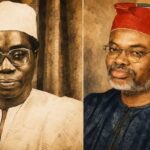
Leaders such as Nnamdi Azikiwe, Obafemi Awolowo, Ahmadu Bello and Abubakar Tafawa Balewa became prominent figures in that transition, while constitutional conferences in the years leading to independence helped shape the political structure of the emerging nation.
On October 1, 1960, Nigeria became an independent country, with Tafawa Balewa as Prime Minister and Nnamdi Azikiwe as Governor-General. The country operated a federal parliamentary system before becoming a republic in 1963, when Azikiwe became its first President.
But independence did not bring an end to the country’s political challenges. Military coups, political tensions and the civil war altered Nigeria’s trajectory, followed by prolonged periods of military rule before civilian government returned in 1999.
That return opened another chapter in the country’s democratic journey and renewed the responsibility of each generation to build institutions and an economy capable of serving its people.
Sixty-Six Years Later, the Struggle Continues
Nigeria has recorded significant achievements since independence, growing in population, economic activity and international influence while producing generations of professionals, entrepreneurs, scientists, athletes, artists and innovators who have made their mark at home and abroad.
The country’s music and film industries now command global audiences, while Nigerians continue to build businesses and careers in technology, medicine, finance, science, sports and the creative industries.
Yet these achievements exist alongside economic pressures that remain deeply personal for millions of households.
The latest figures displayed by the National Bureau of Statistics put headline inflation at 15.39 per cent and food inflation at 19.57 per cent. While a lower inflation rate indicates that prices are rising more slowly, it does not mean that the prices of food, transport, rent and other essentials have returned to their earlier levels.
For households, the more immediate question is whether income can still cover the cost of daily life, from food and transportation to electricity, healthcare and education. Economic statistics may describe the direction of the economy, but their real significance is often found in the decisions families make around their kitchen tables and in the compromises they are forced to make when income falls short of expenditure.
Insecurity and the Fear of Tomorrow
Economic pressure is only part of the challenge, as insecurity continues to disrupt communities and livelihoods across different parts of Nigeria.
Conflict, banditry, kidnapping and communal violence have affected access to farms, schools, healthcare and other essential services, while displacement has forced many families to leave homes and livelihoods behind. A March 2026 situation report by the United Nations Population Fund said the humanitarian crisis in parts of north-eastern Nigeria and Plateau State had intensified because of conflict, economic hardship and climate shocks, with increased displacement and protection risks, particularly for women and girls.
The situation remained serious later in the year, with UNFPA reporting that violence and herder-farmer conflicts in parts of the North-West and North-Central regions had caused widespread displacement, including an estimated 724,543 displaced people across Zamfara and Benue states alone.
Food security has also become closely connected to the security crisis. The Food and Agriculture Organization estimated that nearly 36.3 million Nigerians faced severe acute food insecurity during the June-August 2026 lean season, including about 2.1 million people in Emergency and approximately 10,300 in Catastrophe.
Behind these figures are farmers unable to reach their fields, children whose education has been interrupted, families forced from their homes and communities struggling to cope with the pressure created by displacement.
Security, therefore, extends beyond military operations. It also means creating communities where people can farm, travel, study, work and access essential services without living under persistent fear.
Bad Roads, Broken Journeys and the Cost of Living
For motorists, commuters, traders and transport operators, the condition of Nigeria’s roads provides another everyday measure of how effectively public infrastructure serves citizens.
Potholes, flooding, damaged bridges and unfinished projects can turn ordinary journeys into expensive and exhausting trips, while poor roads increase vehicle maintenance costs, delay the movement of agricultural produce and make it harder for businesses to connect with markets.
For rural communities, the consequences can be even greater when damaged routes restrict access to hospitals, schools and commercial centres. The cost of transportation then feeds into the wider cost of living, as higher fuel, maintenance and logistics expenses can translate into increased fares and higher prices for goods.
For a family already dealing with rising food prices, additional costs for transportation, electricity, healthcare and education can make an already difficult situation even harder.
This is why economic progress cannot be measured only through production figures, investment announcements or new infrastructure projects. It must also be reflected in whether people can afford basic necessities, access essential services and make plans for the future with greater confidence.
What Must Nigeria Do Differently?
As Nigeria marks 66 years of independence, the anniversary offers an opportunity to move beyond celebration and examine what must change if the promise of independence is to become more tangible in people’s everyday lives.
Security remains central to that challenge, particularly in communities affected by violence and displacement. Better intelligence, coordinated operations, effective investigations and accountability for crimes are important, but so are efforts to address local disputes, displacement and the economic pressures that can leave communities vulnerable.
The economy presents another challenge. Policies aimed at strengthening growth need to create opportunities that households and businesses can actually experience, whether through stronger food production, improved storage and transport systems, affordable finance for small businesses or an environment in which employers can create stable jobs.
Government communication is equally important. Major economic reforms require reliable data, clear explanations and regular assessments of their impact so that citizens can understand both their immediate effects and their longer-term objectives.
Nigeria also needs a more consistent approach to infrastructure. Roads, electricity, healthcare, education and public transportation require not only new investment but regular maintenance and effective oversight. Public projects should have clear costs, timelines and completion targets, while contractors should be held accountable for the quality and durability of their work.
Beyond the economy and infrastructure is the question of public accountability. Citizens need transparent budgets, open procurement processes, functioning public institutions and meaningful opportunities to demand answers from those entrusted with public resources.
Democracy does not end with elections. Elections provide the mechanism for choosing representatives, while governance determines what happens between one election and the next.
Independence Must Mean More Than a National Celebration
Nigeria’s 66th Independence Anniversary is therefore both a moment to remember a historic achievement and an opportunity to reflect on the distance between the aspirations of 1960 and the experiences of Nigerians today.
The generation that fought for independence could not have predicted every challenge the country would face in the decades that followed, but it secured the political freedom for future generations to determine their own destiny. That responsibility now belongs to today’s Nigerians, through the choices made by public institutions, businesses, communities and citizens.
Nigeria has enormous resources, a large and youthful population, entrepreneurial energy and a cultural influence that extends far beyond its borders. The challenge is to turn those advantages into improvements that can be felt beyond economic statistics and national celebrations.
At 66, the meaning of progress may be found less in the size of the Independence Day parade or the number of speeches delivered than in the ordinary experiences that define people’s lives: whether a family can afford its meals, whether a child can attend school safely, whether a farmer can reach the market, whether a patient can access healthcare and whether a worker can travel on a dependable road.
Independence gave Nigeria the freedom to determine its future. The continuing challenge is to make that freedom meaningful in the everyday lives of the people for whom that future was secured.