Despite years of military offensives and billions of dollars in aid, the Lake Chad Basin remains one of Africa’s deadliest terrorism hotspots. Here’s why lasting peace has proved so difficult.
For more than 15 years, the Lake Chad Basin shared by Nigeria, Niger, Chad and Cameroon has remained one of Africa’s most dangerous conflict zones.
The region has witnessed relentless attacks by Boko Haram and its splinter faction, the Islamic State West Africa Province (ISWAP), leaving communities devastated despite repeated military offensives by national armies and the Multinational Joint Task Force (MNJTF).
While security forces have killed or captured several terrorist commanders and reclaimed many communities once under insurgent control, the conflict has continued to evolve rather than disappear.
Millions of people remain displaced, humanitarian needs continue to grow, and terrorist groups still launch deadly attacks on military formations and civilian communities.
A Humanitarian Crisis on a Massive Scale
According to the UN Refugee Agency (UNHCR), the conflict has contributed to an estimated 350,000 deaths across the Lake Chad region, with more than 90 percent of fatalities resulting from indirect causes such as hunger, disease and the collapse of healthcare services.
More than 3.2 million people have fled their homes across Nigeria, Niger, Chad and Cameroon. About 2.9 million are internally displaced, while hundreds of thousands have sought refuge in neighbouring countries.
Today, over 10 million people across the basin depend on humanitarian assistance for survival.
Although governments and international partners have invested billions of dollars in security and recovery efforts including the UNDP’s Regional Stabilization Facility and multi-billion-dollar donor pledges the crisis remains one of the world’s most protracted emergencies.
So why has peace remained so elusive?
Climate Change Has Transformed the Battlefield
One of the biggest but least discussed drivers of insecurity is climate change.
Lake Chad, once one of Africa’s largest freshwater lakes, has shrunk dramatically over the past several decades due to climate variability, drought and increased demand for water.
The shrinking lake has destroyed the livelihoods of millions of fishermen, farmers and pastoralists who depend on it for survival.
Beyond the economic impact, the changing landscape has also created an operational nightmare for security forces.
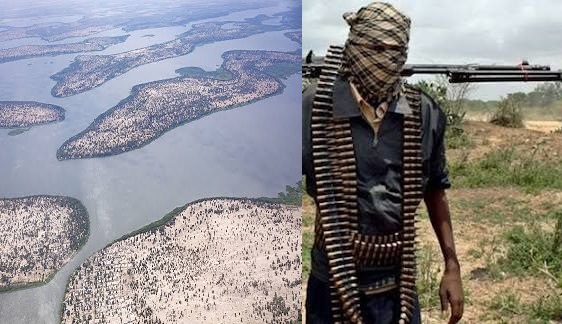
The lake’s maze of islands, marshes, swamps and narrow waterways provides ideal hideouts for insurgents, making surveillance and conventional military operations far more difficult.
As legitimate sources of income disappear, terrorist groups exploit growing frustration by offering recruits money, food, protection or a sense of belonging.
Poverty and Unemployment Fuel Recruitment
Poverty remains one of terrorism’s strongest allies.
Many communities around Lake Chad suffer from high unemployment, poor infrastructure and limited access to education and healthcare with poverty rates exceeding 70%.
For many young people with few economic opportunities, extremist groups present themselves as employers, protectors or providers.
Security analysts argue that unless governments create sustainable livelihoods, terrorist organisations will continue to find new recruits even after suffering military losses.
Terrorist Groups Have Adapted
Military offensives have weakened Boko Haram over the years, but they have not eliminated the threat.
Instead, insurgent groups have changed tactics.
Rather than holding large territories as they once did, they now rely on ambushes, improvised explosive devices (IEDs), surprise raids, kidnappings and attacks on isolated military bases.
ISWAP, in particular, has demonstrated greater organisational discipline and has built networks that allow it to sustain operations despite repeated military pressure.
This ability to adapt has made the conflict increasingly difficult to end.
Weak Governance Creates Security Gaps
In many affected communities, years of conflict have weakened government institutions.
Schools, hospitals, roads and public services have either been destroyed or abandoned.
Where governments struggle to provide security or basic services, criminal groups and insurgents often exploit the vacuum.
Many residents also become reluctant to cooperate with authorities because of fear, distrust or concerns over retaliation by terrorists.
Without strong local governance, military victories are difficult to sustain.
Porous Borders Allow Terrorists to Escape
The Lake Chad Basin stretches across four countries with thousands of kilometres of largely unguarded borders.
Insurgents frequently cross from one country into another to evade military operations, regroup and launch fresh attacks.
Although Nigeria, Niger, Chad and Cameroon collaborate through the Multinational Joint Task Force, differences in resources, intelligence-sharing and operational priorities sometimes create opportunities for terrorists to exploit.
The transnational nature of the conflict means no single country can defeat the insurgency alone.
Weapons Continue to Flow Into the Region
The fall of Libya in 2011 accelerated the spread of illegal weapons across the Sahel.
Many of these arms eventually found their way into the Lake Chad Basin through well-established smuggling routes.
The steady availability of assault rifles, explosives and ammunition has enabled terrorist groups to replenish their arsenals even after major military operations.
The illegal arms trade continues to fuel violence across West and Central Africa.
Military operations alone cannot restore stability when millions of people remain displaced.
Displacement camps often struggle with food shortages, poor sanitation, unemployment and limited educational opportunities.
Without long-term recovery programmes, displaced families may remain vulnerable to criminal networks, extremist recruitment and renewed cycles of violence.
Humanitarian assistance and security operations must therefore work side by side.
Can the Crisis End?
Most security experts agree that defeating terrorism in the Lake Chad Basin requires far more than battlefield victories.
Military operations remain essential to protecting civilians and degrading terrorist networks, but lasting peace depends on addressing the deeper causes of instability.
That means investing in education, agriculture, infrastructure, healthcare, youth employment, border security and climate adaptation while rebuilding public trust in government institutions.
Regional cooperation among Nigeria, Niger, Chad and Cameroon must also remain strong, as terrorist groups continue to operate across national boundaries.
The Lake Chad crisis demonstrates that terrorism is rarely sustained by ideology alone. It survives where poverty, weak governance, environmental pressures and insecurity reinforce one another.
Until those root causes are tackled alongside military operations, the region is likely to remain one of Africa’s most enduring security challenges.