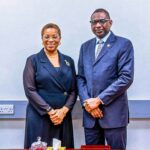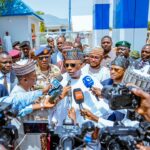

The Emir of Kano, Alhaji Muhammadu Sanusi II, has raised concerns over Nigeria’s nutrition situation, calling for stronger investment, coordination and accountability across government and the private sector to address malnutrition.
Sanusi, who is also Chairman of the Board of Trustees of the Nutrition Society of Nigeria (NSN), spoke in Lagos at the 56th Annual Scientific Conference and Annual General Meeting of the society.
He said Nigeria could not tackle malnutrition through the health sector alone, stressing that agriculture, education, water and sanitation, social protection, trade, finance and political leadership all play important roles in determining nutrition outcomes.
According to him, poor nutrition has implications beyond health, affecting education, productivity and the country’s broader economic development.
“A poorly nourished child will struggle to learn, while a poorly nourished workforce will be unable to deliver the productivity required for Nigeria’s economic transformation,” Sanusi said.
He cited figures from the 2025–26 Nigeria Mini-Demographic and Health Survey, which showed that 41.1 per cent of children under five in Nigeria are stunted, while 19.2 per cent are severely stunted. In the North-West, the prevalence of stunting rises to 58.2 per cent.
Sanusi also noted that only 25.3 per cent of children under five received any iron-containing supplements during the preceding year.
He said the figures should not merely be viewed as statistics but should guide government decisions, budgetary allocations and programmes targeted at vulnerable communities.
“These figures should not discourage us; they should guide us,” he said.
The Emir called for increased investment in local food systems to make nutritious diets more affordable and accessible, while urging greater private-sector participation in food fortification and responsible food marketing.
He also advocated a shift from fragmented interventions and short-term projects towards coordinated systems and sustained investment in nutrition.
Sanusi called for stronger nutrition financing through dedicated budget lines, timely release of funds and effective expenditure tracking.
He further urged stakeholders to scale up proven interventions, including maternal nutrition, breastfeeding support, micronutrient supplementation and food fortification through routine systems rather than isolated projects.
Representing Vice President Kashim Shettima, the Senior Special Assistant to the President on Public Health and Focal Person on Nutrition, Mrs Uju Rochas-Anwukah, said the Federal Government recognised the need for a coordinated approach to tackling Nigeria’s nutrition challenges.
She said nutrition outcomes were influenced by multiple sectors and highlighted the Nutrition 774 Initiative of the National Council on Nutrition, which seeks to take nutrition interventions to all 774 local government areas.
“Good intentions do not feed a child. Budgets must be released on time, expenditures tracked, and every naira judged by measurable community impact,” Rochas-Anwukah said. (News Express Nigeria)
The President of the NSN, Prof. Salisu Maiwada Abubakar, said Nigeria’s nutrition situation required stronger collaboration among food systems, health systems, government, academia and the private sector.
He described the country’s nutrition profile as a warning requiring coordinated action, noting that nutrition problems are interconnected and therefore require equally coordinated solutions. (News Express Nigeria)
Abubakar also highlighted the need for businesses to contribute through food fortification, workforce nutrition programmes, innovation and investment in local food systems.
The Director-General of the National Agency for Food and Drug Administration and Control (NAFDAC), Prof. Mojisola Adeyeye, called for stronger collaboration among regulators, nutrition professionals, academia, industry and policymakers.
She said greater cooperation would support efforts to improve food safety, consumer protection and access to healthy diets.
The conference, themed “Delivering Better Nutrition for All: Connecting the Dots Across Life Cycle, Systems and Sectors,” brought together policymakers, researchers, development partners, civil society organisations and nutrition professionals to examine ways of addressing Nigeria’s malnutrition burden. (News Express Nigeria)
The discussions also focused on maternal and child nutrition, adolescent nutrition, food and biofortification, clinical nutrition and stronger regulation of the nutrition profession.