The African Democratic Congress (ADC) has expressed confidence that it can win the 2027 presidential election without relying on a coalition of opposition parties.
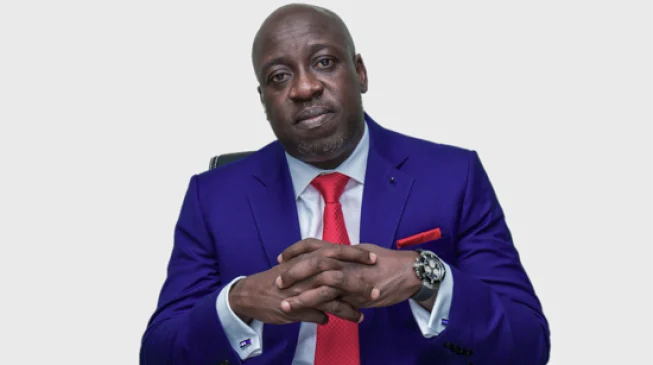
The party’s National Publicity Secretary, Bolaji Abdullahi, made the position known during an appearance on Channels Television’s Politics Today, where he discussed the party’s preparations for the 2027 general elections and the changing dynamics within the opposition.
Abdullahi said the ADC was initially part of efforts to build a broad-based opposition coalition because such an arrangement was expected to make it easier to challenge the ruling All Progressives Congress (APC).
According to him, however, the political situation has changed, and the ADC no longer considers a coalition essential to its chances of winning the election.
“We don’t need a coalition to win this election. The African Democratic Congress does not need a coalition to win this election,” Abdullahi said.
He explained that while a broad opposition coalition could make the party’s task easier, the ADC believes it has sufficient political strength to contest and win the election independently.
“If we are able to build the kind of coalition that we started to build, maybe it will make our job easier, but we don’t need that coalition. We don’t necessarily need the coalition to win the election,” he added.
Abdullahi also expressed confidence in the ability of the party’s presidential candidate, former Vice President Atiku Abubakar, to defeat President Bola Ahmed Tinubu without depending on the support of a wider opposition alliance.
Asked whether Atiku could defeat Tinubu without a coalition, the ADC spokesman responded that he believed the former vice president could do so, stressing that this was the position around which the party was building its campaign strategy.
The ADC’s latest position comes amid significant changes in the opposition landscape ahead of the 2027 elections.
Abdullahi noted that some key political figures associated with earlier coalition discussions have moved in different political directions, altering the structure of the proposed alliance.
He specifically referred to Peter Obi and Rabiu Musa Kwankwaso as major figures whose movement has changed the political calculations surrounding the opposition coalition.
Despite the absence of a unified opposition coalition, Abdullahi said the ADC remains open to cooperation with other political parties and groups.
He clarified that the current discussions are not necessarily focused on producing a single presidential candidate but on identifying areas where opposition groups can work together.
“The conversation is not about how do we produce a single presidential candidate,” he said, adding that discussions are now predominantly about “what areas of cooperation is possible.”
The development marks a shift from earlier efforts to establish a broad opposition alliance capable of presenting a united challenge to the APC in the 2027 presidential election.
For the ADC, the strategy now appears to centre on strengthening its own political structure, mobilising supporters and presenting Atiku Abubakar as a viable alternative to the incumbent administration.
The party’s confidence also sets the stage for a potentially competitive presidential contest, particularly as opposition parties continue to develop separate strategies for challenging the APC.
Political analysts are likely to closely watch whether the ADC can translate its confidence into a nationwide electoral structure capable of competing effectively across Nigeria’s geopolitical zones.
With the 2027 election approaching, the question of opposition unity remains a major factor in Nigeria’s emerging political landscape.
While the ADC insists that it does not need a coalition to win, the party’s willingness to cooperate with other political groups suggests that strategic alliances may still play a role in the election campaign, even if they do not produce a single opposition presidential candidate.
The 2027 presidential contest is therefore increasingly shaping up around competing strategies: the APC’s effort to retain power, the ADC’s independent campaign under Atiku Abubakar, and other opposition movements seeking to establish their own political platforms.
For the ADC, Abdullahi’s declaration sends a clear message: the party believes it has enough political strength to pursue victory on its own terms.