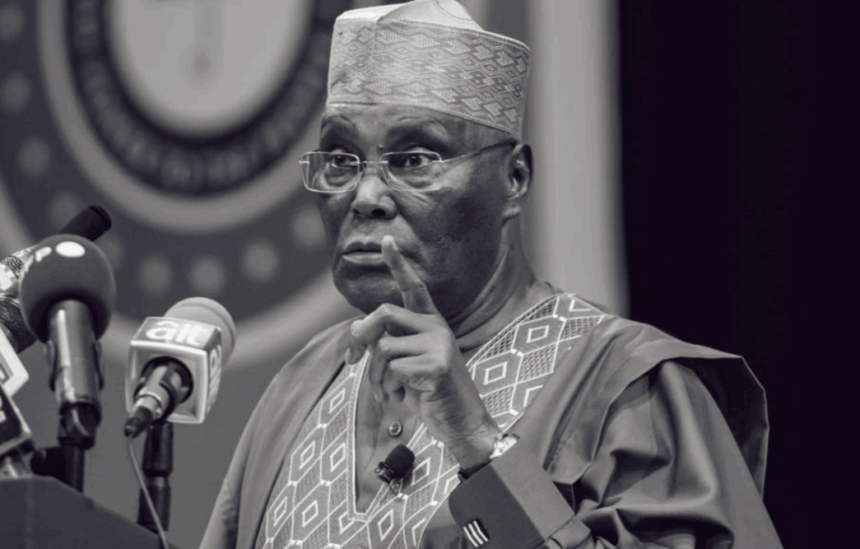
Presidential candidate of the African Democratic Congress (ADC), Atiku Abubakar, has pledged to end insecurity in Nigeria within one year if elected president in the 2027 general elections.
Atiku made the commitment in a recent interview with BBC Hausa, where he outlined some of the measures he said his administration would implement to address the country’s persistent security challenges.
The former Vice President said his government would strengthen the country’s security architecture by recruiting additional security personnel and providing them with the necessary equipment to effectively tackle terrorism, banditry, kidnapping and other forms of criminality.
“I will not take more than one year to end it,” Atiku said, referring to insecurity.
He also linked insecurity to the country’s unemployment crisis, particularly among young people. According to him, his administration would provide adequate funding and support for youths to establish businesses and become economically productive.
He argued that unemployment and economic hardship have contributed to the involvement of some young people in criminal activities.
“We will recruit additional security personnel and provide them with the necessary equipment. We will also provide adequate funding to support youths to establish businesses because many of them are involved in criminal activities due to lack of employment,” he said.
Atiku added that these measures, if implemented effectively, would enable his administration to significantly address insecurity within its first year in office.
“We will take these measures and, within a year, we will end insecurity, God willing,” he stated.
The pledge comes as political activities intensify ahead of the 2027 presidential election, with security expected to remain one of the major issues shaping public debate and voters’ decisions.
Since joining the ADC and emerging as its presidential candidate, Atiku has made several policy pronouncements as he seeks to present an alternative political platform ahead of the election.
Among his recent positions is a pledge to restore fuel subsidy, a proposal that has generated reactions from the Federal Government and sections of the Nigerian public.
The latest security pledge is likely to attract further debate, particularly over the feasibility of completely ending insecurity within one year and the specific strategies required to achieve such an ambitious target.
Nigeria continues to face multiple security challenges across different regions, making security reform, economic opportunities and effective governance central issues in the 2027 political discourse.