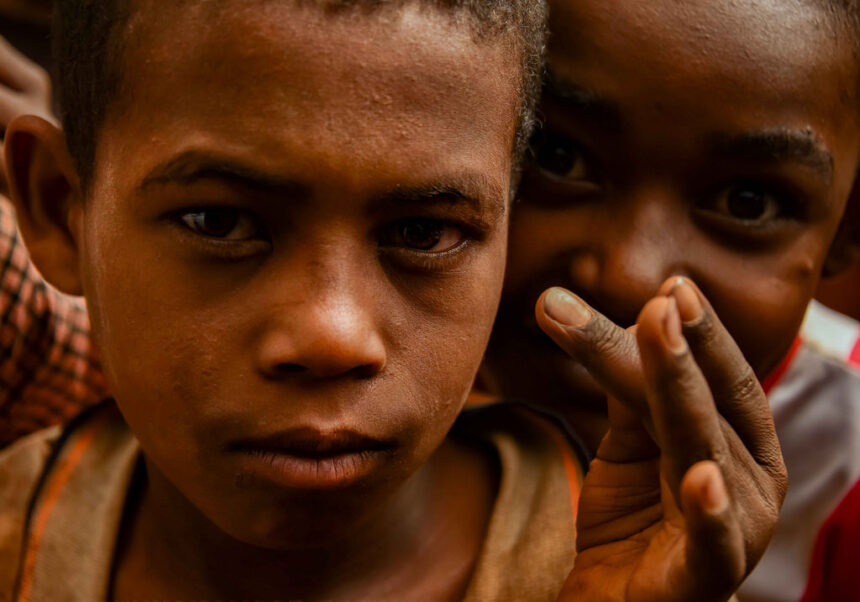
Every morning, long before many Nigerians begin their day, thousands of children take to the streets of many Nigerian cities, begging.
They stand at busy intersections, walk through traffic or move from shop to shop with bowls, cans or plastic plates in their hands. Some ask for food. Others ask for money. Most people see them every day, yet few stop to ask why they are there or who benefits from their presence.
Many people assume street begging is simply the result of poverty. Poverty certainly plays a major role, but the reality is far more complex. Behind every child asking for help lies a story shaped by family hardship, religious traditions, weak social welfare systems and, in some cases, exploitation.
Northern Nigeria records the highest number of child beggars in the country, largely because of the Almajiri system. The system began centuries ago as a respected form of Islamic education. Families entrusted their children to Qur’anic teachers, known as Mallams, while communities supported both the teachers and their pupils with food and other basic needs.
Over time, economic hardship, rapid population growth, and declining community support weakened that model. As resources became scarce, many children began spending hours on the streets searching for food and money rather than focusing on their education. Research published in the Journal of Pediatric Health Care explains that poverty and changing social conditions have transformed many parts of the traditional Almajiri system, leaving children increasingly dependent on street begging for survival.
Many of these children do not beg by choice. UNICEF has documented cases where Almajiri pupils spend several hours each day begging before returning to their Qur’anic schools. Some children reported handing over the money and food they collected to their teachers. Others said they faced punishment if they returned empty-handed.
These accounts raise difficult questions. When children surrender what they collect each day, who truly benefits from their efforts? Child rights advocates argue that some adults responsible for caring for these children rely on their daily collections for survival.
It is important to avoid broad generalisations. Many Mallams reject street begging completely. They focus on teaching the Qur’an, care for their students responsibly and depend on support from local communities instead. However, experts say weak regulation has allowed some people to exploit children while hiding behind a respected religious tradition.
Poverty remains the strongest force driving the problem. Many families struggle to feed their children or pay school expenses. Some parents believe sending a child to a Qur’anic school offers the best chance of receiving an education while reducing financial pressure at home.
Several studies support this view. Researchers have identified unemployment, low household income, poor governance and limited access to quality education as major reasons child begging continues across Northern Nigeria. UNICEF also estimates that millions of children have passed through the Almajiri system over the years, with many ending up on the streets to survive while pursuing religious studies.
Religion also shapes this issue. Islam encourages zakat, which is obligatory charity, and sadaqah, which is voluntary giving. These values encourage Muslims to support people in need. As a result, many motorists and business owners willingly give money or food to children they meet on the streets.
Acts of kindness come from compassion. Yet some experts believe regular cash donations may unintentionally keep vulnerable children on the streets if the money supports exploitative systems instead of improving the children’s lives. The concern is not about discouraging charity. Rather, it is about ensuring assistance reaches the children who need it most.
Street begging creates challenges beyond poverty. Experts warn that children who grow up without proper care, education or protection face greater risks of abuse, trafficking and recruitment into criminal activities. A 2024 study conducted in Bauchi State concluded that the continued neglect of Almajiri children creates long-term social and security concerns for communities. Researchers stressed that these children are more often victims of neglect than perpetrators of crime.
Successive governments have tried to address the problem. Authorities introduced Almajiri schools to combine Islamic and formal education. During the COVID-19 pandemic, several northern states removed thousands of children from the streets and reunited many with their families. UNICEF supported those efforts by helping children return to school or begin vocational training.
Despite these interventions, lasting progress has remained limited. Many programmes suffered from inadequate funding, inconsistent implementation and resistance from communities that feared reforms would undermine religious education.
So, who really profits from street begging?
In some cases, adults receive the money or food collected by children. Criminal groups may also exploit vulnerable children for illegal activities. At a broader level, society often accepts the sight of children begging as normal instead of demanding lasting reforms.
The children themselves gain the least. They lose valuable years of education. They face hunger, illness, harsh weather and the constant risk of abuse. Many grow up without the opportunities needed to escape poverty.
Street begging in Northern Nigeria is not simply about children asking strangers for money. It reflects deeper problems that include poverty, weak child protection systems, limited educational opportunities and the gradual breakdown of a once-respected religious learning tradition.
The child standing beside a busy road is rarely responsible for the system that placed him there. He simply lives with its consequences.
Until governments strengthen education, communities support vulnerable families, religious leaders work together to end exploitative practices and child protection laws receive proper enforcement, the cycle will continue.
Every bowl stretched toward a passing vehicle asks the same question:
Who is really receiving the help, and who continues to pay the price?