
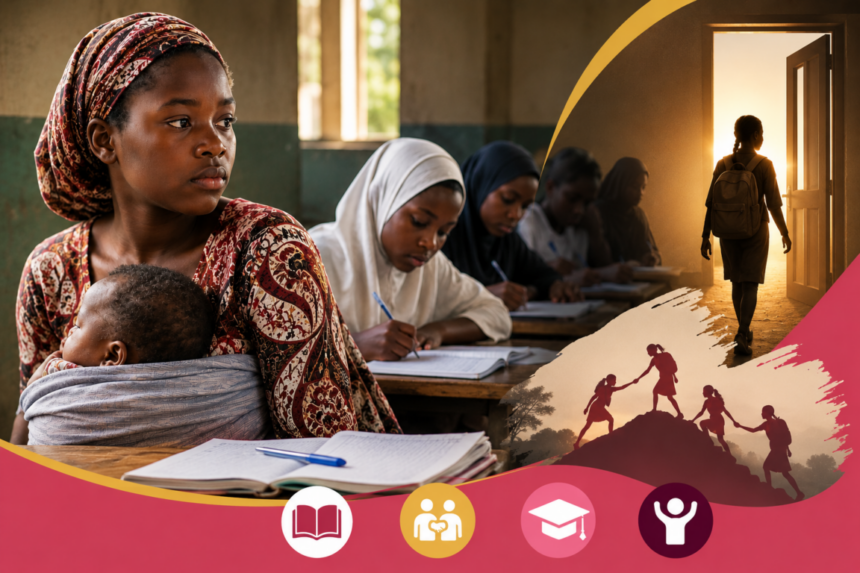
Every day across Northern Nigeria, dozens of schoolgirls exchange classrooms for marriage. For many, the school bell, uniforms and homework is replaced by the responsibilities of motherhood long before they reach adulthood, leaving dreams of education suspended indefinitely.
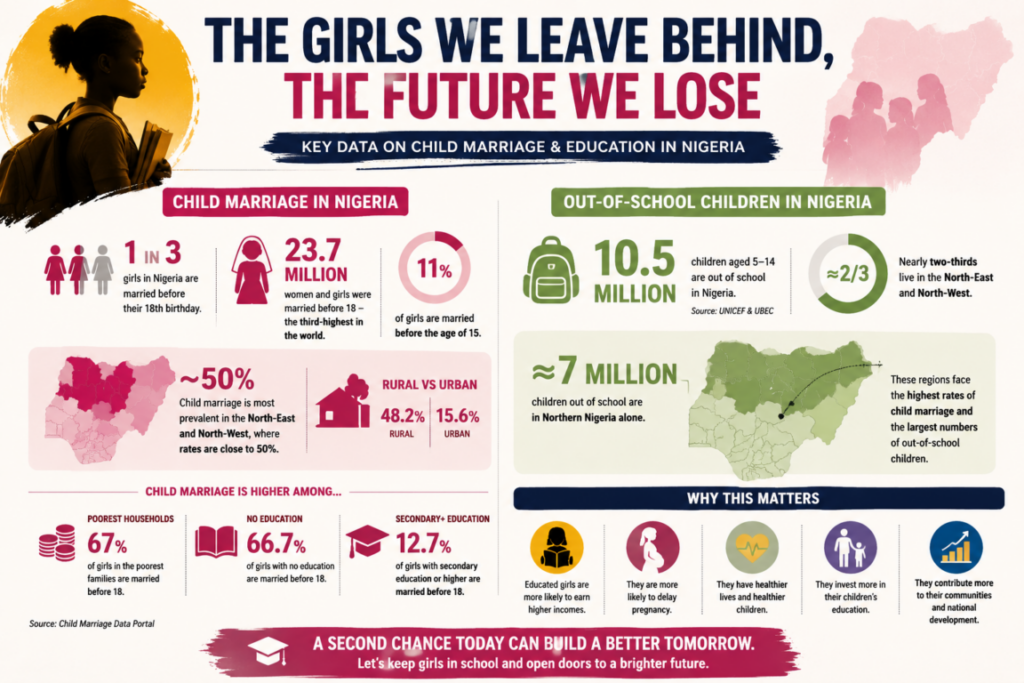
The statistics paint a sobering picture. In Nigeria, one in every three girls is married before her 18th birthday. According to the Child Marriage Data Portal, an estimated 23.7 million women and girls were married before turning 18, giving Nigeria the third-highest number of adolescent marriages in the world.
The practice is particularly widespread in Northern Nigeria, especially the North-East and North-West, where nearly one in every two girls is married before the age of 18. For thousands of girls in the region, marriage signals not just the beginning of family life but the end of their education.
For those who hope to return to school, the odds remain stacked against them. Poverty deeply rooted cultural norms, early motherhood and weak implementation of education policies continue to shut many married adolescent girls out of the classroom.
Their plight mirrors a broader national education crisis. According to UNICEF and the Universal Basic Education Commission (UBEC), about 10.5 million Nigerian children aged five to 14 are out of school, with nearly two-thirds living in the North-East and North-West, equivalent to roughly seven million children in Northern Nigeria alone.
Education advocates say married adolescent girls and young mothers represent a significant, yet often invisible, portion of this out-of-school population.
It is against this backdrop that a non-governmental Organisation, the Participatory Communication for Gender Development Initiative (PAGED Initiative) is advocating gender-responsive school re-entry pathways that would allow married girls and young mothers to resume their education instead of being permanently excluded from the classroom.
Speaking during a training for journalists under the Media Advocacy Project for Married Adolescents and Young Mothers in Abuja, the Programme Director of PAGED Initiative, Ummi Bukar, said the organisation is pushing for policies that guarantee a second chance for girls whose education was interrupted by child marriage.
“We are trying to see how we can get married adolescents back into formal education and also prevent girls from being married off before completing their education,” Bukar said.
She explained that the organisation is also advocating for the extension of Nigeria’s Universal Basic Education programme from nine to 12 years to ensure every child completes secondary education before leaving the basic education cycle.
According to Bukar, child marriage is only one piece of a much larger puzzle. Poverty, entrenched cultural beliefs and family responsibilities continue to prevent many married girls from returning to school even when they are willing.
“Many people believe that once a girl is married, her education should end,” she said. “Most of these girls are burdened with childcare and household responsibilities and receive little or no support to continue their education.”
She argued that school re-entry should not depend on the goodwill of parents or husbands but should instead be guaranteed through enforceable government policies.
Although Nigeria has legal frameworks such as the Child Rights Act and the Universal Basic Education Act that promote access to education, Bukar noted that implementation remains inconsistent across many states.
She, however, expressed optimism over the recently developed National Re-entry Pathways Framework for Married Adolescents and Young Mothers, describing it as a major opportunity for states to institutionalise support for girls seeking to return to school.
Kaduna State has already validated the framework, while Kano State is finalising plans to launch its implementation.
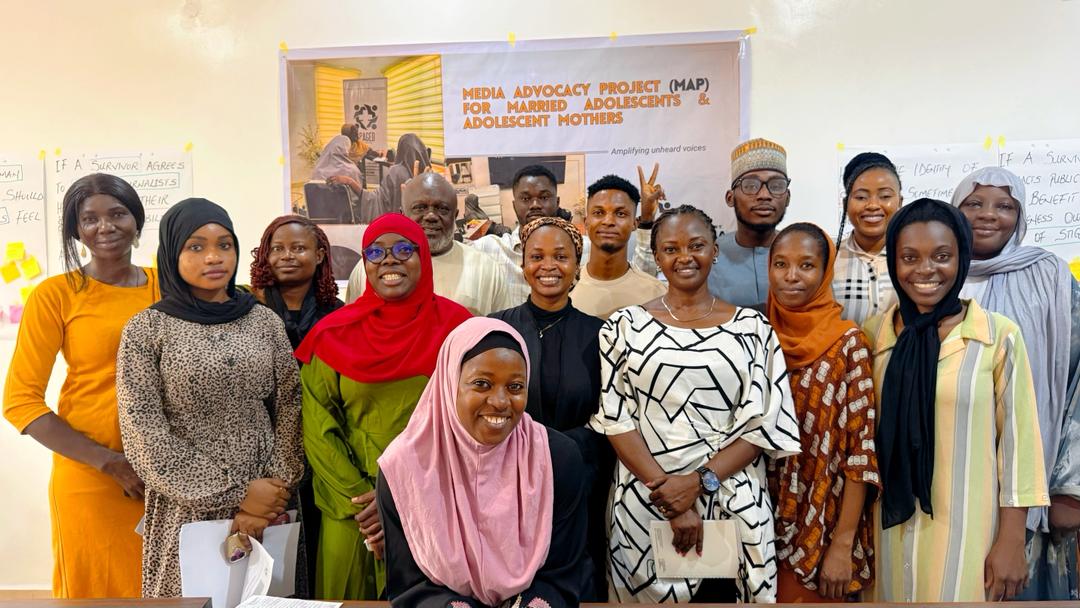
Supported by the Malala Fund, the initiative brings together communities, traditional rulers, civil society organisations and journalists to advocate policy reforms and shift public attitudes towards girls’ education.
For the project’s Strategic Communication Consultant, Iliyasu Ibrahim, the challenge extends far beyond the project’s target states of Borno, Kano and Kaduna.
“The expectation is that journalists will help create a national conversation around re-entry pathways because this problem exists across the country,” he said.
“There are girls in different parts of Nigeria who dropped out of school because of marriage, poverty or other circumstances and never returned.”
Experts say that helping even a fraction of married adolescent girls return to school could generate lasting social and economic gains. Over the years, research has shown that girls who complete their education are more likely to earn higher incomes, delay future pregnancies, improve the health and education of their children and contribute meaningfully to national development.
For advocates, creating structured school re-entry pathways is about far more than reopening classroom doors. It is about breaking cycles of poverty, challenging harmful social norms and ensuring that marriage or motherhood does not permanently extinguish a girl’s right to learn.
As Nigeria continues to grapple with one of the world’s largest out-of-school populations, campaigners believe giving married girls and young mothers a genuine second chance at education could become one of the country’s most transformative education reforms.