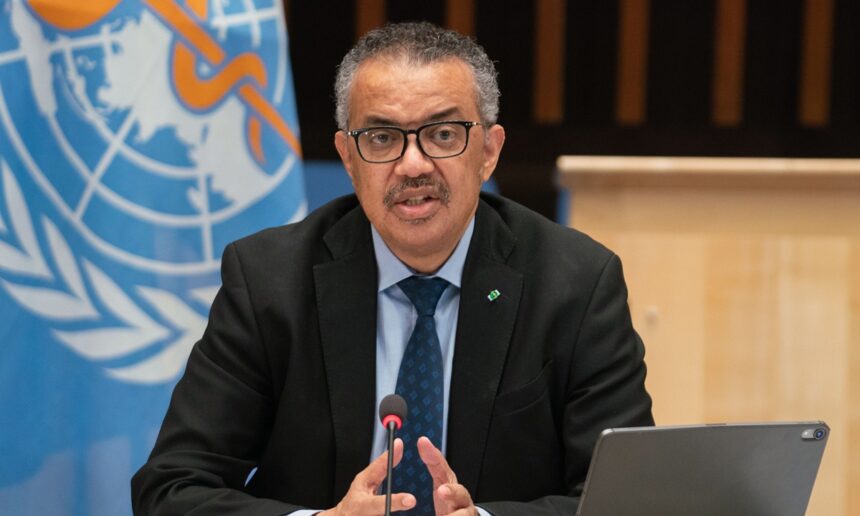
WHO Director-General Dr. Tedros Adhanom Ghebreyesus has visited Uganda amid concerns over the ongoing Ebola outbreak. The visit underscores international efforts to strengthen containment measures and prevent further spread of the deadly virus.
Uganda has recorded multiple confirmed Ebola cases linked to the Bundibugyo strain. Health authorities continue contact tracing and monitoring as new infections emerge among known contacts of confirmed patients.
The outbreak is affecting both Uganda and the Democratic Republic of the Congo, raising concerns about cross-border transmission due to frequent movement between communities.
Dr. Tedros stressed the need for stronger surveillance, community engagement, and rapid testing. WHO officials say early detection remains critical to containing the outbreak.
Health workers face major challenges, including insecurity, population displacement, and difficulties in tracing contacts. These factors continue to complicate efforts to stop transmission.
The current outbreak involves the rare Bundibugyo Ebola strain, for which no approved vaccine currently exists. This makes prevention, monitoring, and rapid response especially important.
WHO has launched an emergency response strategy worth hundreds of millions of dollars to support outbreak control efforts and strengthen preparedness across the region.
Health experts say Ebola patients have a better chance of survival when they receive medical care early. Several recoveries have already been reported during the outbreak response.
WHO officials emphasize that public awareness, community trust, and cooperation with health workers remain essential to stopping the spread of the virus.
Authorities remain on high alert as they work to contain the outbreak and prevent wider regional spread. WHO continues to support Uganda and neighboring countries in their response efforts.