
Police have arrested Ifechukwu Dennis, the man accused of creating and circulating an artificial intelligence (AI)-generated voice note falsely attributed to President Bola Tinubu.
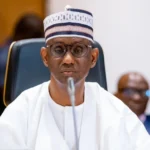
Bayo Onanuga, Special Adviser to the President on Information and Strategy, announced the arrest on Thursday, he said a special team from the Office of the Inspector-General of Police (IGP) tracked and arrested the suspect in Benin City.
According to Onanuga, investigators identified Dennis as the source of the controversial audio recording that recently spread across social media platforms.
“The IGP crack team has arrested Ifechukwu Dennis, who originated the fake voice that he passed on to his gullible targets as President Tinubu’s voice,” Onanuga wrote on X.
He added that the police would release an official statement on the case.
Police investigators traced the origin of the recording after it gained widespread attention online. Subsequently, a special IGP team launched an operation that led to Dennis’ arrest in Benin City.
Although authorities have not released full details of the investigation, officials say the suspect played a central role in creating and distributing the audio.
The AI-generated recording sparked outrage because it contained several controversial claims.
For example, the voice note alleged that insecurity in the South-East was deliberate. It also claimed that Tinubu pressured Peter Obi, the Labour Party’s presidential candidate in the 2023 election, to withdraw from the race.
In addition, the recording suggested that the president was unconcerned about the economic hardship facing Nigerians.
One section stated: “I’ve begged Peter Obi to step down for me. He refused. Now I will make sure the insecurity affects only South East.”
As a result, many social media users reacted strongly to the audio before government officials dismissed it as fake.
The recording gained wider attention after social media activist Martins Otse, popularly known as VeryDarkMan (VDM), featured it in a video posted on May 27.
Following the video’s release, thousands of users shared the clip across multiple platforms. Consequently, the audio reached a significantly larger audience.
The development prompted strong reactions from presidential aides and government supporters.
Soon after the audio went viral, Onanuga condemned its circulation and called for action against those involved in spreading it.
“This VDM needs to face the weight of the law for being the conveyor and disseminator of a fake audio of President Tinubu,” he said.
Furthermore, he described the incident as a serious abuse of social media and warned against the spread of false information.
Meanwhile, the Nigeria Police Force has not issued a formal statement on the arrest.
Authorities have also not disclosed the charges Dennis may face. However, investigators are expected to provide further details in the coming days.
In addition, police may reveal whether other individuals participated in creating or distributing the recording.
The case highlights growing concerns about the misuse of artificial intelligence technology.
Experts have warned that AI tools can create highly realistic fake audio and video content, often referred to as deepfakes. Because these materials can appear authentic, they can easily mislead the public.
As AI technology becomes more accessible, governments around the world face increasing pressure to address the spread of digitally manipulated content.
The arrest is likely to reignite debates about digital responsibility, misinformation, and AI regulation in Nigeria.
Supporters of stricter oversight argue that authorities must act to prevent the spread of harmful falsehoods. However, critics continue to stress the importance of protecting freedom of expression online.
For now, police continue their investigation while Nigerians await an official statement on the case.