
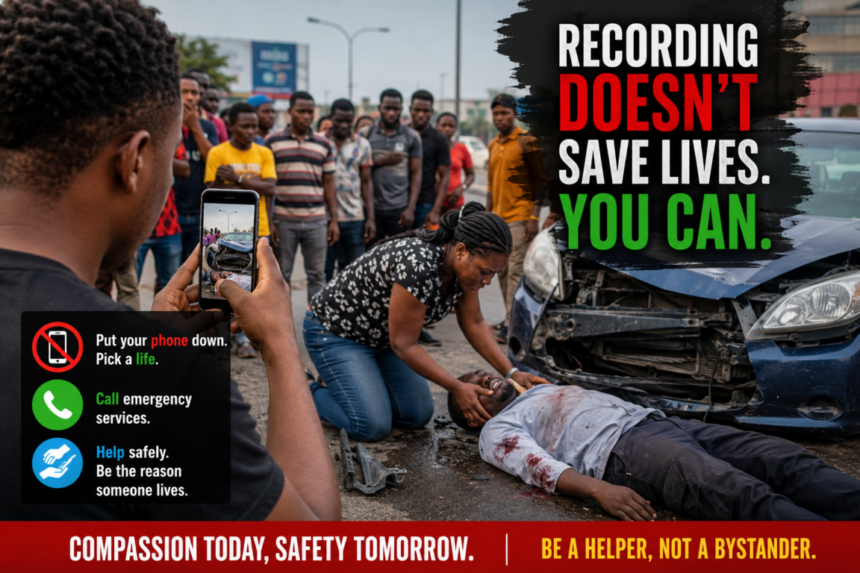
When an accident happens, the first instinct should be to protect life, yet more people are increasingly reaching for their phones to record before reaching out to help.
A serious crash can unfold in seconds. While an injured person may need urgent medical attention, some bystanders pull out their phones and begin recording. Within minutes, the footage may spread across social media, sometimes before emergency responders even arrive.
The behaviour raises an uncomfortable question: why do some people record accidents instead of helping the victims?
The Search for Online Attention
One reason is the desire for attention.
In the age of social media, shocking videos can attract thousands of views, likes, comments and shares. Some people may see an accident as an opportunity to capture content that could go viral.
Others may believe they are documenting an important event for public awareness or investigation. However, the decision to record can become harmful when it takes priority over helping someone in danger.
A phone can capture an incident, but it cannot replace immediate assistance.
The Bystander Effect
Psychologists also point to the bystander effect.
When several people gather around an emergency, individuals may assume that someone else will take responsibility. The more people present, the less personal responsibility each person may feel.
As a result, everyone may stand and watch while very few people step forward to help.
This can create a dangerous delay, especially when victims require urgent medical attention.
Fear Can Also Stop People from Helping
Not everyone who fails to intervene is acting out of indifference.
Some bystanders may fear making the situation worse. Others may worry about legal consequences, personal safety or not knowing how to provide first aid.
These concerns are understandable, especially at a serious accident scene.
However, helping does not always require advanced medical knowledge. Calling emergency responders, warning approaching vehicles, keeping the area safe and offering reassurance can all make a difference.
Every Second Can Matter
After a serious crash, time is critical.
A bystander who quickly alerts emergency services may help bring medical assistance to the scene faster. Someone who controls traffic may prevent another collision. Another person may provide basic first aid or comfort an injured victim while waiting for help.
These simple actions can be more valuable than recording the incident.
In some cases, videos may provide useful evidence for investigators. However, recording should not become the first priority when a person’s life may be at risk.
The Human Cost of Sharing Graphic Footage
The spread of accident videos can also cause further pain.
Victims and their families may unexpectedly encounter graphic images of their loved ones online. In some cases, footage is shared without consent and continues circulating long after the incident.
The desire for views should never come before human dignity.
Social media has changed how people respond to emergencies, but it should not change the value we place on human life.
Communities Must Promote Responsible Action
Schools, communities and road safety organisations can play an important role by teaching basic first aid and emergency response.
People should also learn responsible digital behaviour. Not every shocking moment needs to become content.
When an accident happens, the first questions should be simple: Is anyone in danger? Has emergency help been called? Is the scene safe? What can I do to help?
The phone can wait.
A compassionate response may save a life, protect a victim’s dignity and encourage others to do the same.