
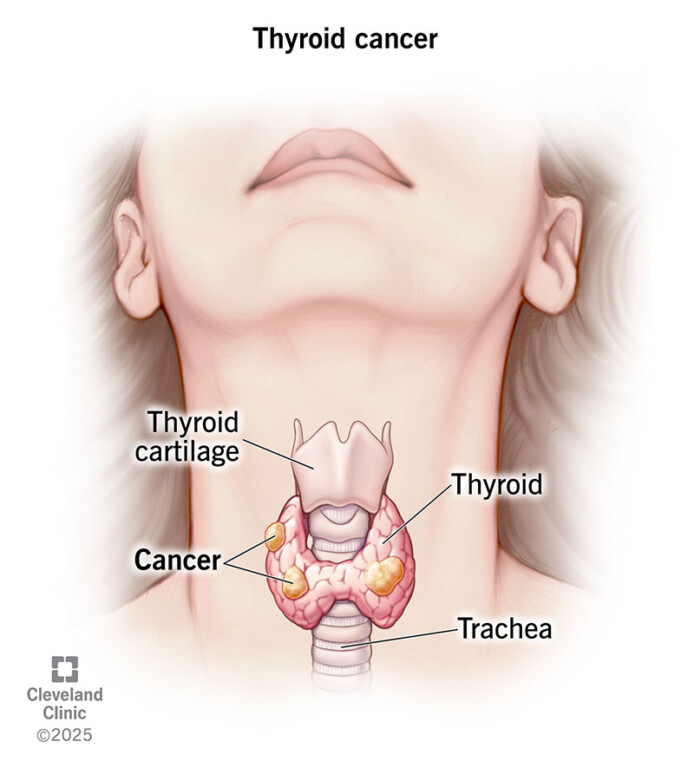
The thyroid is a small, butterfly-shaped gland situated at the front of your neck, and while many people have heard of thyroid nodules, fewer understand thyroid cancer, which is a far less common diagnosis.
The primary function of this gland is the synthesis of vital hormones regulating your metabolism, heart rate, body temperature, and energy levels. Thyroid cancer develops when abnormal cells inside this tissue mutate and grow uncontrollably.
Fortunately, most forms of thyroid cancer respond remarkably well to medical treatment, resulting in complete recovery for the vast majority of patients, especially when diagnosed early.
Defining Thyroid Nodules vs. Cancer
A thyroid nodule is an abnormal lump or growth that forms inside the thyroid gland. While finding a lump can be alarming, it is critical to understand the statistical differences between benign nodules and malignant cancer.
| Characteristic | Thyroid Nodule | Thyroid Cancer |
| Prevalence | Extremely common, especially in older adults. | Less common (~44,000 U.S. cases annually). |
| Malignancy Rate | ~90% are benign (non-cancerous). | 100% of confirmed cancer diagnoses. |
| Primary Action | Active monitoring, medication, or minor surgery. | Surgical removal, targeted therapy, or radiation. |
| Cancer Link | Roughly 1 in 10 nodules proves to be cancerous. | Requires definitive pathology to diagnose. |
The Role of Thyroid Hormones: T3 and T4
The thyroid gland synthesizes two main hormones: Triiodothyronine (T3) and Thyroxine (T4). These chemical messengers travel through the bloodstream to regulate essential physiological systems:
-
Metabolic Rate: Controlling how efficiently your body utilizes food for fuel.
-
Cardiovascular Function: Assisting in maintaining a steady, healthy heart rate.
-
Thermoregulation: Keeping internal body temperature stabilized.
-
System Development: Supporting physical growth and cognitive development.
-
Energy Production: Managing systemic stamina and vital organ performance.
Symptoms & Early Warning Signs
In its early stages, thyroid cancer rarely presents obvious outward symptoms. It is frequently discovered incidentally during routine physicals or imaging scans for unrelated neck issues. As the condition progresses, patients may experience the following signs:
-
A painless lump, nodule, or swelling in the neck area
-
Swollen lymph nodes in the neck
-
Persistent hoarseness or unexpected changes in the voice
-
Difficulty swallowing (dysphagia)
-
Difficulty breathing (dyspnea)
-
Unresolved neck or throat pain
Who Is at Risk?
While the exact cause of cellular mutation remains unknown, certain risk factors make individuals more susceptible to developing thyroid cancer:
-
Family History: A genetic predisposition or history of thyroid disorders.
-
Radiation Exposure: Historical exposure to high-level radiation, particularly during childhood.
-
Biological Sex: Females are statistically diagnosed at a higher rate than males.
-
Age: Risk generally increases with advancing age.
-
Inherited Conditions: Specific genetic syndromes (such as Multiple Endocrine Neoplasia).
Clinical Diagnosis Pathway
If a clinical examination reveals a suspicious nodule or physical symptom, medical providers utilize a sequential diagnostic pathway to evaluate the tissue:
Treatment & Management Options
Endocrinologists and oncologists design treatment regimens based on the specific type of thyroid cancer, its stage, and the patient’s general health profile:
-
Surgical Intervention: Partial (lobectomy) or complete (total thyroidectomy) removal of the thyroid gland.
-
Radioactive Iodine (RAI) Therapy: Ablation targeting residual thyroid tissue or cancer cells after surgical removal.
-
Thyroid Hormone Replacement: Daily oral medications (like levothyroxine) to maintain metabolic balance and suppress TSH production.
-
Targeted Therapies: Advanced pharmaceutical treatments designed for progressive or aggressive cancer types.
Patient Outlook: Most patients go on to live long, healthy, and completely normal lives following successful clinical treatment.
Prevention & Proactive Health Strategies
Although it is impossible to prevent every case of thyroid cancer, individuals can actively manage their risk profile by attending annual wellness exams, requesting neck palpations during check-ups, and avoiding unnecessary radiation exposure. If you or a loved one experiences unexplained hoarseness, difficulty swallowing, or notices a physical lump in the neck, consult a qualified healthcare provider immediately.