For decades, medical history celebrated J. Marion Sims as a pioneer of modern gynaecology, however, behind his reputation were enslaved Black women whose experiences and suffering helped shape his work.
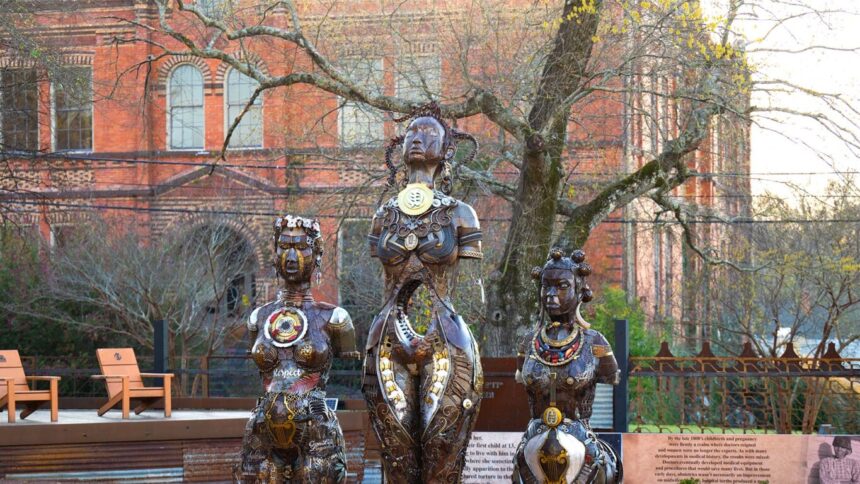
Anarcha Westcott, Lucy and Betsey are now remembered as the Mothers of Gynaecology, their stories have become an important part of conversations about medical ethics, reproductive justice, race and the treatment of patients in medical research.
Sims operated on the women in Alabama during the 1840s while searching for an effective treatment for vesicovaginal fistula, a serious condition that can develop after difficult or prolonged childbirth.
What is vesicovaginal fistula?
Vesicovaginal fistula occurs when an abnormal opening develops between the bladder and vagina. The condition can cause continuous urine leakage, pain, infections and severe social stigma.
In the 19th century, doctors had few effective ways to treat the condition. Women who developed fistula could face serious physical and social consequences, including isolation from their communities.
It was against this medical background that Sims began experimenting with surgical techniques to repair the condition.
Anarcha and the repeated operations
Anarcha Westcott became one of the best-known women associated with Sims’ work.
Historical accounts say Anarcha underwent about 30 operations as Sims attempted to repair her injury. Lucy and Betsey also underwent repeated procedures as he tested and refined his surgical approach.
The procedures eventually contributed to a repair technique that helped establish Sims’ reputation in gynaecology.
However, the women themselves received little recognition for their role in the development of the technique for many years.
Sims documented his medical work extensively, but his accounts provided limited attention to the personal experiences and voices of the women who endured the procedures. Their stories consequently remained largely outside mainstream accounts of medical history.
The question of consent
The history of the Mothers of Gynaecology also raises difficult questions about medical ethics and informed consent.
Anarcha, Lucy and Betsey were enslaved. Their legal and social circumstances meant they had very limited control over their own lives. Because of this, many modern scholars argue that they could not have given consent under the standards expected in modern medicine.
At the same time, historians continue to debate the evidence surrounding their individual circumstances.
Some argue that women suffering from fistula may have accepted treatment because the condition itself caused extreme physical suffering, social isolation and other hardships.
That possibility, however, exists within the larger reality of slavery and the enormous power imbalance between enslaved patients and physicians.
The debate therefore goes beyond whether the women physically participated in the procedures. It also asks whether participation under such conditions can be considered genuinely voluntary and informed.
How medical history remembered Sims
For generations, medical education placed considerable emphasis on Sims and his contribution to gynaecology. The women whose bodies and experiences were central to his work received far less attention.
That imbalance is beginning to change.
A 2024 study of gynaecology textbooks found that 74 percent mentioned J. Marion Sims by name, while only 24 percent mentioned the enslaved women associated with his experiments.
Researchers said the difference demonstrates how medical history can celebrate physicians while overlooking the patients whose experiences contributed to medical advances.
The finding has added to wider efforts to examine how the history of medicine is taught and whose contributions are remembered.
The women are reclaiming a place in history
Today, Anarcha, Lucy and Betsey are increasingly recognised in academic research, books, documentaries, art and memorial projects.
The name Mothers of Gynaecology has become a way of drawing attention to women who were historically overshadowed by the doctor who treated them.
Their recognition is not simply about changing the names that appear in history books. It also reflects a broader effort to examine the ethical circumstances surrounding medical discoveries.
For scholars and activists, remembering the women means acknowledging that advances in medicine can have complicated histories, particularly when they involve vulnerable people.
Why the story still matters
The story of the Mothers of Gynaecology is not confined to 19th-century Alabama. It continues to raise questions about the relationship between medical progress, human dignity and patient rights.
Anarcha, Lucy and Betsey experienced repeated and painful procedures while Sims searched for a treatment for a devastating condition. Their experiences contributed to the development of techniques that later helped improve the treatment of vesicovaginal fistula.
Yet their suffering should not disappear behind the achievements of a celebrated physician.
Remembering the women provides a fuller account of medical history. It also forces society to consider whose suffering has been overlooked and whose achievements have been celebrated.
Their names now serve as a reminder of the difficult links between slavery, race, medicine, reproductive health and human dignity.