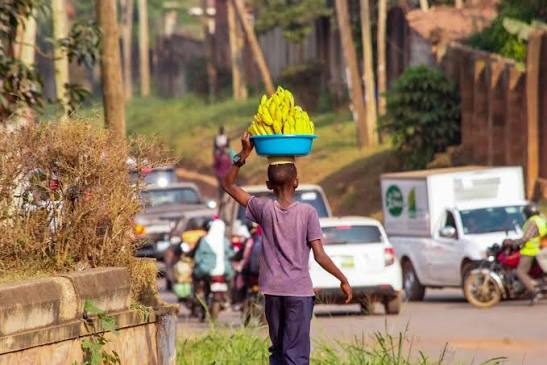
Street Hawking Nigeria has become one of the clearest signs of the economic hardship facing many families, across cities and towns, children sell food, water and household items on busy roads to support their families.
While many people see street hawking as a way to earn money, it also reflects deep poverty, unemployment and the pressure of caring for large households
For many of these children, street hawking is not a choice. It is a survival strategy born out of poverty, rising living costs and the growing pressure on families struggling to feed many mouths.
While child labour is often discussed alongside access to education, the problem runs much deeper. At its core lies a combination of widespread poverty, rapid population growth and limited economic opportunities that continue to push children into the informal workforce.
For millions of low-income families, every extra income matters.
With inflation driving up the prices of food, transport and housing, many parents rely on their children to supplement household earnings. A child selling bottled water or bread on the roadside may earn only a small amount each day, but that money can help buy food or pay rent.
In many homes, parents do not see street hawking as exploitation. They see it as a necessary sacrifice to keep the family afloat.
The result is a generation of children who spend long hours under the scorching sun, in heavy traffic and crowded markets instead of enjoying the safety and protection every child deserves.
Poverty Fuels Child Labour
Poverty remains the strongest driver of child labour in Nigeria.
Families with little or no stable income often face impossible choices. Some send their children to hawk after school. Others depend on them to work throughout the day to contribute to the family’s daily survival.
Economic hardship has become more severe in recent years. Rising food prices, unemployment and declining purchasing power have left many households with few alternatives.
Without stronger social protection, families often view child labour as an economic necessity rather than a violation of children’s rights.
Population Growth Adds More Pressure
Nigeria has one of the fastest-growing populations in the world. Every year, millions of children are born into communities where jobs, healthcare and social services already struggle to meet existing demand.
Large family sizes can place enormous financial pressure on parents, particularly in low-income households.
When limited income must feed, clothe and care for many children, older siblings frequently enter informal work to support the family. Street hawking becomes one of the easiest options because it requires little capital or formal training.
Population growth itself does not cause child labour. However, when rapid population growth combines with poverty and unemployment, vulnerable families often depend on their children to earn an income.
The Hidden Cost of Street Hawking
Street hawking exposes children to dangers that go far beyond physical exhaustion.
Busy highways increase the risk of road accidents. Long hours under harsh weather conditions affect their health. Many children also face harassment, exploitation and violence while trying to sell their goods.
Children working under unspervised on the streets are more likely to fall a victim of sexual abuse, physical abuse, drug abuse and even trafficking
The emotional impact can also be severe. Constant exposure to stress and adult responsibilities often affects children’s confidence, mental health and overall development.
A Cycle That Keeps Families Poor
Although child labour may provide immediate income, it rarely improves a family’s long-term financial situation.
Children who spend years working instead of developing skills often grow into adults with limited employment opportunities. Many remain trapped in low-paying informal jobs, repeating the same cycle of poverty experienced by their parents.
Experts argue that reducing child labour requires more than enforcing laws. It also requires creating economic opportunities that allow parents to support their families without relying on their children’s labour.
What Nigeria Is Doing
Nigeria has laws designed to protect children from exploitation, including the Child Rights Act and labour regulations enforced by the Federal Ministry of Labour and Employmstreet-hawking-nigeriaent. The National Agency for the Prohibition of Trafficking in Persons (NAPTIP) also works to combat child trafficking and exploitation.
International organisations such as the International Labour Organization (ILO) and UNICEF support programmes that encourage family livelihoods, vocational training, social protection and community awareness to reduce child labour.
Despite these efforts, enforcement remains inconsistent, especially within the informal economy where street hawking is common.
Beyond Enforcement: Tackling the Root Causes
Ending child labour requires addressing the economic realities that force children onto the streets.
Policies that create jobs, expand social welfare, improve access to affordable healthcare and strengthen family incomes can reduce the need for children to work.
Access to family planning services and public awareness about responsible family size can also help families better manage available resources without placing financial burdens on children.
Community support, affordable childcare and targeted assistance for vulnerable households are equally important in breaking the cycle.
Children Should Not Carry the Weight of Poverty
Every tray balanced on a child’s head tells a larger story about the economic struggles facing many Nigerian families.
Street hawking is not simply a child protection issue. It is also a reflection of poverty, unemployment and the pressure created by rapid population growth.
Until families have sustainable livelihoods and children no longer become part of household survival strategies, the streets will continue to fill with young hawkers whose greatest burden is not the goods they carry, but the poverty that placed them there.
In the end, protecting Nigerian children means more than removing them from the streets. It means building an economy where parents can provide for their families without sacrificing their children’s childhoods.