
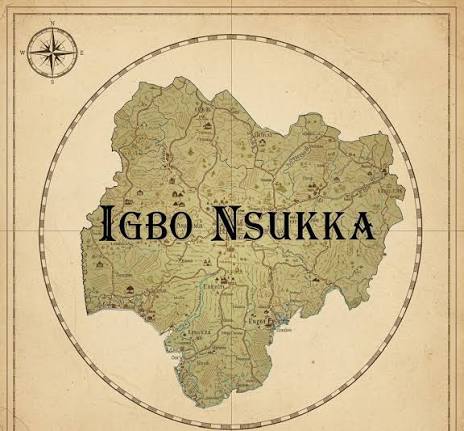
From ancient traditions and warrior communities to the University of Nigeria and the colourful Omabe festival, Nsukka remains one of southeastern Nigeria’s most distinctive cultural centres.
In the hills of southeastern Nigeria lies Nsukka, a town with a story that goes far beyond its identity as a university city.
Located in Enugu State, Nsukka serves as a city, a Local Government Area and an agricultural trading centre. It also anchors a wider cultural region that has carried the Nsukka identity for generations.
Many Nigerians associate Nsukka with the University of Nigeria, Nsukka, the country’s first indigenous and autonomous university. Yet the town had a rich history long before the university opened its doors in 1960.
Its story draws from ancient communities, agriculture, traditional institutions, warfare, festivals and art.
A HISTORY ROOTED IN ANCESTRY
Oral tradition traces the origin of Nsukka to Asadu Ideke Arụmọna.
According to the tradition, Asadu Ideke Arụmọna had three sons. They were Nsukka, Ọbụkpa and Okpuje.
Nsukka later had three sons of his own. They were Nkpụ̀naanọ́, Nru Nsukka and Ihe’n Owerre.
These communities developed into the core settlements that make up traditional Nsukka town.
The name Nsukka, however, extends beyond the city.
Over the years, governments used the name in different administrative and political contexts. The British colonial administration created Nsukka Division.
Later, Nigerian governments also recognised a wider Nsukka political and cultural zone.
Today, the official political structure uses the name Enugu North Senatorial District. However, many people still identify strongly with the historic Nsukka name.
THE UNIVERSITY THAT TRANSFORMED NSUKKA
The University of Nigeria remains one of Nsukka’s most important landmarks.
Dr. Nnamdi Azikiwe championed the institution, which opened in 1960. The university became a major symbol of Nigeria’s independence and its pursuit of indigenous higher education.
The institution transformed Nsukka into a centre of learning and research.
Thousands of students, academics and researchers have passed through its gates. Their presence has given the town a cosmopolitan character.
The university also helped shape Nigeria’s contemporary art scene.
The famous Nsukka School of Art emerged around artists and scholars connected to the university. They explored traditional Uli art and gave the indigenous form new expression in contemporary Nigerian art.
A LAND OF AGRICULTURE AND TRADE
Agriculture remains central to life in Nsukka.
The area serves as a major trading centre for yam, cassava, maize, taro, pigeon peas, palm oil and palm kernels.
Farmers and traders from surrounding communities contribute to the town’s busy agricultural economy.
Traditional crafts also remain part of the region’s heritage. Weaving, in particular, has long formed part of local craftsmanship.
Nsukka also has a strong food culture.
The area is famous for Ose Nsukka, a highly aromatic local pepper known for its distinctive flavour.
The region also celebrates foods such as Okpa, which remains popular across southeastern Nigeria.
OMABE: A FESTIVAL OF IDENTITY
Few traditions capture Nsukka’s cultural identity like the Omabe festival.
The festival brings communities together through masquerades, music, dance and elaborate displays.
For the people, Omabe means more than entertainment.
The tradition connects communities with their ancestors, spiritual beliefs and traditional institutions.
It also strengthens relationships among communities.
Each generation inherits the festival and helps keep its traditions alive.
At a time when modern lifestyles continue to influence young Nigerians, Omabe provides a link between the present and the past.
THE MEMORY OF ANCIENT WARRIORS
Nsukka also carries a history of warfare.
Historical accounts describe the communities that made up Nsukka as having strong fighting forces during the 18th and 19th centuries.
Individual communities maintained their own forces. They used them to defend their territories and, at times, expand their influence.
Nsukka fought several conflicts with neighbouring communities.
In some cases, neighbouring settlements sought Nsukka’s help when attackers threatened them.
One recorded conflict involved Ejuona-Obukpa. The conflict ended with Nsukka gaining part of the territory.
These accounts offer a glimpse into the complex relationships among pre-colonial communities.
They show how communities defended their land, protected their people and negotiated power with their neighbours.
LANDMARKS THAT PRESERVE THE PAST
Nsukka offers more than history and culture.
The wider area contains natural and historical sites that reflect its heritage.
The Opi Lake Complex stands out among the area’s natural attractions. Its interconnected lakes and water features create a distinctive landscape.
Onuiyi Haven also holds historical importance. The site has an association with Nigeria’s first president, Nnamdi Azikiwe.
Old trees and traditional sites across the region provide further reminders of Nsukka’s long history.
A CULTURAL IDENTITY THAT ENDURES
Administrative changes have reshaped the Nsukka region over the years.
Colonial authorities created new boundaries. Successive governments established new local governments and political districts.
The creation of Ebonyi State in 1996 also changed political boundaries in the area.
Despite these changes, the Nsukka identity has remained strong.
Language, food, festivals, ancestry and traditional institutions continue to connect communities across the wider region.
People in Nsukka speak varieties of Igbo, including the Nsukka dialect.
The region’s influence has also extended beyond Enugu State. Historical accounts trace connections between Nsukka communities and settlements as far as Idah in present-day Kogi State.
NSUKKA TODAY
Today, Nsukka stands at the meeting point of tradition and modern life.
Students and academics fill its university environment. Farmers and traders drive its agricultural economy. Communities continue to celebrate traditional festivals.
The town has also produced and attracted artists, scholars and professionals who have contributed to Nigeria’s cultural and intellectual life.
But beneath this modern identity lies an older story.
It is the story of ancestry, community, agriculture, scholarship, art and resilience.
From the story of Asadu Ideke Arụmọna to the legacy of the University of Nigeria, Nsukka continues to carry its past into the present.
From the colourful Omabe masquerades to its farms and markets, the town continues to preserve traditions that connect generations.
Nsukka is more than a university town.
It is a living archive of history and culture.
It is a place where tradition meets modernity, where scholarship meets heritage, and where a strong cultural identity continues to shape the lives of its people.