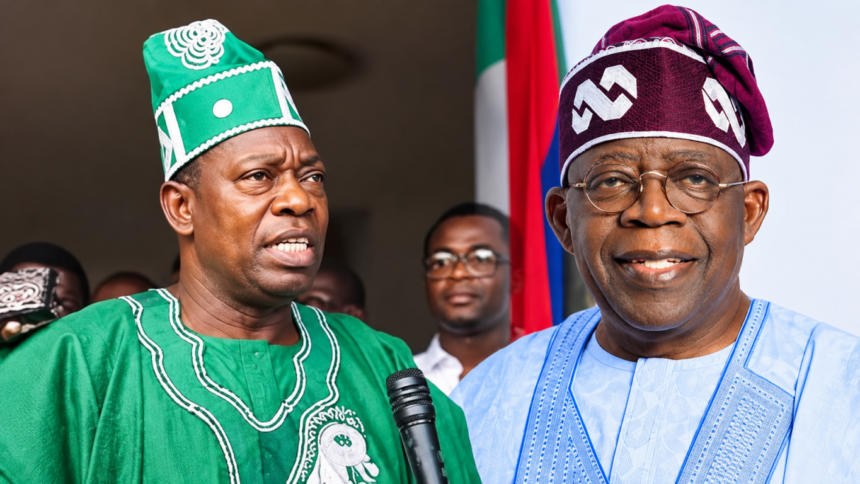
The phrases “Hope ’93” and “Renewed Hope” occupy two very different moments in Nigeria’s political history, even though the wording creates an obvious connection between the presidential campaigns of the late Moshood Kashimawo Olawale (MKO) Abiola in 1993 and President Bola Ahmed Tinubu in 2023.
Abiola’s “Hope ’93” emerged during a period of military rule, economic hardship and growing public demand for a return to democratic government. Tinubu’s “Renewed Hope,” by contrast, was introduced in a competitive multiparty presidential election under an established democratic system.
The similarity in language has nevertheless attracted political and historical debate, particularly because both slogans presented their candidates as offering Nigerians a better future.
What Was Hope ’93?
MKO Abiola was the presidential candidate of the Social Democratic Party (SDP) in the June 12, 1993 presidential election.
His campaign was built around the message “Hope ’93,” a phrase that appeared in his campaign literature and became associated with his promise of a better Nigeria. Abiola also published a 1993 political document titled Hope ’93, Farewell to Poverty: How to Make Nigeria a Better Place for All. (WorldCat)
The political environment was fundamentally different from today’s.
Nigeria was then under the military government of General Ibrahim Babangida. The government had introduced the Structural Adjustment Programme (SAP), while the country was experiencing significant economic and social difficulties. The transition programme promised a return to civilian rule, culminating in the June 12 election.
Abiola’s campaign therefore spoke not only to economic aspirations but also to a broader desire for democratic government.
Historical accounts describe his campaign as emphasising national unity, economic reform, poverty reduction, education and social justice. His appeal also crossed significant ethnic and religious boundaries. (Pulse Nigeria)
The slogan consequently acquired meaning beyond ordinary campaign branding. For many Nigerians, “Hope ’93” became associated with the expectation that democratic government could replace military rule and improve living conditions.
What Happened to Abiola’s Mandate?
The June 12, 1993 presidential election was annulled by the Babangida administration before the result could lead to a transfer of power.
Abiola was widely regarded as having won the election, and the annulment triggered a prolonged political crisis and a struggle for the restoration of the democratic mandate.
The significance of the election has endured in Nigeria’s political history. The Federal Government eventually designated June 12 as Democracy Day, formally recognising the historical importance of the election and the democratic struggle associated with it.
Political scientist Moses Duruji, reflecting on the legacy of Abiola’s message, argued that the ideals associated with Abiola’s “Hope” had not been adequately reflected in Nigeria’s political system and called for reforms. (Radio Nigeria Ibadan)
This helps explain why “Hope ’93” is remembered not simply as an election slogan but as part of the historical narrative surrounding June 12, democracy and the struggle against military rule.
What Is Tinubu’s Renewed Hope?
Thirty years later, Bola Ahmed Tinubu adopted “Renewed Hope” as the central theme of his 2023 presidential campaign under the All Progressives Congress (APC).
His campaign manifesto was titled Renewed Hope 2023. In the document, Tinubu promised, among other things, to expand access to healthcare, education and housing, strengthen national security, improve economic opportunities and pursue social justice and prosperity. (Premium Times Nigeria)
Unlike Abiola’s campaign, Tinubu’s took place within Nigeria’s Fourth Republic, a period of constitutional civilian government that began in 1999.
The meaning of “renewed” is therefore important.
The word suggests restoration or strengthening of something that already exists rather than the creation of hope for the first time. In Tinubu’s campaign context, it was presented as a programme for changing the direction of the country and improving the existing democratic system.
The administration subsequently made the Renewed Hope Agenda its central governing framework. The Federal Ministry of Information lists eight priority areas, including economic reform, national security, food security, energy and natural resources, infrastructure and transportation, education and health, industrialisation and digitisation, and improved governance. (Federal Ministry of Information)
The Major Difference: Historical Context
The biggest difference between the two slogans is arguably the political context in which they were deployed.
“Hope ’93” was used during military rule.
“Renewed Hope” was used during constitutional democracy.
Abiola’s campaign was therefore connected to two major expectations: the restoration of civilian government and socioeconomic improvement.
Tinubu’s campaign, on the other hand, was conducted within an established electoral democracy. The central argument was about how a new administration should govern and address existing economic, security and institutional challenges.
This distinction is important because political slogans derive much of their meaning from the circumstances surrounding them.
Hope Versus Renewed Hope
There is also a linguistic distinction.
“Hope ’93” points directly toward a particular future — the Nigeria that Abiola and his campaign presented to voters in 1993.
“Renewed Hope” contains an additional idea: that hope existed before but had been weakened or lost and therefore needed to be restored.
Tinubu’s 2023 manifesto explicitly called on Nigerians to “renew hope” through policies aimed at equality of opportunity, social justice and prosperity. (Premium Times Nigeria)
Thus, while the two expressions share the word “hope,” they make different rhetorical claims.
Abiola’s message was essentially associated with the promise of hope at a moment when Nigerians were seeking democratic change.
Tinubu’s message was framed as the restoration or renewal of hope within the existing democratic order.
Why Are the Two Slogans Often Compared?
The comparison is partly historical and partly political.
Both men are prominent Yoruba politicians from the South-West. Both contested the presidency and both used the word “hope” prominently in their presidential campaigns.
There are also similarities in the political symbolism surrounding their campaigns. Commentators have pointed to the fact that Abiola’s 1993 election was annulled, while Tinubu’s 2023 election took place within a functioning democratic system and resulted in the transfer of presidential power. (Pulse Nigeria)
The similarity became particularly noticeable because Tinubu’s manifesto was titled Renewed Hope 2023, while Abiola’s 1993 political publication was titled Hope ’93, Farewell to Poverty. (WorldCat)
Was Tinubu’s Slogan Borrowed From Abiola?
This is an area where the distinction between fact and political interpretation is important.
The similarity between the two phrases is documented. However, whether Tinubu deliberately borrowed Abiola’s slogan or whether the similarity represents political continuity is a matter of interpretation.
In 2023, journalist and politician Dele Momodu accused the APC and Tinubu’s campaign of copying elements of Abiola’s political manifesto. That was Momodu’s criticism, not an established historical finding. (The Guardian Nigeria)
Other commentators have instead interpreted the similarity as an attempt to evoke the historical memory of June 12 and Abiola’s political legacy.
Therefore, it would be inaccurate to present plagiarism as an established fact without evidence of the authors’ intent and the provenance of the campaign material.
What Political Scientists Say About the Legacy
The political-science perspective also requires separating a campaign slogan from actual governance.
Political scientist Moses Duruji has argued that the ideals associated with Abiola’s hope had not been adequately sustained in Nigeria’s political system. (Radio Nigeria Ibadan)
Another political scientist, Segun Ogunsola, has similarly argued that successive administrations since the return to democratic rule have struggled to deliver the full dividends of democracy to Nigerians. (Radio Nigeria Ibadan)
These observations point to an important principle in political communication: a slogan communicates an aspiration, but its historical significance ultimately depends on whether institutions and governments translate that aspiration into measurable outcomes.
In other words, “hope” is a political message; governance is the test of the message.
The Abiola and Tinubu Messages Compared
| Issue | Abiola – Hope ’93 | Tinubu – Renewed Hope |
|---|---|---|
| Year | 1993 | 2023 |
| Political system | Military rule/transition to democracy | Constitutional democracy |
| Party | Social Democratic Party | All Progressives Congress |
| Core message | Hope and a better Nigeria | Renewal of hope and national transformation |
| Major context | Military rule, economic hardship, democratic transition | Economic, security and governance challenges under democracy |
| Election | June 12, 1993 | February 25, 2023 |
| Outcome | Election annulled | Tinubu declared winner and inaugurated |
| Policy emphasis | Poverty reduction, social welfare, unity and democratic aspirations | Economy, security, infrastructure, education, health, agriculture and governance |
| Historical legacy | Closely associated with June 12 and the democratic struggle | Associated with the current administration’s governing agenda |
Thirty Years Apart, But a Similar Political Language
The historical irony is that the two slogans appeared exactly 30 years apart.
Abiola’s “Hope ’93” emerged in 1993, at a time when Nigerians were hoping to move from military rule to democratic government.
Tinubu’s “Renewed Hope” emerged in 2023, three decades later, when Nigeria was already operating under democratic rule but facing serious economic, security and social challenges.
The difference therefore goes beyond the wording.
Abiola was campaigning for a political future that Nigeria did not ultimately experience because his election was annulled.
Tinubu campaigned to lead an existing democratic state and presented “Renewed Hope” as a programme for changing the country’s economic and governance trajectory.
The Question Nigerians Can Ask Today
The most significant connection between “Hope ’93” and “Renewed Hope” may ultimately not be the similarity of the slogans but the expectations they created.
For Abiola’s supporters, hope was tied to democracy, national unity and the prospect of improved living conditions.
For Tinubu’s supporters, renewed hope has been tied to economic reforms, security, infrastructure, social investment and improved governance.
The historical question is therefore straightforward: what happens to political hope after the campaign ends?
Historians can assess Abiola’s legacy through the events surrounding June 12 and the democratic struggle that followed. Political scientists can examine Tinubu’s administration through its policies, institutions and measurable outcomes.
What the comparison demonstrates is that political slogans can survive for decades, but their lasting significance is determined by the political and historical realities that follow them.
For “Hope ’93,” the defining historical event was the annulment of the June 12 election.
For “Renewed Hope,” the historical assessment remains tied to the policies and outcomes of the Tinubu administration.
The two slogans therefore share a word, but they belong to different political moments — one associated with the struggle to establish democratic government, and the other with an attempt to reshape an already established democratic system.