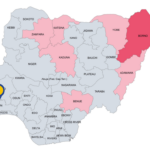

The news that Nigerians paid about ₦2.23 trillion in ransom to kidnappers in just one year is more than a crime report. It reveals a serious problem about the relationship between citizens, violence, and the government.
According to the National Bureau of Statistics (NBS), more than 2.2 million kidnapping incidents happened between May 2023 and April 2024. Families paid an average ransom of about ₦2.67 million, and around 65 percent of victims’ families paid to secure the release of their loved ones.
Many people may see this only as a security problem. But the issue is much deeper.
Kidnapping has grown from a criminal activity into a powerful economic system operating alongside the Nigerian state.
The Economics of Violence
Political experts often say that the most important duty of any government is to provide security for its people.
German sociologist Max Weber described a state as an institution that has the legal authority to use force within its territory.
When armed groups can kidnap people, collect money, control territories, and force communities to obey them, the government’s control becomes weaker.
In some parts of northwestern and north-central Nigeria, criminal groups have become more than ordinary bandits. They now operate like alternative authorities. Communities sometimes negotiate with them, pay protection fees, and adjust their lives around their activities.
In some places, kidnapping has become a form of illegal taxation enforced through violence.
Political scientist Charles Tilly once argued that governments became powerful by controlling violence and collecting taxes.
This raises an important question:
What happens when criminal groups become effective at collecting money through force?
A Parallel Revenue System
The ₦2.23 trillion ransom economy is shocking because it represents a huge transfer of wealth from citizens to criminals.
To understand its size, the amount is close to the yearly budgets of several Nigerian states combined and is comparable to major federal government spending programmes.
Kidnapping is no longer just a crime. It has become a business sector.
This criminal industry has its own system, including:
• Information gathering
• Logistics networks
• Weapons supply
• Negotiators
• Informants
• Financial middlemen
• Territorial protection arrangements
Such a system cannot survive for years without becoming organised.
Experts who study conflict economies describe this as a “violence market,” where insecurity itself becomes profitable.
While legitimate businesses struggle with inflation, taxes, and foreign exchange challenges, criminal enterprises often make huge profits with relatively low risk.
Is a Decline in Ransom Payments Good News?
Some reports suggest that ransom payments may be reducing in certain areas.
At first, this sounds positive. However, there may be different reasons.
First, security may actually be improving. Better military operations, intelligence gathering, and community security efforts may be weakening criminal groups.
Second, citizens may simply be getting poorer. Due to inflation, unemployment, and the falling value of the naira, many families may no longer be able to raise large ransom payments.
Third, criminal groups may be expanding into other illegal businesses such as illegal mining, extortion, cattle rustling, and collecting levies from farmers and traders.
In this case, lower ransom collections would not mean criminals are weaker. It would only mean they have found other sources of income.
Finally, people may be reporting fewer kidnapping cases because they no longer trust authorities to help them.
Why Huge Security Spending Has Not Solved the Problem
Nigeria has spent trillions of naira on security over the years, yet insecurity remains widespread.
This does not necessarily mean security agencies have failed.
Nigeria faces many challenges, including:
• A very large territory
• Porous borders
• Ungoverned spaces
• Youth unemployment
• Ethnic and religious conflicts
• Farmer-herder disputes
• Weak local governance
However, the data suggests that spending money alone cannot solve security problems.
Economist Douglass North argued that strong institutions matter more than large budgets.
Without effective institutions, even huge spending may produce limited results.
What This Crisis Says About Nigeria
The most important lesson is political, not criminal.
A government may have laws, officials, and security agencies everywhere, yet still lack the ability to fully enforce its authority.
The kidnapping economy reveals three major weaknesses.
Territorial Weakness
Many rural areas remain difficult for government agencies to monitor effectively. Rural communities suffer most from kidnappings.
Intelligence Weakness
Modern security depends heavily on information. Criminal groups often succeed because they possess better local intelligence than authorities.
Trust Weakness
Many families immediately begin raising ransom money instead of expecting government rescue efforts.
This shows a lack of confidence in the state’s ability to protect citizens.
This may be the most dangerous problem because governments depend not only on force but also on public trust.
Reasons for Hope
Despite these challenges, it would be wrong to describe Nigeria as a failed state.
Nigeria still has functioning institutions, conducts elections, collects taxes, regulates economic activities, and provides services across most parts of the country.
Security forces have also recorded important successes against criminal and insurgent groups.
The problem is not state collapse.
The real challenge is uneven state capacity. Some areas are governed effectively, while others are not.
This means reform is still possible.
The Bigger Question
The key issue is not simply whether Nigeria can defeat kidnapping.
The real question is whether Nigeria can rebuild the social contract between citizens and the state.
People pay taxes because they expect protection.
When citizens pay taxes to government and also pay ransom to criminals for safety, it creates a dangerous situation. It begins to feel as though people are paying twice for security.
No democracy can sustain such a contradiction forever.
The ₦2.23 trillion ransom economy is therefore more than a sign of criminal activity. It is a measure of the gap between government authority and citizens’ security.
How Nigeria closes this gap will determine not only its security future but also the trust and legitimacy of the state.
Centuries ago, philosopher Thomas Hobbes argued that people create governments mainly to escape fear and violence.
When fear becomes a normal part of life, the challenge is no longer just about fighting crime. It becomes about restoring public trust.
That is the larger battle Nigeria must win.
Cliff Stanley
Political Scientist, Analyst and Public Theologian