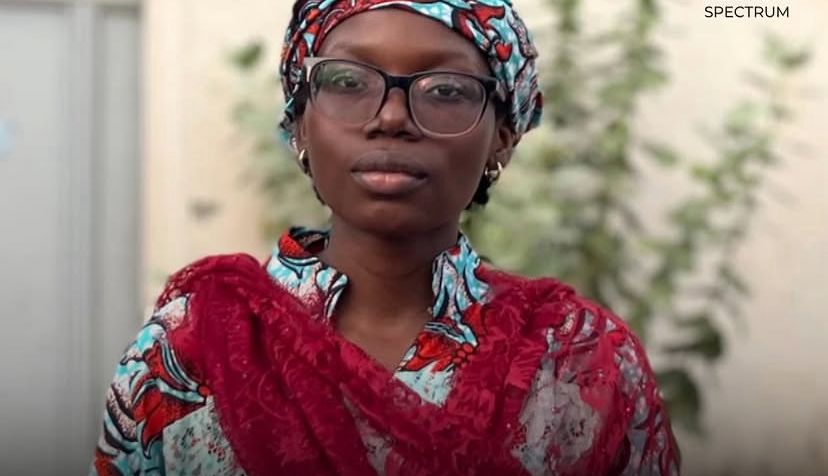
A 15-year-old Nigerian student is drawing attention for an innovative idea aimed at tackling two pressing challenges at once period poverty and environmental waste.
Raheema Auwal-Panti, a young innovator, has developed the concept of PantiPads, an environmentally friendly sanitary pad project that seeks to transform agricultural waste materials such as banana leaves, cassava peelings, and corn husks into affordable menstrual hygiene products.
Although the project is still under development, it has already generated interest for its potential to improve access to menstrual health products while reducing plastic waste.
Period poverty remains a major challenge in many communities, with millions of girls and women struggling to afford sanitary products. At the same time, disposable sanitary pads contribute significantly to environmental pollution due to their plastic content and slow decomposition rates.
Raheema’s solution aims to address both issues by creating sustainable alternatives from locally available materials that are often discarded as waste. The approach could help lower production costs, support environmental conservation, and make menstrual hygiene products more accessible to underserved communities.
Supporters of the initiative say the project highlights the power of youth-driven innovation and demonstrates how local solutions can be developed to address global challenges.
The young inventor’s work has been praised as an example of how creativity and sustainability can be combined to create positive social impact. If successfully developed and scaled, PantiPads could provide a practical and eco-friendly option for menstrual health management while helping reduce agricultural waste.
Raheema’s story is also inspiring conversations about the importance of supporting young innovators, particularly girls, who are using science and technology to solve real-world problems.
As the project continues to evolve, many are hopeful that PantiPads could become a model for sustainable menstrual health innovation in Nigeria and beyond.