
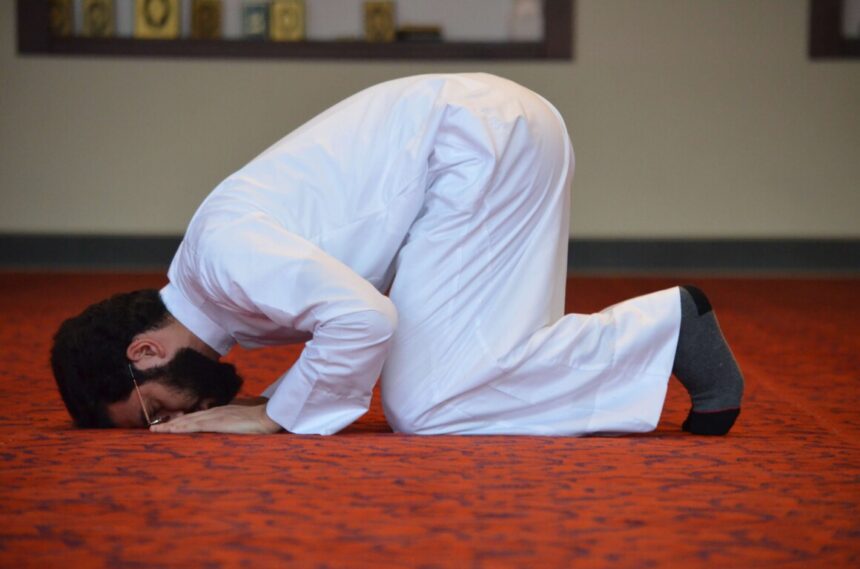
Salah, the five daily prayers observed by Muslims, is primarily an act of worship and obedience to Allah. However, beyond its immense spiritual rewards, Islamic teachings and modern scientific studies suggest that regular prayer also offers several physical, mental and emotional health benefits.
Islam regards prayer as the second pillar of the faith after the declaration of faith (Shahadah). It is an obligation upon every sane adult Muslim and serves as a daily reminder of a believer’s relationship with Allah.
Health experts and Islamic scholars say the structured movements, cleanliness through ablution (wudu), and moments of reflection embedded in Salah contribute positively to overall well-being.
Here are six scientifically supported health benefits of Salah and what Islam says about them.
1. Salah Promotes Cleanliness and Reduces the Risk of Infections
Every prayer is preceded by ablution, during which Muslims wash their hands, mouth, nose, face, arms, head and feet. Since observant Muslims perform wudu before each of the five daily prayers, these body parts are cleaned several times each day.
Medical experts have long emphasized that regular handwashing and personal hygiene significantly reduce the spread of bacteria, viruses and infectious diseases.
The World Health Organization (WHO) and the Centers for Disease Control and Prevention (CDC) consistently identify hand hygiene as one of the most effective ways to prevent infections.
Islam established this practice over 1,400 years ago.
Allah says in the Qur’an:
“O you who believe! When you rise to perform prayer, wash your faces and your hands 6up to the elbows, wipe your heads and wash your feet up to the ankles.”
(Surah Al-Ma’idah 5:6)
The Prophet Muhammad (peace be upon him) also likened the cleansing effect of prayer to bathing in a river five times daily.
Abu Hurairah (RA) narrated that the Prophet said:
“If there were a river at the door of one of you in which he bathed five times a day, would any dirt remain on him?”
They replied, “No.”
The Prophet said:
“That is the example of the five daily prayers. Allah wipes away sins through them.”
(Sahih al-Bukhari 528; Sahih Muslim 667)
While the hadith primarily refers to spiritual purification, the practice of repeated washing also offers clear physical hygiene benefits.
2. Salah Helps Reduce Stress and Improves Mental Health
Modern research has shown that mindfulness, meditation and structured moments of reflection can reduce stress hormones and improve emotional well-being.
Salah incorporates all of these elements through focused attention, controlled breathing, recitation and complete submission to Allah.
The Qur’an declares:
“Indeed, in the remembrance of Allah do hearts find rest.”
(Surah Ar-Ra’d 13:28)
During difficult times, Allah also commands believers:
“Seek help through patience and prayer.”
(Surah Al-Baqarah 2:153)
The Prophet Muhammad (peace be upon him) also sought comfort in prayer whenever faced with challenges.
Hudhayfah (RA) reported:
“Whenever something distressed the Prophet, he would turn to prayer.”
(Sunan Abu Dawud 1319 – authenticated by scholars)
Medical researchers have found that regular spiritual practices can reduce anxiety, improve resilience and lower stress-related illnesses.
3. Salah Provides Gentle Physical Exercise
Each unit (rak’ah) of prayer includes standing, bowing (ruku’), prostration (sujood) and sitting.
These repeated movements stretch muscles, mobilize joints and improve flexibility.
Depending on the number of voluntary prayers performed, practicing Muslims may perform dozens of these movements every day.
Although Salah should never replace regular physical exercise, researchers say it provides light-to-moderate physical activity, especially for older adults.
A study published in the International Journal of Industrial and Systems Engineering and other biomechanical analyses found that the movements involved in Islamic prayer resemble low-intensity exercise capable of improving joint mobility, balance and posture.
Allah describes believers by these movements:
“You see them bowing and prostrating, seeking bounty from Allah and His pleasure.”
(Surah Al-Fath 48:29)
4. Prostration May Support Healthy Blood Circulation
During sujood, the head is positioned lower than the heart, temporarily altering blood flow.
Some researchers suggest this posture may improve circulation to the head and upper body while promoting relaxation.
Although scientific evidence does not conclusively prove that prostration alone increases brain function, studies indicate that body positioning and controlled breathing during prayer contribute to relaxation and improved cardiovascular function.
Spiritually, prostration is regarded as the moment of greatest closeness to Allah.
The Prophet (peace be upon him) said:
“The nearest a servant comes to his Lord is when he is prostrating, so increase your supplication.”
(Sahih Muslim 482)
5. Salah Helps Establish Healthy Daily Routines
Islam requires prayers at fixed times throughout the day.
This naturally encourages discipline, time management and consistency.
Health experts agree that maintaining regular daily routines contributes to improved sleep quality, better productivity and healthier circadian rhythms.
Allah says:
“Indeed, prayer has been decreed upon the believers at specified times.”
(Surah An-Nisa 4:103)
Beginning the day with Fajr prayer and dividing daily activities around the remaining prayers helps many Muslims maintain structured lifestyles.
6. Salah Supports Musculoskeletal and Cardiovascular Health
Doctors say the repeated standing, bowing and prostration involved in prayer activate different muscle groups while reducing prolonged periods of sitting.
According to Dr. Umar Sani Ibrahim of Barau Dikko Teaching Hospital, Kaduna, studies suggest that individuals who consistently observe the five daily prayers often demonstrate improved physical strength, better joint function and fewer musculoskeletal complaints.
He also noted that prayer movements improve blood circulation, support heart health and help reduce stress levels.
Research conducted at King Saud University and findings published in sports medicine journals have also associated regular prayer movements with better balance, flexibility and musculoskeletal health, although experts emphasize that prayer should complement—not replace—regular exercise and medical care.
Worship Comes First
Islamic scholars caution that while science continues to uncover health benefits associated with Salah, Muslims perform prayer primarily as an act of worship and obedience to Allah—not as a form of exercise or medical treatment.
The physical and psychological benefits are regarded as additional blessings that accompany sincere worship.
Ultimately, Salah nourishes both body and soul. Through cleanliness, movement, discipline and spiritual connection, it remains one of Islam’s most comprehensive acts of devotion—offering believers not only hope for the Hereafter but also a healthier and more balanced life in this world.