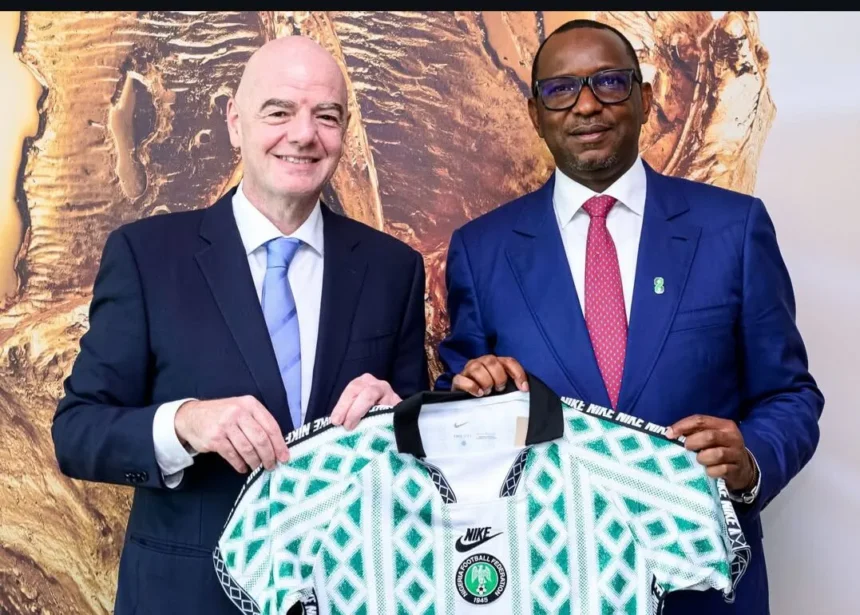
FIFA President Gianni Infantino has pledged continued support for Nigeria’s football development after meeting a Nigerian delegation at FIFA House in Zurich, Switzerland.
The meeting took place on Tuesday, September 1, 2026. National Sports Commission Chairman Shehu Dikko led the Nigerian delegation.
Officials from the National Sports Commission (NSC), Nigeria Football Federation (NFF) and other football stakeholders also attended the meeting.
According to reports, the talks focused on the future of Nigerian football. They included football development, governance and institutional reforms.
The meeting comes at a difficult time for Nigerian football.
Several senior NFF officials recently resigned from their positions. The development followed concerns over the administration and performance of Nigerian football.
Reuters reported that NFF President Ibrahim Gusau, General Secretary Mohammed Sanusi and other officials resigned on August 27, 2026.
The leadership changes have increased calls for reforms in Nigerian football.
Infantino said FIFA was ready to work with Nigerian football stakeholders. He also said the organisation would explore areas where it could provide further support.
The focus includes improving football structures and creating more opportunities for young Nigerian players.
Infantino’s comments could provide a boost to Nigeria’s football reform efforts.
Nigeria has a strong football tradition and has produced many talented players. However, the country has faced challenges in football administration and national team performance.
The Super Eagles also missed the 2026 FIFA World Cup. This increased pressure on football authorities to find solutions and improve the country’s football system.
The meeting with FIFA therefore comes at an important time.
While Infantino expressed FIFA’s willingness to support Nigeria, there is no confirmed announcement of a new financial package for Nigerian football.
The support discussed so far appears to focus on cooperation, development and reforms.
For Nigeria, the bigger challenge will be turning these discussions into practical action.
Better football administration, stronger grassroots programmes and improved development pathways could help Nigeria produce more talents and build stronger national teams.
The meeting signals FIFA’s willingness to remain engaged with Nigeria during the current period of change.
The success of the reform process will depend largely on how Nigerian football authorities implement the proposed changes.
For young Nigerian players, coaches and football fans, the hope is that the renewed engagement with FIFA will lead to a stronger and more organised football system.