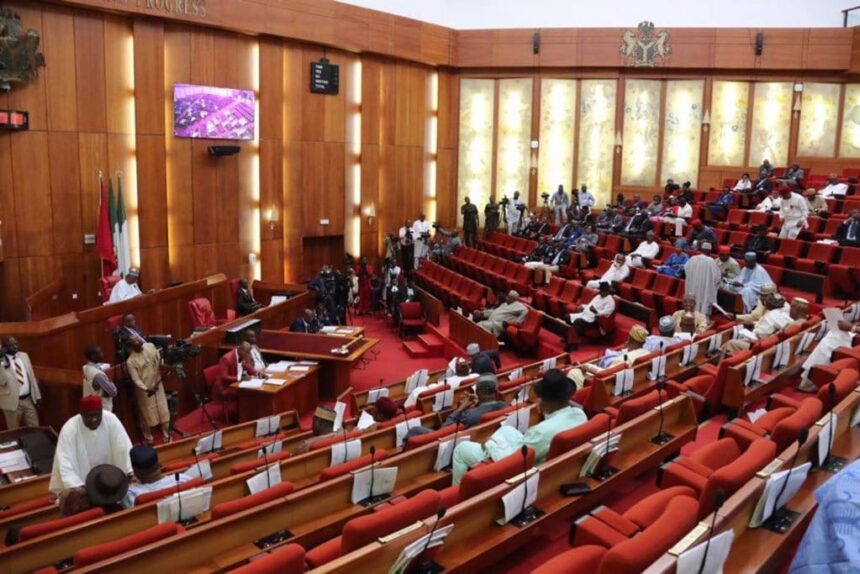
The House of Representatives on Thursday passed the Constitution Alteration Bill seeking to establish State Police across Nigeria, despite a walkout by opposition lawmakers who accused the House leadership of breaching parliamentary procedure.
The bill marks a major step toward decentralising policing in Nigeria and also advances one of President Bola Tinubu’s key security reforms.
Lawmakers approved the proposal after it secured the required two-thirds majority in the House with the executive transmitting the bill to the National Assembly as part of efforts to strengthen Nigeria’s security architecture. The government believes state police will help tackle terrorism, banditry, kidnapping and communal violence.
The proposal must still clear several constitutional hurdles. The Senate must approve it. At least 24 of the 36 state Houses of Assembly must also endorse it. President Tinubu must then sign it into law.
Deputy Speaker and Chairman of the House Committee on Constitution Review, Benjamin Kalu, presented the committee’s report describing the proposal as one of the most significant constitutional reforms in Nigeria’s security sector.
Kalu praised President Tinubu for transmitting the executive bill saying the move reflected strong cooperation between the executive and legislature.
According to him, the amendment will bring policing closer to communities and also improve intelligence gathering, strengthen community policing and enhance coordination among security agencies and state governments will respond more effectively to local security threats under the new system.
“This bill is not merely about creating another policing institution. It is about bringing policing closer to the people and improving security responses across the country,” Kalu said acknowledging that some stakeholders still have concerns.
However, he explained that the amendment only creates the constitutional framework. Future legislation will address recruitment, funding, training, accountability and operational standards.
“We must not allow the pursuit of perfection to become the enemy of meaningful progress,” he added.
The debate turned contentious during the Committee of the Whole.
Speaker Tajudeen Abbas announced that 311 lawmakers supported the bill. According to him, the figure included 211 APC members, 65 lawmakers from other parties who attended physically and 35 members who participated virtually.
He reminded lawmakers that constitutional amendments require support from at least 240 members.
Instead of considering the bill clause by clause, Abbas read its long title and called for a voice vote declaring that the “ayes” had prevailed and announced the bill’s passage.
The Speaker’s decision sparked protests from opposition lawmakers. Minority Leader Frederick Agbedi repeatedly sought recognition to raise a point of order. and the Speaker did not recognise him.
Opposition lawmakers then walked out of the Green Chamber with the protest disrupting proceedings and Abbas repeatedly struck the gavel before restoring order